
Back acne, commonly called bacne, gets significantly less attention in skincare conversations than facial acne, despite affecting a significant portion of the population and producing genuine physical discomfort alongside its cosmetic impact.
The back presents unique treatment challenges that facial acne doesn’t. The skin is thicker, the sebaceous glands are larger, and the area is harder to reach and see, which makes consistent, thorough treatment application genuinely difficult.
Products that work on the face often underperform on the back because they’re not designed for the skin’s different texture, the follicle size, or the practical challenges of reaching across your own back effectively.
Dermatologists approach back acne as a distinct clinical concern requiring body-specific formulations and delivery methods. This article covers the best back acne treatments that dermatologists specifically recommend, all available on Amazon, with real experiences from people who’ve finally solved this challenge.
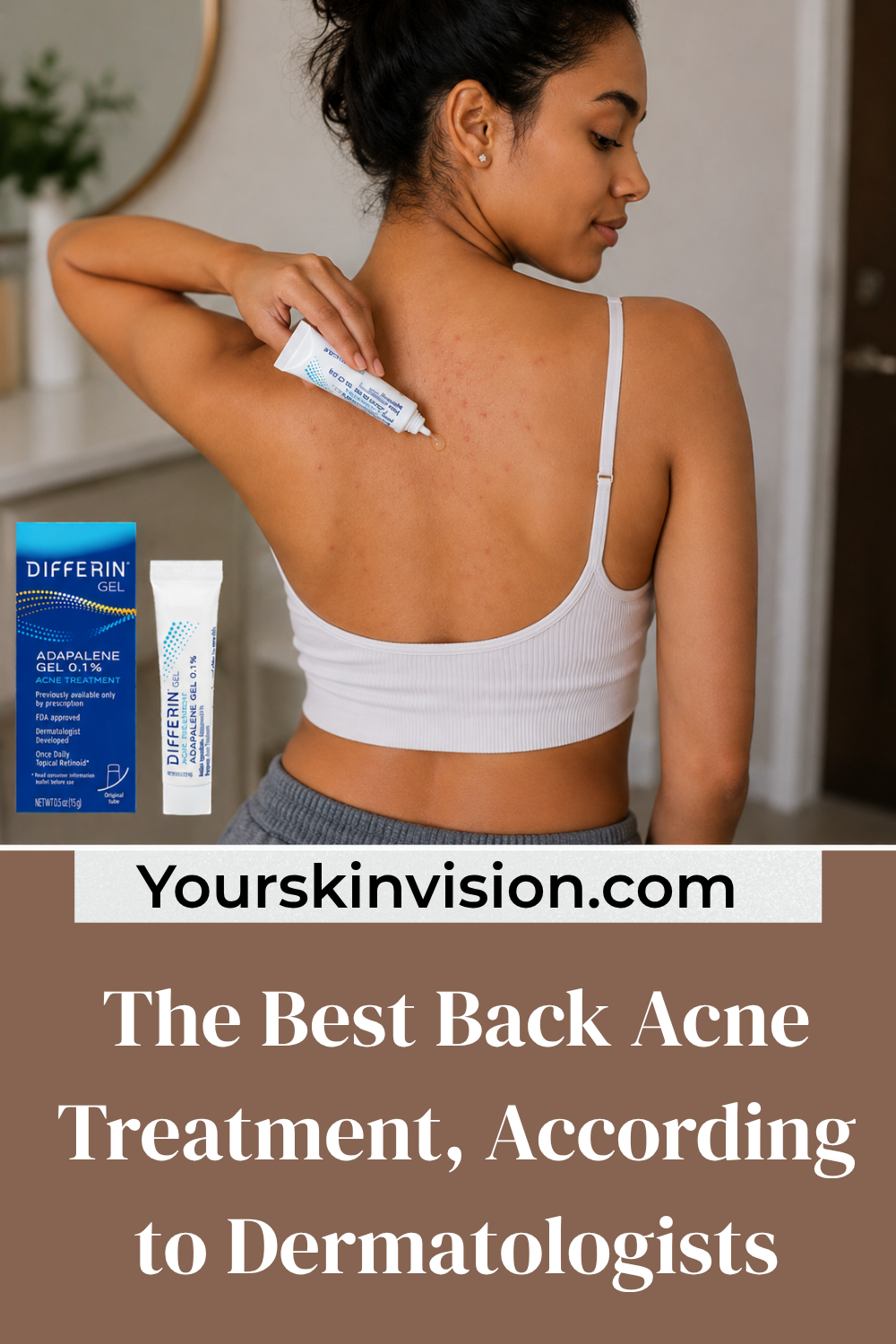
Table of Contents
This Is What Dermatologists Say Makes Back Acne Different From Facial Acne
Back acne isn’t just facial acne that relocated. Dermatologists treat it differently because the skin on the back behaves differently, and understanding those differences explains why certain products and approaches produce dramatically better results for back acne than a standard facial acne routine applied to the body.
Board-certified dermatologist Dr. Yoram Harth, medical director of MDacne and a widely cited expert in Healthline and WebMD, explains that back acne involves larger, more active sebaceous glands than facial acne, thicker skin that requires deeper-penetrating formulas, and a microbiome environment significantly affected by sweat, friction from clothing, and the warm, occluded conditions that the back creates, particularly in active, athletic people.
The specific factors that make back acne distinct include:
- Larger follicles and sebaceous glands — the back’s sebaceous glands are significantly larger than facial glands and produce more sebum per gland. This means back acne tends to present with larger comedones, deeper cysts, and more severe inflammatory lesions than the average facial acne presentation.
- Sweat and friction as primary triggers — sweat creates a moist environment that supports bacterial and fungal growth in back follicles, while clothing friction (particularly tight workout gear, backpack straps, and sports equipment) creates a specific form of acne called acne mechanica, friction-triggered breakouts that develop wherever persistent pressure and friction occur.
- Malassezia folliculitis risk — a fungal condition often confused with back acne that produces small, uniform, itchy follicular papules across the back and shoulders. Dermatologists specifically look for this because it doesn’t respond to standard bacterial acne treatment and requires antifungal approaches. Using the wrong treatment for months wastes time and can worsen the condition.
- Difficulty with application and coverage — back treatment requires either a long-handled applicator or assistance from another person. Products that require precise fingertip application or small-area spot treatment are impractical for the back. Sprays, body washes, and wide-coverage pads suit back acne treatment far better than standard acne spot treatments.
- Thicker stratum corneum — the outermost skin layer on the back is significantly thicker than on the face, which means active ingredients need higher concentrations or longer contact times to reach the sebaceous unit effectively.
Dermatologists also consistently remind back acne patients to shower immediately after sweating, whether from exercise, heat, or activity. Allowing sweat to sit on the back for more than 30 minutes significantly increases the bacterial and fungal load in back follicles and worsens both bacterial and fungal back acne.
Here are 5 Back Acne Treatment Dermatologists Rank as the Overall Best.

1. Overall Best: Neutrogena Body Clear Body Wash with Salicylic Acid
Neutrogena Body Clear Body Wash consistently earns the top dermatologist recommendation for back acne because it solves the back acne treatment’s primary practical challenge: consistent daily coverage of a large area that’s difficult to reach through a body wash format that delivers 2% salicylic acid across the entire back, chest, and shoulders during every shower without requiring precise application or assistance.
Dermatologists identify daily salicylic acid exposure as the most important step in back acne management because BHA penetrates the oil inside follicles and exfoliates the pore lining, preventing comedone formation that can become inflammatory acne.
A body wash that delivers this exposure twice daily at 2% concentration treats every follicle on the back with each shower rather than requiring targeted spot application to individual lesions. The oil-free, fragrance-free formula avoids common body wash irritants that can worsen back acne.
Dermatologists recommend lathering the product on the back and letting it sit for one to two minutes before rinsing. This contact time significantly improves salicylic acid penetration compared to rinsing immediately. Using a long-handled bath brush or loofah to apply the wash helps reach the entire back and creates mild physical exfoliation that complements the chemical exfoliation from the salicylic acid.
User Comments:
“My back acne had been a problem since high school, and I’d tried every spot treatment without making a dent. The problem was I could barely reach half of my back to apply them consistently. My dermatologist told me to switch to a salicylic acid body wash and leave it on for two minutes during every shower. Neutrogena Body Clear was her specific recommendation. After six weeks of consistent use, my back acne has improved more dramatically than anything else I’ve tried. The whole-back coverage from the wash format was the solution I’d been missing.”
“Bacne had been embarrassing me for years and I’d never found a consistent treatment because nothing was practical to apply on my own. My dermatologist said the body wash approach was the right format for back acne: you treat the whole area with every shower rather than trying to spot-treat individual pimples you can barely see. Neutrogena Body Clear with the two-minute contact time has cleared my back significantly over eight weeks. I use it every morning and evening shower, and the consistent daily BHA exposure is what finally worked.”

2: PanOxyl Acne Foaming Wash 10% Benzoyl Peroxide
PanOxyl earns consistent dermatologist recommendations for severe back acne through the highest benzoyl peroxide concentration available over the counter, 10% in a foaming wash format that covers large body areas effectively.
Dermatologists recommend benzoyl peroxide for inflammatory back acne specifically because it kills Cutibacterium acnes, the bacteria driving inflammatory papules and cysts, without contributing to the antibiotic resistance that makes long-term antibiotic treatment problematic.
The 10% concentration produces faster bacterial kill than 2.5% or 5% formulations. Dermatologists recommend the highest concentration for back acne specifically because the thicker back skin reduces how much active ingredient reaches the sebaceous unit per application, making a higher starting concentration appropriate compared to the face.
Dermatologists recommend using PanOxyl on the back after wetting the skin, applying the foam, and allowing it to contact the skin for two to three minutes before rinsing. Daily use on consecutive days produces the most rapid clearance of inflammatory back acne.
Benzoyl peroxide bleaches fabric; dermatologists recommend wearing old or white clothing immediately after application and allowing the back to dry completely before contact with clothing.
User Comments:
“My back acne was severe, deep inflammatory lesions that hurt and wouldn’t respond to salicylic acid treatment. My dermatologist said I needed benzoyl peroxide at the highest OTC concentration and recommended PanOxyl 10%. She said the back skin needed the higher concentration because of its thickness. After four weeks of daily use with the two-minute contact time, my inflammatory lesions reduced dramatically. By eight weeks, my back was the clearest it’s been in five years. Benzoyl peroxide at 10% was what my skin actually needed.”
“I’d been using a 2.5% benzoyl peroxide product for my back acne without much improvement. My dermatologist explained that the back needed the 10% concentration because the thicker skin reduced penetration of lower concentrations. PanOxyl Foaming Wash at 10% has cleared my back more effectively than anything I’ve used previously. The foam format covers my entire back easily. I use it every morning, and the bleaching on my old shower towels is the only side effect, completely manageable.”

3: Differin Adapalene Gel 0.1%
Differin adapalene earns its position in back acne treatment specifically for patients whose back acne is primarily comedonal, with blackheads, whiteheads, and closed comedones that create a rough, bumpy back texture without significant inflammation. Adapalene works by normalizing follicular cell turnover, preventing the dead cell accumulation that creates comedones and eventually leads to inflammatory breakouts.
Dermatologists recommend adapalene for back acne with an important caveat about application: it requires careful, even coverage of the back’s comedone-prone zones, typically the upper back and shoulder blade area, applied as a thin, even layer at night.
This can be challenging for someone without assistance, which is why dermatologists recommend using a cosmetic applicator sponge on a flexible handle for self-application of the gel across the upper back.
Consistent nightly adapalene use produces gradual but significant improvement in comedonal back acne over twelve weeks. Dermatologists identify the twelve-week timeline as the minimum for accurate assessment of adapalene’s effectiveness; patients who stop at four to six weeks often miss the improvement that was building.
User Comments:
“My back was covered in blackheads and whiteheads rather than inflamed acne; it felt bumpy and rough even when individual lesions weren’t red or painful. My dermatologist said adapalene was the right approach for comedonal back acne rather than benzoyl peroxide, which was more for inflammatory lesions. She showed me how to use a sponge applicator on a handle for self-application. After twelve weeks of nightly use, my back texture has transformed; the bumpiness is gone, and the blackheads have reduced dramatically. Adapalene, specifically targeting comedone formation, was exactly what my back acne needed.”
“I’d been using salicylic acid body wash, but my dermatologist said my comedonal back acne needed a retinoid to truly normalize the follicular cell turnover driving the congestion. She recommended Differin adapalene applied at night on my upper back. The application was awkward at first, but I got a long-handled applicator that made it manageable. Twelve weeks of consistent use has genuinely transformed my back; the rough, congested texture has smoothed significantly, and my breakout frequency has reduced dramatically. Adapalene addressed the root cause rather than just treating existing lesions.”

4: Mario Badescu AHA Botanical Body Soap
Mario Badescu’s AHA Botanical Body Soap earns dermatologist recommendations for back acne through the glycolic acid content that provides chemical exfoliation alongside cleansing, addressing the surface dead cell accumulation on back skin that contributes to pore blockage and creates the rough, uneven texture that accompanies back acne.
Dermatologists recommend AHA body soaps as a complementary step for back acne patients already using salicylic acid or benzoyl peroxide; glycolic acid exfoliates at the skin surface while BHA exfoliates inside the pore, and the two mechanisms work synergistically to address both the surface congestion and the follicular congestion of back acne.
The bar soap format allows easy self-application across the back during showering without requiring a pump or pour mechanism. Dermatologists recommend using this in rotation with an active body wash, alternating with salicylic acid or benzoyl peroxide washes rather than using them simultaneously in the same shower to maintain consistent exfoliation from different mechanisms across the week.
User Comments:
“My dermatologist suggested adding glycolic acid to my back acne routine alongside my salicylic acid wash; she said the surface exfoliation from AHA complemented the pore-penetrating BHA and addressed my rough back texture better than either alone. Mario Badescu AHA Body Soap was her recommendation for an accessible AHA soap. After six weeks of alternating it with my salicylic acid wash on alternate days, my back is noticeably smoother, less congested, and clearer than with either product alone.”
“My back acne came with significant surface roughness and uneven texture that the BHA wash was only partially addressing. My dermatologist added an AHA soap to my routine specifically for the surface exfoliation that glycolic acid provides. I alternate Mario Badescu AHA Body Soap with my benzoyl peroxide wash on alternate mornings. The combination has produced better texture improvement than either product alone. My back is smoother, clearer, and less congested after eight weeks of the alternating approach.”

5: Stridex Maximum Strength Pads with 2% Salicylic Acid
Stridex Maximum Strength Pads deliver 2% salicylic acid on a pre-soaked pad format that dermatologists recommend for targeted back acne spot treatment after the morning shower, wiping over the back’s most affected zones to extend BHA contact time beyond what a body wash achieves during the brief shower rinse period.
Dermatologists point to the pad format’s extended contact time advantage as what makes Stridex relevant for back acne alongside a body wash treatment. While a body wash’s two-minute contact provides meaningful BHA exposure, a leave-on pad wiped across the back and left to dry provides four to six hours of additional salicylic acid contact, significantly extending the follicular exfoliation period for stubborn or severe back acne.
The alcohol-free version of Stridex Maximum suits skin types that react to the alcohol in standard Stridex formulas. Dermatologists recommend using the pads after showering and before dressing, allowing the back to dry completely so the salicylic acid contact begins before clothing adds friction and potential product absorption.
User Comments:
“My dermatologist told me my back acne wasn’t responding to body wash because the brief shower contact time wasn’t enough for the salicylic acid to penetrate my thick back skin adequately. She recommended following my shower with Stridex pads wiped across my back to extend the BHA contact time. The improvement from adding this step has been significant; my back clears faster between breakouts, and the congestion has reduced more than with body wash alone. The pad format is practical and easy to use on my back with a reaching motion.”
“I’d been using body wash with salicylic acid without getting the results my dermatologist expected. She said the issue was contact time; the back skin needed more than two minutes of BHA exposure to adequately penetrate the follicles. Adding Stridex pads as a leave-on step after my shower has made a visible difference in my back acne. My breakouts are less frequent and less severe, and the congestion between breakouts has reduced significantly. The extended contact time was what my stubborn back acne needed.”
This Is How You Should Treat Back Acne Effectively at Home
Back acne treatment at home requires both the right products and the right habits around sweating, clothing, and shower timing. Dermatologists give specific lifestyle guidance for back acne alongside their product recommendations, because the behavioral factors driving back acne can undo even the most effective topical treatment if not addressed.
- Shower immediately after sweating. Sweat left on the back for more than 30 minutes significantly increases bacterial and fungal load in back follicles. Dermatologists identify delayed post-workout showering as one of the most common back acne contributors in active people. Rinse within 30 minutes of any significant sweating; the shower doesn’t need to be elaborate, just timely.
- Choose loose, breathable clothing for exercise. Tight synthetic workout clothing traps sweat against the back and creates friction that triggers acne mechanica, the friction-driven back acne that appears specifically where clothing, straps, or gear contacts the skin. Loose cotton or moisture-wicking loose-fit gear reduces both the friction and sweat retention that drive this specific back acne type.
- Apply your active treatment in the correct sequence. After showering: pat the back dry, allow it to cool for two minutes, then apply any leave-on treatments (adapalene, retinol, or Stridex pads). Apply to the entire affected area, not just visible lesions; treating only the lesions you can see misses the microcomedones forming across the back that will become the next cycle’s breakouts.
- Change pillowcases and bed sheets weekly at minimum. The back spends six to eight hours nightly in contact with fabric that accumulates sweat, bacteria, and skin oils. Changing bed sheets weekly and using fragrance-free, dye-free detergent reduces the bacterial transfer that contributes to back acne between treatment applications.
- Be patient with the twelve-week timeline. Dermatologists consistently tell back acne patients that twelve weeks of consistent treatment is the minimum for accurate assessment. Back acne typically responds more slowly than facial acne because the thicker skin and larger follicles require more time for topical actives to produce measurable changes. Products that seem to be “not working” at four weeks often produce significant improvement at ten to twelve weeks when used consistently.
Conclusion
Back acne responds to the same proven active ingredients that treat facial acne: salicylic acid, benzoyl peroxide, adapalene, and glycolic acid, but requires body-specific formulations, practical application methods, and patient commitment to a twelve-week timeline.
Dermatologists who treat back acne successfully use formats that deliver consistent daily coverage across the entire affected area rather than relying on spot treatments applied to individual lesions on skin the patient can barely reach.
Neutrogena Body Clear Body Wash with 2% Salicylic Acid earns the overall top recommendation because it solves back acne’s most practical challenge: consistent, full-coverage treatment of an area that’s difficult to reach through a format that requires no assistance, covers the entire back with every shower, and delivers the clinical standard BHA concentration for comedone prevention and follicular exfoliation.
Shower immediately after sweating. Use the right format for the area. Allow adequate contact time. Stay consistent for twelve full weeks. Add leave-on treatment after showering for stubborn cases. That complete approach built from dermatologist-recommended products and backed by evidence-based habits is what genuinely clears back acne for people who commit to it.
Other Related Articles
- 5 Best Facial Cleansers for Teenage Acne
- The 5 Best Acne Treatments for Sensitive Skin
- The 6 Best Overnight Creams for Seniors, According to Dermatologists
- The 5 Best Dog Shampoos for Yeast and Fungus (Vet-Approved Picks)
- The 5 Best Acne Treatment UK, According to Dermatologists
- The Best Facial Treatment for Clogged Pores, According to Dermatologists
- The Best Facial Treatment for Acne Marks, According to Dermatologists
- The 5 Best Facial Treatments for Bumps, According to Dermatologists
