
Your dog smells like corn chips, and it’s not because he raided the pantry again. That musty, yeasty odor coming off his paws or ears usually means Malassezia yeast has moved in and set up camp on his skin. Left alone, it turns into red patches, constant scratching, and greasy fur that never feels clean no matter how many baths you give him.
The good news is that a properly formulated antifungal shampoo can knock this problem back fast, often within a couple of weeks of consistent use. Below are five of the best dog shampoos for Yeast and fungus that vets actually recommend, ranked from the strongest all-around pick down to the most budget-friendly option, plus real feedback from owners who’ve used each one.
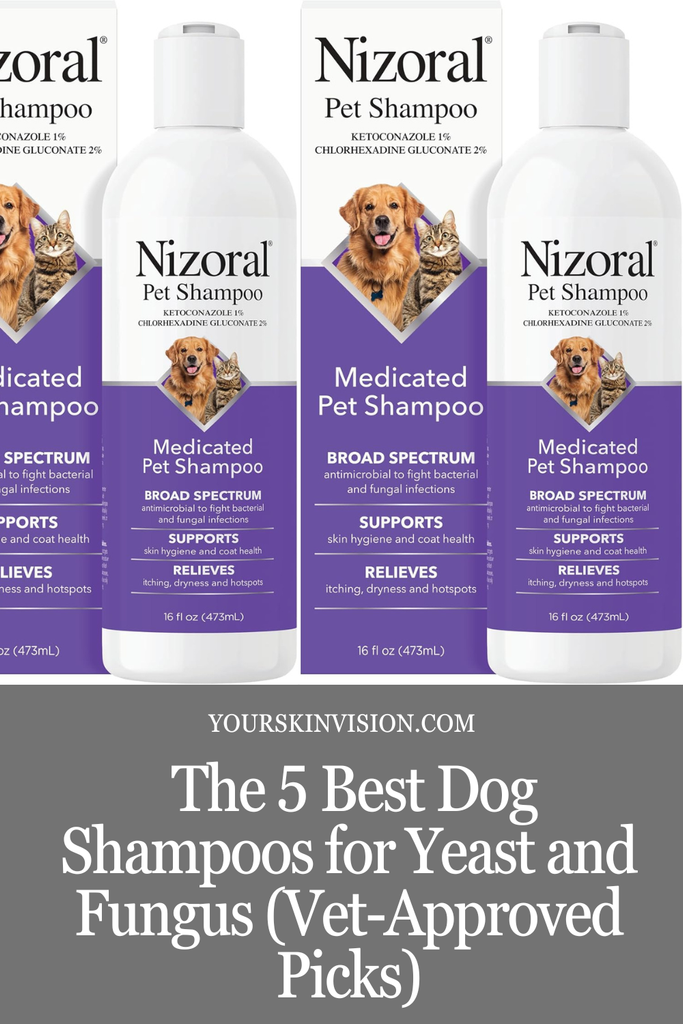
Table of Contents
Why Do Dogs Get Yeast and Fungal Skin Infections?
Yeast and fungus live on healthy dog skin in small, harmless amounts. Problems start when something throws off that balance. Allergies are the most common trigger, because they weaken the skin barrier and give yeast an opening to multiply. Humid weather does the same thing, especially for dogs with skin folds, floppy ears, or thick double coats that trap moisture.
Some breeds get hit harder than others. Cocker Spaniels, Basset Hounds, West Highland White Terriers, and Shih Tzus all appear on the “high risk” list due to their skin structure or ear shape. However, any dog can develop a yeast or fungal problem after swimming, a course of antibiotics, or even a stretch of rainy days spent outside.
The telltale signs include a sour, yeasty smell, greasy or flaky skin, redness between the toes, and hair loss in circular patches if ringworm is involved. Once you spot these symptoms, a targeted shampoo becomes part of the fix, not the whole fix.
What Should You Look for in an Antifungal Dog Shampoo?
Ingredients matter more than marketing claims here. Chlorhexidine and ketoconazole are the two workhorses in most vet-recommended formulas, and miconazole shows up frequently too. Each one attacks fungal cell walls in a slightly different way, so products that combine two of them tend to work faster than single-ingredient shampoos.
Dr. Sara Ochoa, a veterinarian who consults for Hound Games, keeps her advice simple: “For ringworm, go with chlorhexidine combined with an antifungal.” That combination shows up in four of the five products below, and it’s not a coincidence. Vets reach for it because the research backs it up.
Beyond the active ingredients, check for a soap-free, pH-balanced base. Dogs have thinner, more sensitive skin than humans, and harsh detergents can undo the good the medication is doing. A shampoo that lathers gently and rinses clean without stripping natural oils will hold up better over a multi-week treatment plan.
How Should You Use a Medicated Shampoo for Best Results?
Contact time makes or breaks these products. Most antifungal shampoos need five to ten minutes sitting on the skin before you rinse, not a quick lather-and-go like a regular bath. Set a timer if you tend to lose track, because rinsing too early is the single biggest reason these shampoos “don’t work” for some owners.
Frequency depends on severity. Mild cases often respond to twice-weekly baths for two to four weeks, then tapering to weekly maintenance. Dr. Gavin Casper, Managing Veterinarian of General Practice at Hometown Animal Hospital, points out that a proper diagnosis should always come first, since treating the wrong type of infection wastes time and money.
Skip the guesswork and get a skin scraping or cytology done before committing to a long treatment course. Also, resist the urge to bathe more than the label recommends. Over-washing can dry out skin and trigger a rebound flare, which defeats the entire purpose of the treatment.
What Are the Best Dog Shampoos for Yeast and Fungus (Vet-Approved Picks)
Here’s the lineup, starting with the shampoo that earns the most consistent praise from both owners and veterinary dermatologists.

1. Douxo S3 PYO Shampoo — Best Overall
Douxo S3 PYO tops this list because it’s one of the few over-the-counter shampoos with clinical studies behind it, not just anecdotal buzz. It’s built around 3% chlorhexidine, which targets both the bacteria and yeast that commonly team up during a skin flare. The formula also includes Ophytrium, an ingredient designed to protect and repair the skin barrier while the antimicrobial does its work.
Owners like that it doesn’t smell medicinal and rinses out without leaving a filmy residue behind. It’s on the pricier end for a 6.7 fl oz bottle, but a little goes a long way since the foam expands as you work it in.
Denise, a Golden Retriever owner in Georgia, first tried it after her dog kept licking his paws raw every summer. “Two weeks in and the smell was already gone,” she said. “His coat looks shinier too, which I wasn’t expecting.” Marcus, who has a Beagle mix in Ohio, appreciated how gentle it felt. He mentioned his dog usually hates bath time but tolerated this one without the usual struggle, and the redness between the toes cleared up within ten days.

2. Nizoral Ketoconazole Pet Shampoo — Best for Stubborn Yeast
Nizoral pairs 1% ketoconazole with 2% chlorhexidine gluconate, making it one of the stronger combinations on the market for pets with recurring or hard-to-shake yeast overgrowth. Ketoconazole specifically disrupts the cell membrane of yeast organisms, which is why vets often reach for it when a milder shampoo hasn’t done the job.
Because it’s more potent, some dogs with very sensitive skin may need it diluted or used less often. Most owners find it works within one to two weeks on typical yeast dermatitis, and the 16 oz bottle lasts through a full treatment cycle for a medium-sized dog.
Tasha in North Carolina used it on her Bulldog after a vet visit confirmed a yeast infection on his belly and neck folds. “It actually smelled like it was working, if that makes sense,” she said, referring to the medicinal scent fading as the infection cleared.
Rob, a Pit Bull owner in Arizona, noted that his dog’s constant chewing at his paws stopped almost completely by the third bath, though he did dilute it slightly per his vet’s suggestion.

3. Pet MD Micoseb-CX Anti-Fungal Medicated Shampoo — Best for Ringworm and Hot Spots
This one earns its spot for versatility. Pet MD Micoseb-CX combines miconazole nitrate and chlorhexidine gluconate, a pairing that handles ringworm, yeast overgrowth, hot spots, and even minor bacterial skin issues in one bottle. It’s also labeled safe for puppies, which not every medicated shampoo can claim.
The lather is light rather than luxurious, so some owners add a bit of water to stretch it further across a larger dog. It rinses clean and doesn’t leave a heavy fragrance behind, which matters if your dog already associates strong smells with a trip to the vet.
Angela, who has a rescue mutt in Tennessee, used it to treat a ringworm patch her dog picked up at daycare. “The bald spot started filling back in around week three,” she said. Kevin, a Boxer owner in Michigan, liked that it worked on his dog’s hot spots and paw yeast at the same time, saving him from buying two separate products.

4. PetHonesty Chlorhexidine Antibacterial Cleansing Shampoo — Best for Sensitive Skin
PetHonesty blends chlorhexidine, ketoconazole, and aloe vera, aiming for a formula that treats infection without irritating already-inflamed skin. The aloe adds a soothing element that owners of itchy, sensitive-skinned dogs tend to notice right away. It carries a light cucumber melon scent, a departure from the clinical smell of most medicated shampoos.
It won’t out-muscle Nizoral on severe cases, but for mild to moderate yeast issues, or as a maintenance shampoo after a stronger treatment clears the infection, it holds its own. The brand is veteran-owned and donates a portion of profits to shelters, a detail some shoppers factor into their decision.
Priya, who has a Shih Tzu in California, said her dog’s paw-licking habit calmed down noticeably after a few uses. “He stopped waking us up at 3 a.m. gnawing on his feet,” she said. Jerry, an Australian Shepherd owner in Colorado, mentioned the scent was a relief compared to the harsher medicated shampoos he’d tried before, and his dog’s skin looked less flaky within two weeks.

5. Veterinary Formula Clinical Care Antiseptic & Antifungal Shampoo — Best Budget Pick
For owners managing a mild case or trying to stay ahead of recurring flare-ups without spending a fortune, Veterinary Formula Clinical Care delivers solid results at a lower price point than the other four picks. It’s paraben-free, dye-free, and soap-free, and it starts calming redness within five to ten minutes of contact, according to the brand’s own testing.
It won’t replace a prescription-strength shampoo for a severe, established infection, but as a preventive option for dogs prone to yeast buildup, especially ones who swim often or live in humid climates, it earns its place in a rotation.
Wendy, who owns a Labrador in Florida, uses it monthly as prevention since her dog is in the water constantly. “It keeps the paw smell from ever really starting,” she said. Dave, a Beagle owner in Kentucky, switched to it after his dog’s infection cleared with a stronger shampoo, using it now just to maintain results without overdoing the medicated stuff.
When Should You Call the Vet Instead of Reaching for Shampoo?
Shampoo handles a lot, but not everything. Dr. Melissa Shelton, an integrative veterinarian who has formulated antifungal treatments based on her own clinical practice, points to essential-oil and topical approaches as useful support tools, but she’s also clear that they work best alongside, not instead of, a proper diagnosis.
If your dog’s skin doesn’t improve after two to three weeks of consistent bathing, or if you notice spreading redness, open sores, or a fever, that’s your cue to book an appointment rather than trying a stronger shampoo on your own.
Oral antifungal medication sometimes becomes necessary for deep or systemic infections that topical treatment alone can’t reach. A vet can run a simple skin scraping or cytology to confirm exactly what you’re dealing with, which saves you from guessing your way through months of the wrong product.
Final Thoughts
Yeast and fungal skin problems are frustrating, but they’re also one of the more fixable issues a dog owner will deal with. The right shampoo, used consistently and left on long enough to work, clears up most mild to moderate cases within a few weeks.
Douxo S3 PYO stands out as the strongest all-around choice, Nizoral steps in for tougher cases, and Veterinary Formula Clinical Care works well for budget-conscious prevention. Whichever one you pick, give it the full contact time the label recommends, and loop in your vet if things aren’t improving. Your dog’s skin and your nose will thank you.
