
There’s something almost funny about how a simple jar of coconut oil ended up sitting next to dog shampoo in so many homes. It didn’t arrive with big marketing promises for pets. It just quietly proved itself. A little dab here, a gentle massage there, and suddenly dry patches look calmer, scratching reduces, and coats start reflecting light again.
Veterinarians didn’t jump on it because it was trendy. They kept recommending it because it’s one of the few natural oils that actually make sense biologically for the dogs’ skin barrier. Still, not every coconut oil deserves to touch your dog’s skin. Refining methods, purity levels, and even storage practices change how effective (or irritating) it can be.
Dr. Karen Becker explains it like this: “Coconut oil can support skin healing, but only when it is raw, organic, and free of chemical processing.”
Dr. Marty Goldstein adds: “Dogs respond best to natural fats that resemble what their bodies already recognize.”
And Dr. Jennifer Coates keeps it grounded: “Coconut oil helps many dogs, but dosage and observation matter more than enthusiasm.” Below are the five best coconut oils for dogs’ skin you’ll actually find on Amazon, ranked carefully, reviewed deeply, and broken down in a way that reflects real pet-owner experiences.
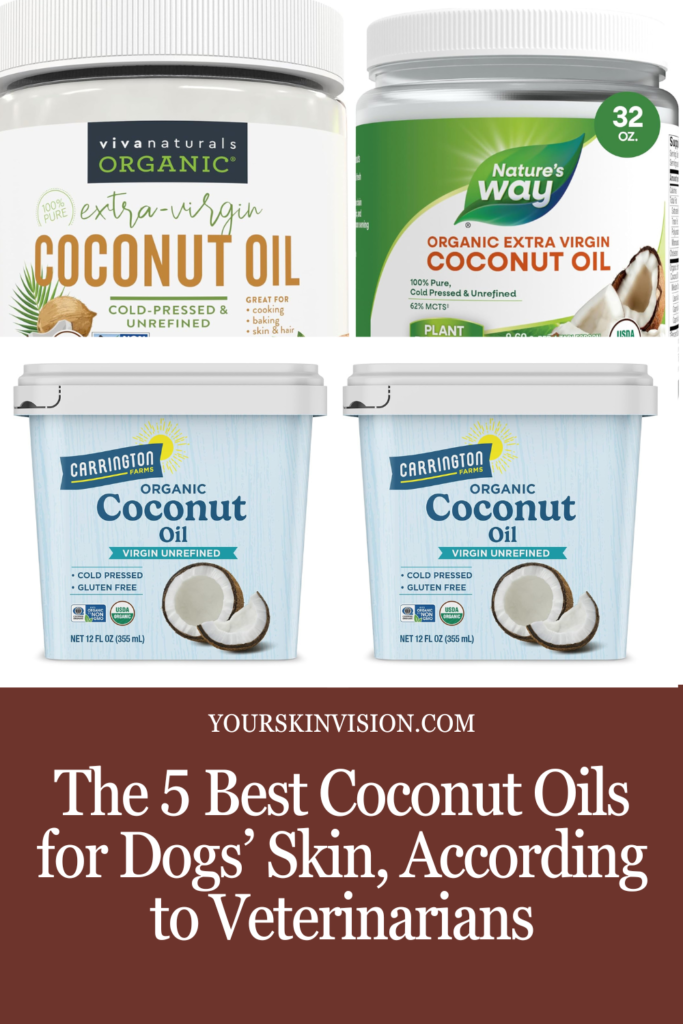
Table of Contents
What Makes a Coconut Oil Actually Good for Dogs’ Skin? (And What Most People Miss)
Before jumping into products, it helps to understand what separates a “safe” coconut oil from one that actually improves skin health.
Dogs don’t just need moisture; they need barrier repair. Their skin loses hydration faster than human skin, especially in dry climates, after bathing, or with aging. Coconut oil works because it brings lauric acid, capric acid, and healthy fats that mimic natural skin lipids. But here’s where people often go wrong:
1. Refining vs. unrefined matters more than price
Refined oils often lose antioxidants during processing. That means less skin support and more chance of irritation.
2. Texture affects absorption
Thicker oils sit on top of fur instead of sinking into the skin. That can lead to greasiness and matting in long-haired dogs.
3. Freshness is everything
Rancid or old coconut oil can irritate sensitive skin instead of calming it. Veterinarians repeatedly emphasize moderation here. Dr. Karen Becker notes: “Even a great product becomes less effective when overused on the skin.”
What Are The Best Coconut Oils for Dogs’ Skin (Amazon Picks That Actually Work)

1. Viva Naturals Organic Extra Virgin Coconut Oil (Overall Best for Skin Healing & Coat Repair)
If coconut oil had a “safe default setting” for dogs, this would be it. Viva Naturals stays consistent in purity, smell, and absorption, which matters more than people think when you’re using it on animals with sensitive skin.
It comes cold-pressed and unrefined, which keeps the fatty acids intact. When you rub it between your fingers, it melts fast without turning watery. On dogs, that translates to quick absorption instead of greasy buildup.
What makes it really stand out is how balanced it feels. It’s strong enough to help dry, flaky skin but gentle enough for regular maintenance.
Why do dog owners keep choosing it
- Organic, unrefined extraction
- Smooth texture that doesn’t clump fur
- Works for both skin spots and full coat conditioning
- No artificial scent or additives
Deep real-life experiences
- Jessica (Texas, USA): “My beagle had stubborn dry patches around her back legs. I tried this after baths, and within a week, the flaking reduced a lot. She stopped scratching at night, too, which honestly surprised me.”
- Michael (California, USA): “I use a tiny bit after grooming my husky. His coat used to feel rough; now it actually feels softer without looking oily.”
Vet-backed note
Dr. Marty Goldstein says, “The less processed the oil, the more the body recognizes and uses it effectively.” This is exactly why Viva Naturals consistently ranks at the top; it behaves predictably on skin.

2. Nutiva Organic Virgin Coconut Oil (Best for Persistent Dryness & Seasonal Itching)
Nutiva feels slightly richer than the top pick, and that thickness actually helps dogs with more stubborn dryness. It’s especially helpful for dogs that experience seasonal skin changes or environmental irritation. The oil spreads slowly but evenly, which gives you more control when applying it to specific areas like elbows, paws, or behind the ears.
What sets it apart
- Strong organic sourcing standards
- Slightly thicker consistency for deeper hydration
- Works well for localized skin issues
- Good for dogs with recurring dryness
Real experiences from pet owners
- Amanda (Florida, USA): “My boxer gets really itchy during summer humidity swings. This helped calm his skin without me needing medicated sprays.”
- Brian (New York, USA): “I mostly use it on my dog’s paws. After walks, I rub a little in, and cracking stopped completely.”
Vet insight
Dr. Jennifer Coates explains: “Thicker oils can provide longer-lasting moisture on areas exposed to friction.” Nutiva works best when you want deeper, longer-lasting hydration rather than a quick cosmetic coat shine.

3. Nature’s Way Organic Virgin Coconut Oil (Best Budget-Friendly Everyday Skin Support)
This is the “no drama” option. It doesn’t try to feel luxurious; it just works steadily for everyday dog skin care. It’s slightly lighter than premium oils, which makes it ideal for regular maintenance rather than intense repair work. If your dog’s skin issues are mild, this is a practical long-term option.
Why does it earn its place?
- Affordable without sacrificing safety
- USDA-certified organic
- Light enough for frequent use
- Good for general coat maintenance
Real user experiences
- Samantha (Ohio, USA): “I use this after baths on my lab. It keeps her coat shiny without making it greasy.”
- Eric (Georgia, USA): “It didn’t fix severe dryness, but for daily upkeep, it’s perfect.”
Nature’s Way works best when you’re maintaining already healthy skin rather than fixing a major issue.

4. Carrington Farms Organic Virgin Coconut Oil (Best for Sensitive Skin Dogs)
Some dogs react easily to products, even natural ones. Carrington Farms tends to be a safer middle ground for those situations because it feels lighter and absorbs quickly. It spreads easily, doesn’t sit heavily on fur, and has a mild natural scent that doesn’t overwhelm sensitive noses.
Key advantages
- Lightweight texture
- Gentle on reactive skin
- Fast absorption
- Good for frequent, small applications
Real experiences
- Olivia (Washington, USA): “My terrier usually reacts to oils, but this one didn’t cause any redness. It actually calmed his skin.”
- Jason (Arizona, USA): “I use it on small dry patches instead of a full coat. Works fast and doesn’t leave residue.” This one is especially useful if your dog has a history of sensitivity or allergic reactions.

5. Garden of Life Organic Extra Virgin Coconut Oil (Best for Targeted Skin Healing Spots)
This is the heavier, more concentrated option in the lineup. It’s not meant for full-body coating. Instead, it works best for focused treatment of nose dryness, cracked paws, elbows, or small irritated spots. It has a thicker consistency, which helps it stay in place longer instead of absorbing too quickly.
What makes it useful
- High purity sourcing
- Thick consistency for targeted use
- Strong moisturizing effect
- Best for problem spots
Real experiences
- Rachel (Illinois, USA): “I used it on my dog’s dry nose, and within days it looked normal again.”
- Kevin (Colorado, USA): “It’s a bit thick, but that actually helped with my dog’s rough elbow patches.” This one performs best when you use it like a treatment, not a daily lotion.
Final Thoughts
Coconut oil isn’t a miracle cure, but it’s one of the simplest tools that actually supports dog skin health when used correctly. Dr. Karen Becker reminds pet owners: “Consistency and moderation matter more than quantity.”
Dr. Marty Goldstein adds: “Natural care works best when it supports, not overwhelms, the body.” And Dr. Jennifer Coates keeps it practical: “Watch your dog’s reaction and adjust use accordingly.” If you choose the right product and apply it thoughtfully, coconut oil can genuinely improve comfort, softness, and skin balance over time.
Other Related Articles
- Is Coconut Oil Safe for Cats? What Every Owner Must Know
- Mind-Blowing Nutrition Facts About Coconut Oil
- The 5 Best Antifungal Wipes for Dogs with Pyoderma, According to Veterinarians
- What Happens If You Use Too Much Coconut Oil? The Truth Most People Ignore
- The 6 Best Antifungal Sprays for Dogs, According to Veterinary Doctors
- Coconut Oil On Skin:8 Benefits, And How To Use
