
Acne marks are the part of acne that nobody talks about enough. The breakout clears. The inflammation calms. And then the evidence stays: dark spots, red patches, and sometimes shallow depressions that sit on the skin for months or years after the original blemish has gone.
Most people assume this is just how acne works and that waiting is the only option. Dermatologists know better. Acne marks fall into distinct categories with different causes and different treatment pathways, and confusing them leads to months of treating the wrong concern with the wrong ingredients.
Post-inflammatory hyperpigmentation, post-inflammatory erythema, and atrophic scarring each respond to specific treatments, and choosing the right one determines how quickly the skin clears. This article covers the best facial treatments for acne marks that dermatologists specifically recommend, all available on Amazon, with honest experiences from people who’ve seen real results.
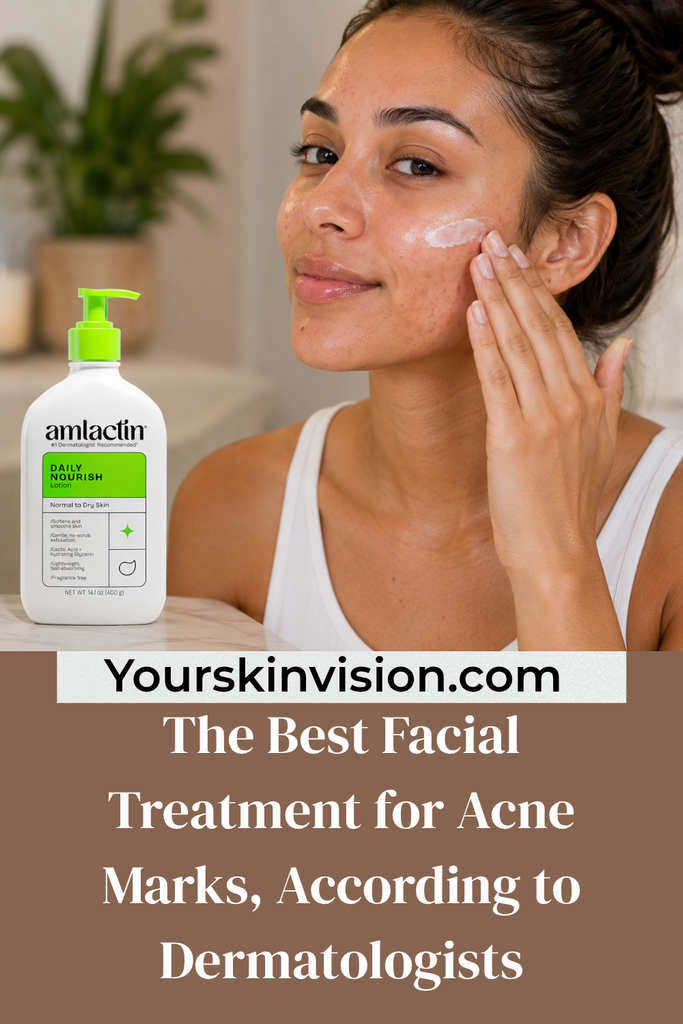
Table of Contents
What Do Dermatologists Say About the Different Types of Acne Marks?
Before recommending a treatment, dermatologists distinguish between three distinct post-acne mark types, because the treatment for one doesn’t necessarily work for another, and many people waste months applying the wrong product to the wrong concern.
Board-certified dermatologist Dr. Corey L. Hartman, founder of Skin Wellness Dermatology in Birmingham, Alabama, and a widely cited expert in Men’s Health, Allure, and Essence, explains this distinction clearly to every acne patient whose breakouts have left lasting marks. Getting the diagnosis right before the treatment starts saves significant time and frustration.
- Post-inflammatory hyperpigmentation (PIH): flat dark spots that remain after inflammatory acne heals. PIH occurs when the skin produces excess melanin in response to the inflammation of a blemish. It appears as tan, brown, or dark brown spots depending on the person’s skin tone. PIH is not true scarring; the skin’s structure is intact, which means it responds to topical brightening treatments. However, UV exposure darkens PIH dramatically and slows its fading, making daily SPF the single most impactful PIH management step.
- Post-inflammatory erythema (PIE): flat pink or red marks that remain after acne in fair to medium skin tones. PIE results from damaged capillaries left behind after inflammatory acne, not from excess melanin. It responds to vascular-targeting treatments and anti-inflammatory ingredients rather than the brightening agents used for PIH. Many people apply niacinamide or vitamin C to red marks; both help, but vascular-targeted treatment accelerates clearance.
- Atrophic scarring: depressed areas in the skin surface where the collagen network was damaged during significant inflammatory acne. Includes ice-pick scars (deep, narrow), boxcar scars (wider, defined edges), and rolling scars (wavelike surface depression). Atrophic scars involve structural skin damage that collagen-stimulating topical treatments can partially address but typically require in-office procedures for significant improvement.
The formulation qualities dermatologists recommend for acne marks depend on the type:
- For PIH: Niacinamide (inhibits melanin transfer), tranexamic acid (reduces melanin synthesis), azelaic acid (tyrosinase inhibition), vitamin C (antioxidant brightening), AHA exfoliation (surface cell removal), retinoids (cell turnover acceleration)
- For PIE: Niacinamide (anti-inflammatory, vascular support), azelaic acid, centella asiatica (anti-inflammatory), retinoids (collagen support for vascular repair), green tea extract
- For atrophic scarring: Retinoids (collagen stimulation), peptides (fibroblast signaling), vitamin C (collagen synthesis support), AHA exfoliation (surface smoothing)
Here are 5 Facial Treatments Dermatologists Rank as the Overall Best for Acne Marks.

1. Overall Best: Paula’s Choice RESIST 10% Niacinamide Booster
Paula’s Choice 10% Niacinamide Booster earns the top dermatologist recommendation for acne marks because it addresses both PIH and PIE simultaneously through complementary mechanisms, making it the most versatile single product for the mixed post-acne mark presentation that most people actually deal with.
Niacinamide inhibits the transfer of melanosomes, the melanin-containing organelles, from melanocytes to surrounding keratinocytes. This transfer inhibition directly reduces the pigment delivery that creates PIH surface spots without bleaching the skin or disrupting normal melanin production.
Clinical studies published in the International Journal of Cosmetic Science confirm that 5% niacinamide produces significant lightening of hyperpigmented spots within four weeks of twice-daily use. The 10% concentration in this formula delivers a clinical dose that produces results faster than lower concentrations.
For PIE, niacinamide’s anti-inflammatory properties reduce the vascular inflammation that keeps post-acne red marks visible, calming the dilated capillary response that creates the persistent pink and red discoloration.
Dermatologists also point to niacinamide’s barrier-strengthening effect as meaningful for post-acne skin, whose compromised barrier makes it reactive to the brightening ingredients needed to treat the marks.
User Comments:
“My skin left dark marks after every breakout, and they stayed for months. My dermatologist told me the marks were PIH, excess melanin from the inflammation, and that niacinamide was the most important active for inhibiting the melanin transfer that created them. She recommended Paula’s Choice 10% Niacinamide Booster for the clinical concentration. After eight weeks of twice-daily use, my marks are fading faster than they ever have before. The spots that typically took six months to clear are significantly lighter at two months. My skin looks more even than it has in years.”
“I have combination PIH and PIE, both dark spots and red marks from my acne. My dermatologist said niacinamide was the one ingredient that addressed both simultaneously, which is why she recommended starting there rather than with a brightening serum. Paula’s Choice 10% Niacinamide has reduced both my dark spots and my red marks over three months of consistent twice-daily use. My skin tone is more even overall, and my new marks fade faster than my old ones did before I started this. The clinical concentration makes a real difference compared to lower-percentage products I’d tried.”

2: The Ordinary Alpha Arbutin 2% + HA
The Ordinary Alpha Arbutin 2% + HA earns strong dermatologist recommendations for PIH specifically because alpha arbutin is one of the most effective and tolerable tyrosinase inhibitors available over the counter. Tyrosinase is the enzyme that catalyzes melanin production; alpha arbutin inhibits it directly at the source, reducing melanin synthesis before the pigment can reach the skin surface and darken into a visible mark.
Dermatologists recommend alpha arbutin for PIH specifically because it works earlier in the pigmentation cascade than niacinamide, inhibiting production rather than transfer. Using both together creates a two-step interruption of the PIH process: alpha arbutin reduces how much melanin the melanocytes produce, while niacinamide reduces how much of that melanin reaches the surface skin cells. This complementary approach produces faster and more complete PIH fading than either ingredient alone.
The hyaluronic acid in this formula maintains skin hydration during brightening treatment, important for post-acne skin whose compromised barrier needs support during any active treatment course. The formula is fragrance-free and suitable for daily use on sensitive, reactive post-acne skin.
User Comments:
“My deep skin tone means my PIH marks are very dark and take a long time to fade. My dermatologist said I needed a tyrosinase inhibitor to address melanin production at the source and recommended The Ordinary Alpha Arbutin specifically because it was effective without the irritation risk of hydroquinone. After six weeks of daily morning use alongside my niacinamide serum, my marks are fading noticeably faster than they ever have. The spots that used to take eight months to clear look significantly lighter at two months.”
“I have a medium-deep skin tone, and my post-acne marks were my biggest skin concern; they lasted so much longer than the breakouts themselves. My dermatologist recommended The Ordinary Alpha Arbutin for the direct tyrosinase inhibition and said to use it alongside my niacinamide for the two-step pigmentation interruption approach. Three months of consistent daily use has produced more PIH fading than a year of basic brightening products I’d tried previously. My skin tone is more even than it’s been since my acne started years ago.”

3: Differin Adapalene Gel 0.1%
Differin adapalene earns its position as an acne marks treatment because it addresses the concern at the most comprehensive biological level, normalizing the cell turnover that both clears existing marks and prevents new marks from forming after future breakouts.
Dermatologists recommend adapalene for acne marks because its retinoid mechanism accelerates the natural shedding of pigmented and damaged skin cells while simultaneously stimulating the collagen production that partially addresses atrophic scarring.
Dermatologists point to the cell turnover acceleration as what makes adapalene particularly effective for PIH; pigmented cells that would naturally take six to twelve months to shed do so in a fraction of that time with consistent retinoid use, bringing the clearer cells below to the surface more quickly.
For atrophic acne scarring, the collagen stimulation adapalene produces gradually increases the skin’s structural density in scar areas, reducing the visible depth of shallow scars over twelve or more weeks of use.
Introducing adapalene specifically as an acne marks treatment requires the same gradual introduction as using it for active acne, with an every-other-night starting dose built to nightly over three to four weeks, with a ceramide moisturizer applied afterward to support barrier function through the cell turnover increase.
User Comments:
“My acne left both PIH marks and some shallow atrophic scarring. My dermatologist said adapalene was the right treatment for both because the cell turnover acceleration cleared the pigmented marks faster and the collagen stimulation addressed the scarring structurally. After twelve weeks of nightly adapalene use, my PIH marks have largely cleared, and my shallow scars look less pronounced. The combination of faster cell turnover and collagen support was exactly what my post-acne skin needed.”
“My PIH marks were taking up to a year to fade on their own, which felt hopeless when new breakouts kept creating new ones. My dermatologist said adapalene was the most impactful change I could make; it would accelerate the clearing of existing marks while preventing future breakouts from forming in the first place. After ten weeks of consistent nightly use, my marks are fading in half the time they used to. The prevention benefit has also meant fewer new marks appearing, which has finally broken the cycle I’d been in.”

4: TruSkin Vitamin C Serum
TruSkin Vitamin C Serum earns dermatologist recommendations for acne marks through vitamin C’s dual mechanism for PIH: antioxidant neutralization of the free radicals that trigger excess melanin production during inflammation, and direct tyrosinase inhibition that reduces melanin synthesis.
Dermatologists recommend vitamin C as a morning serum specifically because it provides antioxidant protection against UV-triggered darkening of existing PIH marks during the day, addressing the UV component that dermatologists identify as the primary reason dark marks take so long to fade.
UV exposure significantly worsens PIH by stimulating additional melanin production in already-overactive pigment-producing cells. A morning vitamin C serum provides antioxidant defense that reduces this UV-triggered darkening, allowing marks to fade at the rate topical brightening treatment achieves rather than being continuously re-darkened by daytime UV exposure.
The ferulic acid and vitamin E in this formula stabilize and amplify the vitamin C’s efficacy, increasing its antioxidant and brightening potency significantly compared to vitamin C alone. Dermatologists recommend applying it in the morning before SPF for maximum photoprotective and brightening benefit.
User Comments:
“My PIH marks were re-darkening through the day despite my evening brightening treatments. My dermatologist explained that UV exposure was counteracting my treatment progress by stimulating new melanin in my already-reactive spots. She recommended TruSkin Vitamin C Serum every morning before SPF for the antioxidant protection against UV darkening. After adding it to my morning routine, my marks have started fading consistently rather than lightening at night and darkening back through the day. The difference in my fading rate since protecting against daytime UV darkening has been significant.”
“I was applying brightening treatments at night and wearing SPF during the day, but my marks weren’t fading the way my dermatologist expected. She said I needed antioxidant protection under my SPF to prevent the UV darkening that was offsetting my evening treatment. TruSkin Vitamin C was her recommendation for the correctly formulated L-ascorbic acid with ferulic acid and vitamin E. After two months of consistent morning use, my fading rate has genuinely accelerated. My marks are lighter at eight weeks than they were at four months before I added the vitamin C step.”

5: Amlactin Daily Nourish Body and Face Lotion with 12% Lactic Acid
AmLactin’s 12% Lactic Acid lotion earns dermatologist recommendations for acne marks through regular AHA exfoliation that accelerates the surface removal of pigmented cells, physically clearing the marks from the outside by bringing fresh, unpigmented cells to the surface faster than the skin’s natural turnover rate achieves on its own.
Dermatologists recommend lactic acid specifically for post-acne marks because its larger molecular size than glycolic acid makes it slightly gentler on the compromised, reactive skin that active-acne or recently healed skin often presents. The 12% concentration delivers meaningful exfoliation without the aggressive stripping that very high glycolic acid concentrations can cause on post-inflammatory skin.
Used two to three evenings per week as a leave-on treatment rather than a rinse-off mask, lactic acid provides cumulative surface exfoliation that enhances the effectiveness of every other brightening product in the routine. Dermatologists recommend alternating lactic acid evenings with adapalene or retinol evenings rather than using them on the same night.
User Comments:
“My acne marks were layered, dark spots on an uneven skin texture that made everything look worse than individual spots alone. My dermatologist added lactic acid to my routine specifically for the surface exfoliation that would remove the textured layer of post-acne skin and bring cleaner, more even skin to the surface. AmLactin 12% applied two evenings per week alongside my other treatments has produced noticeable texture improvement within four weeks. My marks look clearer partly because the uneven surface around them has smoothed, making the remaining spots less prominent.”
“My dermatologist described regular AHA exfoliation as ‘revealing the work’ of my other brightening treatments; the retinol and niacinamide were fading marks from below while the lactic acid removed the surface cells to expose the progress more quickly. She recommended AmLactin 12% as an accessible, well-formulated AHA option. Alternating it with my adapalene three nights per week has accelerated my mark fading noticeably. My marks are clearing in roughly half the time they did before I added the AHA exfoliation step.”
How Should You Build a Complete Acne Mark Treatment Routine?
A targeted, systematic approach produces significantly faster acne mark clearance than applying individual products sporadically. Dermatologists build post-acne mark routines around the complementary mechanisms of multiple ingredients working simultaneously rather than sequentially.
- Morning routine for acne marks: Cleanse gently. Apply vitamin C serum and allow two minutes for absorption. Apply niacinamide serum. Follow with a non-comedogenic moisturizer. Apply broad-spectrum mineral SPF 30 or higher, non-negotiable for anyone treating PIH. Every morning without SPF re-darkens marks that brightening treatments cleared the previous night. Dermatologists consistently identify SPF as the most impactful single step in PIH management, more impactful than any brightening treatment used without it.
- Evening routine for acne marks: Cleanse thoroughly. Apply alpha arbutin serum and allow two minutes. Apply niacinamide serum. On adapalene nights (three to four nights per week for established users), apply Differin adapalene as a thin layer; it stimulates cell turnover that carries brightening treatment benefits to the surface faster. On lactic acid nights (two to three nights per week), apply AmLactin and skip adapalene; don’t use both exfoliants on the same evening. Always follow with a ceramide moisturizer.
- Track marks with photos under consistent lighting. Acne mark fading is gradual enough that day-to-day comparison rarely shows visible change. Monthly photos taken in the same lighting conditions reveal the cumulative improvement that feels invisible week to week. Dermatologists recommend this for all mark-treatment patients because it prevents premature routine abandonment when progress is actually happening but not visually apparent in daily skin checks.
- Expect twelve to sixteen weeks of consistent treatment. Dermatologists set realistic timelines for patients: fresh PIH from a recent breakout typically fades in six to twelve weeks with an active treatment routine. Older marks, those present for six months or more, may take sixteen or more weeks of consistent treatment to clear significantly. Atrophic scarring responds more slowly still. Consistency over this timeline produces results. Cycling through products every few weeks because progress feels slow ensures you never give any product enough time to work.
Conclusion
Acne marks respond to treatment, but only when the right treatment targets the right type of mark consistently enough and long enough for the biological process of pigment clearance, vascular repair, or collagen remodeling to complete.
Dermatologists achieve the best patient outcomes for acne marks by identifying which type of mark they’re dealing with and building a multi-ingredient routine that addresses that type through multiple complementary mechanisms.
Paula’s Choice 10% Niacinamide Booster earns the overall top recommendation for acne marks because it addresses both the most common mark types, PIH and PIE, through two validated mechanisms in a single fragrance-free, well-tolerated serum that suits the reactive, post-inflammatory skin that acne leaves behind.
Identify your mark type first. Apply vitamin C and SPF every morning without exception. Layer niacinamide and alpha arbutin in the evening. Add adapalene for cell turnover acceleration. Exfoliate with lactic acid two to three nights per week.
Give the routine sixteen consistent weeks. That complete approach, built from the evidence-backed ingredients dermatologists recommend for post-acne marks, produces the genuine clearing that waiting alone never does.
Other Related Articles
- The 5 Best Clean Skincare Brands for Acne, According to Dermatologists.
- The Best Back Acne Treatment, According to Dermatologists
- The Best Facial Treatment for Clogged Pores, According to Dermatologists
- The 5 Best Facial Treatments for Bumps, According to Dermatologists
- 5 Best Facial Cleansers for Dark Spots, According to Dermatologists
- The 6 Best Facial Cleansers for Blackhead Removal, According to Dermatologists
