
If your cheeks flush in the wind, sting after a new moisturizer, or turn pink at the mention of exfoliating, you probably crossed retinol off your list years ago. Plenty of people with sensitive skin do the same.
Dermatologists wish they wouldn’t. Sensitive skin ages, breaks out, and develops dark spots just like any other skin type, and retinol helps with all three. The trick lies in choosing a cushioning formula and easing in slowly.
The best retinol creams for sensitive skin skip fragrance, add moisture, and soften the retinol’s edge. This article covers four of them, all available on Amazon, plus the step-by-step method that helps reactive skin say yes to retinol.
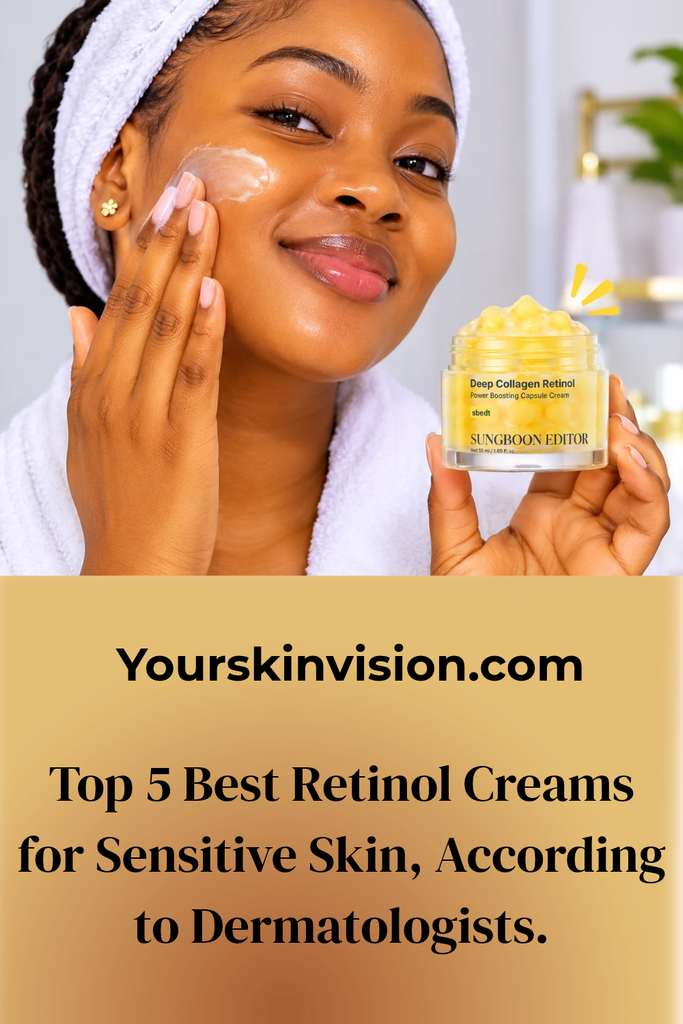
Table of Contents
Why Does Sensitive Skin React to Retinol, and Can You Still Use It?
Retinol speeds up cell turnover. That process pushes fresh cells to the surface, but it also temporarily loosens the skin barrier. Healthy skin bounces back fast. Sensitive skin often starts with a weaker barrier, so it reacts with redness, stinging, dryness, and flaking.
The good news is that most people with sensitive skin can still use retinol. The American Academy of Dermatology notes that retinoids work well for many skin concerns, and it recommends easing in and moisturizing. Dermatologists follow a few rules for reactive skin:
- Pick a fragrance-free formula. Fragrance triggers redness and flare-ups more often than any other cosmetic ingredient.
- Choose a cushioning cream. A thick, moisturizing base protects the barrier while retinol works.
- Look for supportive ingredients. Niacinamide, hyaluronic acid, and peptides help skin hydrate and recover.
- Start low and go slow. One night per week beats a rushed schedule that ends in a flare-up.
- Match the formula to your skin. Encapsulated or slow-release retinol lowers the shock for reactive skin.
Also, skip retinol and talk to your doctor first if you are pregnant, trying to conceive, or nursing. If you have rosacea, eczema, or perioral dermatitis, ask your dermatologist before you start.
5 Retinol Cream Tested by Dermatologists for Sensitive Skin.

1. Overall Best: Olay Regenerist Retinol 24 + Peptide Night Face Moisturizer
Olay earns the top spot because it removes the most common triggers while still delivering results. The fragrance-free formula eliminates a major cause of redness and flare-ups in mature, sensitive skin.
It then pairs a gentle retinoid complex with collagen peptides and vitamin B3, also known as niacinamide. Niacinamide helps strengthen the barrier and calm redness, while the peptides plump the skin and the retinoid handles fine lines.
The texture helps too. This night cream feels like a normal moisturizer, so it hydrates deeply as it works. Many people with reactive skin find that cushioning makes the difference between quitting retinol and sticking with it.
Apply a pea-sized amount to clean, dry skin at night. Start with one night per week, then add a night every two weeks as your skin adjusts. Many people notice smoother texture by week eight and softer lines by week twelve.
User Comments:
“I wanted retinol that felt like a regular night cream. This one is thick but not greasy, and it never stung. I started with one night a week. After about four months, my skin looks brighter and feels plumper.”
“My skin turns red easily, so I went slowly with two nights a week. I never had peeling. My fine lines look softer after three months, and my face feels comfortable in the morning.”

2: LilyAna Naturals Retinol Cream for Face
LilyAna Naturals designed this as a thicker, deeply nourishing cream that cushions skin against the dryness retinol often causes. It includes hyaluronic acid to pull in moisture, and the brand positions it as a gentle, collagen-supporting formula for daily use on sensitive skin.
The rich texture suits people whose skin feels tight or flaky with most retinols. It also costs less than many alternatives, which makes it a low-risk way to try retinol. Keep in mind that gentler formulas usually give milder results than stronger ones. If your skin tolerates this cream well after a few months, you can step up to something more potent.
User Comments:
“I’d never used retinol, and I was nervous. This cream is thick and soothing, and it didn’t irritate my dry skin. After about three months, my fine lines look softer, and I use it on my neck too.”
“I like that it feels like a rich moisturizer. My skin feels comfortable, and I’ve had no redness. It’s a good starter cream, and I may try something stronger later.”

3: Neutrogena Rapid Wrinkle Repair Retinol Face Cream (Fragrance-Free)
Neutrogena offers a reliable entry-level cream that delivers retinol in a low-grade, non-aggressive way. It suits people who want a proven, widely available option without a big price tag.
One important tip: choose the jar clearly labeled “Fragrance-Free.” Reactive skin can feel low-grade irritation from fragrance, and the standard version may not suit you. Check the label before you buy. Then start slowly, apply at night, and moisturize on top if your skin feels dry.
User Comments:
“I made sure to grab the fragrance-free version. I used it twice a week at first, and I had no irritation. After three months, my skin texture looks smoother. It’s an easy cream to start with.”
“I have sensitive skin, so I wanted something simple and familiar. This cream felt gentle and didn’t burn. After about three months, my skin looks a little brighter and my fine lines look softer.”

4: Sungboon Editor Deep Collagen Retinol Capsule Cream
This Korean skincare option uses encapsulated retinol suspended in a dense, hydrating cream built around collagen and copper peptides, according to the brand. Encapsulation releases retinol gradually, which softens the impact on the skin. The rich cream then wraps the barrier in moisture.
The brand structured this formula for dry, easily irritated skin barriers. It costs more than the drugstore picks, so it suits people who want a more luxurious texture and are willing to pay for it. Use it at night, and start slowly like you would with any retinol.
User Comments:
“The cream feels luxurious and thick. I use it two or three nights a week, and my skin stays calm. After about three months, my skin looks firmer, and my fine lines look softer.”
“My dry, reactive skin handled this one better than most. The capsule cream feels cushioning, and I never had peeling. After about four months, my skin looks plumper and more even.”

5. Dr.Althea Pure Retinol 0.15% Cream
If you want to add retinol to your routine without starting with an overly heavy cream, Dr.Althea Pure Retinol 0.15% Cream is worth considering. It contains 1,500ppm retinol alongside 1,000ppm bakuchiol, a plant-based ingredient often used to support smoother-looking skin. Together, they target the appearance of fine lines, uneven tone, and loss of firmness.
The formula also includes 10,000ppm panthenol to help keep skin hydrated, plus centella asiatica, madecassoside, allantoin, and houttuynia cordata to soothe and support the skin barrier.
Ceramide NP adds another helpful touch, while kojic acid may help improve the look of dark spots and uneven tone. Its lightweight, watery texture absorbs quickly without leaving a sticky or greasy finish, making it easy to layer into an evening routine.
At 20ml, the tube is compact and travel-friendly. It is also fragrance-free, vegan, cruelty-free, and made without parabens. Customer feedback describes comfortable wear, good absorption, and visible improvements in fine lines around the eyes and mouth, although results will vary.
Despite its gentle positioning, retinol can still cause dryness or irritation. Start two or three nights weekly, moisturize, and increase use gradually as tolerated. Wear sunscreen every morning. Overall, this is a promising option for anyone seeking a lightweight retinol cream with added hydration and soothing ingredients daily
How Should Sensitive Skin Start Using Retinol?
A careful start prevents most problems. Dermatologists recommend this simple plan.
- Patch test first. Dab a small amount behind your ear or along your jawline for a few nights. If the spot stays calm, move on.
- Begin with one night per week. Stay at that frequency for two weeks. Then add one night every two weeks if your skin feels comfortable.
- Apply to dry skin. Wait several minutes after washing your face. Damp skin absorbs retinol more intensely and stings more easily.
- Use a pea-sized amount. Spread it over your whole face, and skip the corners of your nose, mouth, and eyes at first.
- Try the sandwich method. Apply moisturizer, then retinol, then more moisturizer. This cushions your skin without blocking the retinol.
- Wear sunscreen every morning. Use a broad-spectrum SPF 30 or higher. Retinol makes skin more sun-sensitive.
- Back off if needed. If your skin gets red, tight, or itchy, skip a few nights. Resume at a lower frequency once it calms down.
- Stay patient. Texture often improves by week eight, and lines and spots need three to six months.
Conclusion
Sensitive skin can use retinol. It just needs the right formula and a slower start. Dermatologists recommend fragrance-free creams, cushioning moisture, and supportive ingredients like niacinamide and hyaluronic acid, then building up gradually.
Olay Regenerist Retinol 24 + Peptide earns the top spot because its fragrance-free formula, peptides, and niacinamide protect reactive skin while retinol works. LilyAna Naturals gives dry skin a rich, affordable starter cream. Neutrogena offers a familiar entry-level option, as long as you choose the fragrance-free jar. Sungboon Editor adds a luxurious, encapsulated option for dry, easily irritated skin.
Patch test first. Go slowly. Moisturize generously. Protect your skin with sunscreen every day. If you have a skin condition or you’re pregnant, check with your doctor. Give your routine at least twelve weeks, and your skin will adjust.
Other Related Articles
- The 5 Best Drugstore Retinol Moisturizers, According to Dermatologists
- The 5 Best Retinol Treatments for Wrinkles, According to Dermatologists
- The 5 Best Retinol Serums for Beginners, According to Dermatologists.
- The 5 Best Neck Creams for Seniors, According to Dermatologists.
- The 5 Best Drugstore Moisturizers With Peptides, According to Dermatologists.
