
Wrinkles don’t show up overnight. They build quietly for years, one squint, one smile, one sunny afternoon at a time. Then a photo catches the light wrong, and you see them. Retinol remains the ingredient dermatologists trust most for that moment, because it does something most creams can’t: it changes how your skin behaves, not just how it looks.
It speeds up cell turnover and pushes your skin to make more collagen. However, a bottle that says “retinol” doesn’t guarantee results. Strength, stability, and the ingredients around it all matter. Below, you’ll find the retinol treatments dermatologists recommend most for wrinkles, all sold on Amazon, ranked with the best overall pick first.
Table of Contents
How Does Retinol Actually Work to Smooth Wrinkles?
Retinol belongs to the vitamin A family, and your skin converts it into retinoic acid, the form that does the real work. Once that happens, retinol speeds up cell turnover and signals your skin to build more collagen. It also slows the breakdown of collagen you already have. Dermatologists point to this combination as the reason retinol softens fine lines and, with time, eases deeper ones.
Timing matters here. Retinol doesn’t erase wrinkles in a week. Most people see softer texture around week four to six, and visible changes in lines around the eyes and forehead usually take eight to twelve weeks. Deeper creases respond more slowly, and dermatologists often say retinol works best at softening them, not removing them.
Also, remember that sun damage drives most wrinkles. Retinol repairs, but sunscreen protects. Without daily SPF, you fight against your own progress.
What Should You Look for in a Retinol Wrinkle Treatment?
Start with strength. Dermatologists generally suggest 0.3% to 1% retinol for wrinkles, depending on how much experience your skin has. Lower strengths suit beginners, while stronger formulas suit people who already tolerate retinol well.
Next, check the supporting cast. Hyaluronic acid, niacinamide, and ceramides keep skin comfortable while retinol works. Because dryness and peeling push people to quit, a formula that cushions those effects often wins over a stronger one that you abandon after two weeks.
Finally, look at the packaging. Retinol breaks down in light and air. Opaque tubes, pumps, and dropper bottles protect the formula far better than open jars. Consistency drives results more than any label claim, so pick something you’ll actually use every night.
5 Retinol Treatments Dermatologists Rank as the Overall Best for Wrinkles.

1. RoC Retinol Correxion Deep Wrinkle Night Cream (Best Overall)
RoC built its name on one job: treating wrinkles with retinol. This night cream uses a stabilized retinol formula designed to stay potent from the first use to the last, and it pairs the active with a moisturizing base that softens the adjustment period. Dermatologists often recommend it because it balances strength with comfort, which keeps people on track long enough to see results.
The texture feels richer than most drugstore retinol products, so it suits normal to dry skin especially well. Oily skin can use it too, though a lighter serum may feel better. Most users notice smoother texture within a month, and fine lines around the eyes and mouth soften over the next two to three months of nightly use.
User Comments:
Says, “The lines across her forehead looked softer after about ten weeks, and she liked that the cream didn’t leave her skin tight in the morning”.
Says, “He started with three nights a week and had only mild dryness in week two. By month three, he noticed less depth around his eyes”.

2. La Roche-Posay Pure Retinol Face Serum
La Roche-Posay pairs pure retinol with vitamin B3 in a lightweight serum that dermatologists frequently suggest for people who want visible wrinkle results without heavy creams. The formula delivers retinol steadily, and the added niacinamide calms skin while it adjusts. Because the serum absorbs fast, it layers easily under a moisturizer.
This option works well for combination and mature skin. It leans toward gentle, so it won’t act as quickly as a high-strength formula, but it earns trust through steady progress. Users often mention improved texture first, followed by softer fine lines.
User Comments:
Says, “Her skin looked smoother and more even by week six, and she used a few drops on her whole face without any redness”.
Says, “He noticed fewer fine lines around his eyes after two months. He mixed it with a plain moisturizer at first to keep dryness down.”

3. Neutrogena Rapid Wrinkle Repair Retinol Serum
Neutrogena designed this serum around an accelerated retinol formula that dermatologists often describe as fast-acting for an over-the-counter product. It targets fine lines and uneven texture, and the lightweight feel makes it easy to layer under other skincare. Many users report visible changes sooner than they expected, often within two to four weeks for texture and within a couple of months for lines.
The price stays friendly, which helps when you need to commit to months of use. Sensitive skin should start slowly, because faster results can mean more early dryness.
User Comments:
Says, “Her skin looked brighter within three weeks, and her smile lines softened by week eight”.
Says, “He liked how quickly it absorbed. He noticed less crinkling around his eyes after about six weeks of nightly use”.

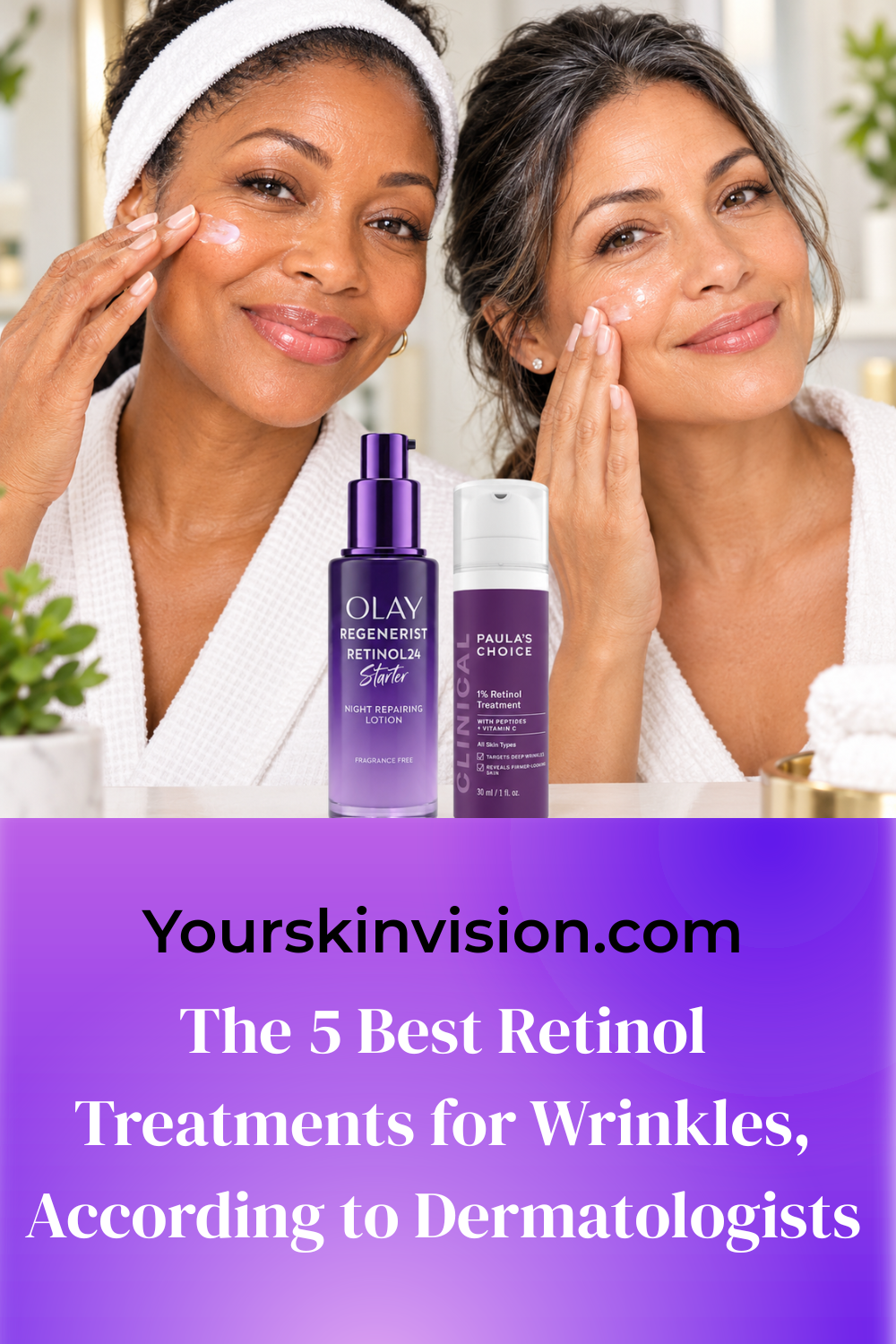
4. Paula’s Choice Clinical 1% Retinol Treatment
Paula’s Choice built this treatment for people with retinol experience. At 1% retinol, it delivers real strength, and the formula includes peptides and soothing ingredients to keep irritation manageable. Dermatologists often suggest it for deeper lines and stubborn texture when gentler products stop making progress.
Because of its strength, start with two nights a week and build up. Beginners should skip this one until they’ve used a milder product for a few months.
What buyers say:
Says, “She plateaued on weaker retinol products, and this one softened the lines between her brows after about two months”.
Says, “he flaked a little during the first two weeks, then settled in. He saw smoother skin on his forehead by week eight”.

5. Olay Regenerist Retinol24 Night Serum
Olay combines a retinol complex with niacinamide in a fragrance-free formula made for nightly use. The serum feels light, sinks in quickly, and works well under a night cream. Dermatologists appreciate that it targets fine lines and dullness together without a heavy price tag.
Results build gradually, usually over four to eight weeks. The formula suits most skin types, including sensitive skin when introduced slowly.
What buyers say:
Says, “Her skin looked fresher within a month, and the fine lines by her mouth looked softer after about eight weeks”.
Says, “The price made it easy to try. He stuck with it nightly and saw a more even tone and fewer fine lines by month two”.
How Should You Use Retinol for the Best Wrinkle Results?
Start slow. Use retinol two or three nights a week for the first couple of weeks, then increase as your skin adjusts. A pea-sized amount covers your whole face, and more product only raises the risk of irritation.
Apply retinol to clean, dry skin at night. If your skin feels tight, add a fragrance-free moisturizer on top. Also, keep retinol away from your eyelids unless the product says it’s safe there, and skip it during pregnancy or breastfeeding unless your doctor says otherwise.
Every morning, wear a broad-spectrum SPF 30 or higher. Retinol makes skin more sun-sensitive, and sunscreen protects the smoother skin you’re building. Give any product at least twelve weeks before you judge it.
Conclusion
Retinol earns its reputation because it works on wrinkles at the source, not just at the surface. RoC’s Deep Wrinkle Night Cream takes the top spot because it balances real strength with comfort, which helps you stay consistent. However, the best choice depends on your skin’s tolerance and how quickly you want to move.
Start gently, build up slowly, and protect your skin with daily sunscreen. Because results take months, patience matters more than strength. Talk with a dermatologist if you have sensitive skin, rosacea, or a skin condition, and they can help you pick the right starting point.
