
Retinol used to feel like a luxury skincare secret. Not anymore. Walk into any pharmacy today, and you’ll find shelves packed with drugstore retinol moisturizers that dermatologists actually recommend. That shift matters because retinol remains one of the few ingredients with real clinical backing for fine lines, texture, and breakouts.
Still, not every drugstore retinol works the same way. Some formulas pair retinol with soothing ingredients like ceramides or niacinamide, which makes them gentler for beginners. Others lean stronger, better suited for skin that already tolerates actives.
Because retinol can also irritate sensitive skin if you jump in too fast, picking the right formula matters as much as picking a “top-rated” one. This guide breaks down the best drugstore retinol moisturizers dermatologists most often recommend, based on formulation quality, tolerability, and real-world performance, starting with the overall best pick.
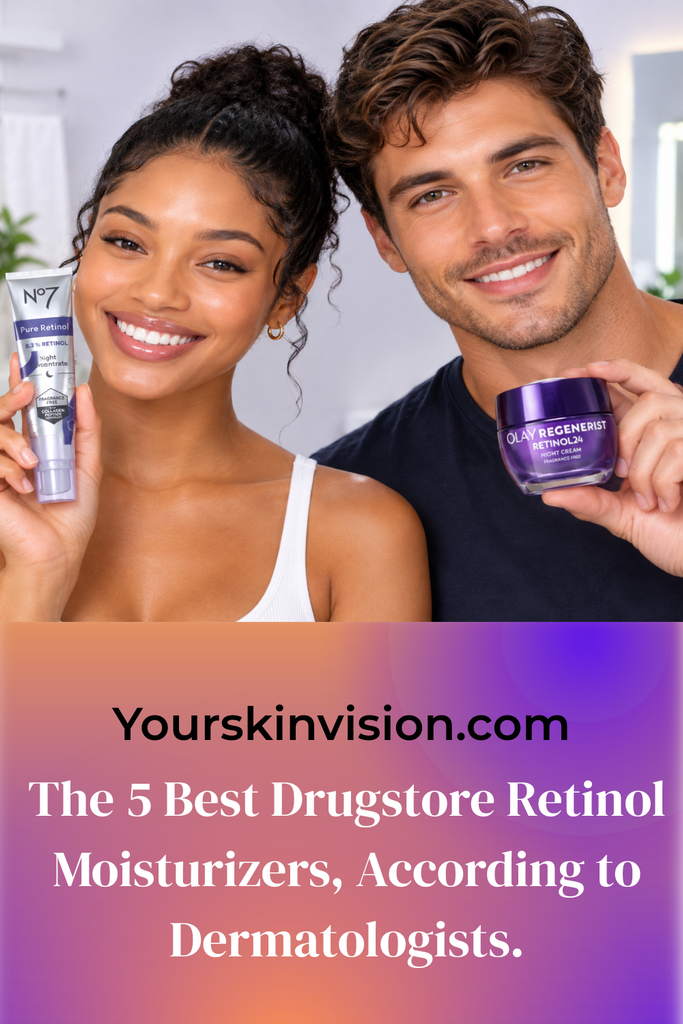
Table of Contents
What Makes a Retinol Moisturizer “Dermatologist-Approved”?
Dermatologists don’t just look at the word “retinol” on a label. They look at concentration, stabilization, and what else is in the jar. A well-formulated retinol moisturizer balances the active ingredient with hydrators and barrier-supporting ingredients, so your skin doesn’t dry out or flake while it adjusts.
Encapsulated retinol is one feature dermatologists often flag as a plus. This technology releases the ingredient slowly overnight, which reduces irritation without weakening results. Products that also include niacinamide, ceramides, or hyaluronic acid tend to score higher with dermatologists because they support the skin barrier while retinol does its work.
Packaging matters too. Retinol breaks down when it’s exposed to light and air, so opaque, airtight packaging (tubes or pumps rather than open jars) helps the product stay effective for longer.
How Do You Choose the Right Retinol Strength for Your Skin?
Retinol percentages on drugstore products usually range from 0.01% to 1%. Beginners should start low, anywhere from 0.01% to 0.03%, and build tolerance over several weeks. Jumping straight to a higher percentage often backfires, causing redness, peeling, or a temporary breakout phase sometimes called “purging.”
If you already use retinol regularly and haven’t seen irritation, a mid-range strength (0.1% to 0.3%) can deliver faster results. However, sensitive or rosacea-prone skin usually does better sticking with encapsulated, lower-strength formulas indefinitely, since higher concentrations can trigger flare-ups even after your skin has adjusted.
A simple rule dermatologists repeat often: start slow, apply at night, and always follow with sunscreen the next morning, because retinol increases sun sensitivity.
Here are the Best Drugstore Retinol Moisturizers

1. Overall Best: RoC Retinol Correxion Deep Wrinkle Night Cream
This is the pick dermatologists mention most consistently for drugstore retinol, and it’s been a mainstay for over two decades for good reason. RoC uses a patented, stabilized retinol complex that’s designed to stay effective longer than raw retinol, and the formula pairs it with hydrating ingredients to offset dryness.
The texture is richer than most drugstore night creams, which helps buffer the retinol so skin doesn’t feel stripped. Consistent users typically report visible improvement in fine lines around 4 to 6 weeks in, with continued softening of texture beyond that. It is good for first-time retinol users and anyone specifically targeting fine lines and deep-set wrinkles.
User Comments:
Common feedback centers on two things: noticeable smoothing around the eyes and forehead after about a month of nightly use, and a manageable adjustment period with minimal flaking if introduced gradually (every other night for the first two weeks). Reviewers who eased in slowly report far less irritation than those who started nightly right away.

2. CeraVe Skin Renewing Retinol Serum
CeraVe built its reputation on ceramides, and this retinol serum leans into that strength. It combines encapsulated retinol with three essential ceramides, niacinamide, and licorice root extract, which together support the skin barrier while the retinol works.
Because the retinol is encapsulated, it releases gradually rather than all at once. That slower release is exactly why dermatologists recommend it for people who’ve reacted badly to retinol before. It’s also fragrance-free, which lowers the irritation risk further. It is good for sensitive, reactive, or rosacea-prone skin, and anyone easing into retinol for the first time.
User Comments:
The most repeated theme is tolerability; many describe skipping the usual “retinol purge” entirely or experiencing only mild, short-lived dryness. Several note pairing it with a heavier moisturizer on top during the first two weeks made the adjustment nearly seamless.

3. Best for Acne and Texture: Neutrogena Rapid Wrinkle Repair Retinol Pro+
Neutrogena’s Retinol Pro+ line uses a proprietary Accelerated Retinol SA formula, combining retinol with hyaluronic acid. Dermatologists often point to it for people managing both fine lines and lingering acne-related texture, since it addresses both without needing separate products.
The formula absorbs faster than many creamier retinol products, so it works well under other skincare layers or makeup the next morning, without pilling. It’s also one of the more affordable options on this list relative to its retinol concentration. It’s for combination or acne-prone skin dealing with texture and post-breakout marks.
User Comments:
Reviewers frequently mention improved skin texture and smaller-looking pores within six to eight weeks, along with a lightweight feel that doesn’t sit heavy under makeup. A smaller number noted initial breakouts in week two or three that settled once their skin adjusted, a pattern consistent with typical retinol purging.

4. Best Budget Option: L’Oréal Paris Revitalift Derm Intensives Night Serum
L’Oréal’s Revitalift line uses 0.3% pure retinol, a notably high concentration for a drugstore price point. It’s formulated for people who already have some retinol tolerance and want a faster-acting option.
At 0.3%, this sits closer to prescription-adjacent strength than most competitors on this list, which is why dermatologists often flag it as a strong “next step up” option rather than a starter product. The lightweight serum texture also layers easily under a separate moisturizer. This formula is for retinol users ready to level up strength without paying prescription prices.
User Comments:
People with retinol experience often describe faster visible results, smoother texture, and reduced fine lines within a month but also caution that it’s noticeably stronger than beginner formulas, with a few reporting flaking if used nightly right away rather than building up gradually.

5. Best for Uneven Tone: Olay Regenerist Retinol24 Night Moisturizer
Olay’s Retinol24 line pairs retinol with vitamin B3 (niacinamide) in a formula built specifically for overnight repair. Dermatologists frequently point to it for men and women dealing with dullness and uneven skin tone rather than deep wrinkles, since the niacinamide component works alongside retinol to brighten as it smooths.
The whipped, lightweight texture sets this apart from heavier retinol creams. It sinks in fast without feeling greasy, which makes it an easier sell for anyone who dislikes the tacky residue some retinol products leave behind. Olay also markets a fragrance-free version, useful for reactive skin. This is good for: Dull, uneven skin tone and anyone who dislikes heavy, greasy retinol creams.
User Comments:
The most consistent theme is brightness; people frequently mention their skin looking less dull and more even-toned within three to four weeks. Some note the texture takes getting used to at first, since it applies more like a gel than a traditional cream, but most come to prefer the lighter feel over time.

6. Best High-Strength Option: No7 Advanced Retinol 1.5% Complex Night Concentrate
No7 built this concentrate around a proprietary retinol blend equivalent to 1.5% pure retinol, making it one of the strongest options available without a prescription. It’s designed for experienced retinol users who’ve built up tolerance and want maximum results from an over-the-counter product.
This formula uses a time-release retinol blend rather than raw retinol at that strength; it manages to deliver high potency without the same intensity of irritation you’d expect from a 1.5% concentration. Dermatologists tend to recommend it as a step just below prescription tretinoin for people who’ve outgrown gentler formulas. Experienced retinol users who’ve plateaued on lower strengths and want a stronger, near-prescription-level option
User Comments:
Long-time retinol users often describe this as the strongest over-the-counter option that still feels manageable, with visible improvement in deeper lines and texture within four to five weeks. First-time users who skip the gradual buildup, however, frequently report more noticeable dryness and peeling than with gentler formulas on this list.
How Should You Introduce Retinol Into Your Skincare Routine?
Start with two to three nights a week, applying a pea-sized amount after cleansing and before your regular moisturizer if the retinol product itself feels light. Give your skin a full week before deciding whether to increase frequency, because irritation often shows up with a delay rather than immediately.
Also, always apply retinol at night, since sunlight breaks it down and increases photosensitivity. Sunscreen the next morning isn’t optional; skipping it undoes a lot of the benefit and raises your risk of sun damage
If you experience redness, peeling, or stinging that doesn’t settle within a few days, scale back frequency rather than stopping altogether. Building tolerance gradually almost always works better than pushing through daily use too soon.
What Does a Realistic First-Month Timeline Look Like?
Week one typically brings the biggest adjustment. Skin often feels tighter than usual, and some mild flaking shows up around days three to five as cell turnover speeds up. This is normal, and it usually settles on its own within a week or two.
By week two, most people can comfortably move from every-other-night application to nightly use, assuming irritation has calmed down. Some users experience a short “purge” phase here too, especially with acne-prone skin, as retinol pushes clogged material to the surface faster than usual.
Weeks three and four are where visible changes usually start. Texture smooths out, tone looks more even, and the tightness from week one fades completely as the skin barrier adjusts. Full results, especially for fine lines, generally take 8 to 12 weeks of consistent use to become clearly noticeable.
What Should You Avoid Pairing With Retinol?
Retinol doesn’t play well with every other active ingredient. Combining it with strong exfoliating acids like glycolic or salicylic acid on the same night often overwhelms the skin barrier, leading to redness and irritation that takes longer to calm down.
Benzoyl peroxide can also deactivate retinol when layered directly on top of it, reducing effectiveness for both ingredients. Vitamin C serums and retinol can coexist, but most dermatologists recommend using vitamin C in the morning and saving retinol for night, rather than layering them together.
This keeps both ingredients working at full strength instead of competing or destabilizing each other. If you already use a strong active in your routine, introduce retinol slowly and on alternating nights until you understand how your skin handles the combination.
Frequently Asked Questions About Drugstore Retinol
- Can you use retinol every night from the start? Most dermatologists advise against it. Starting nightly usually causes more irritation than starting two to three times a week and building up gradually over several weeks.
- Does drugstore retinol expire faster than prescription retinoids? Not necessarily faster, but retinol in general degrades with light and air exposure. Products in opaque, airtight packaging tend to stay effective longer than those in clear jars, regardless of whether they’re drugstore or prescription.
- Is it normal for retinol to cause breakouts at first? Yes, a temporary purge is common, especially in the first two to four weeks. This differs from an allergic reaction because it tends to appear in areas where you already break out, rather than randomly across the face.
- Can you use retinol if you have rosacea? It’s possible, but it requires extra caution. Encapsulated, low-strength formulas with barrier-supporting ingredients tend to work best, and starting once or twice a week rather than more frequently reduces the risk of a flare-up.
- Do you still need sunscreen if you only use retinol at night? Yes. Retinol increases how easily your skin burns and is sun-damaged for a period after application, not just on the nights you use it. Daily sunscreen matters just as much as the retinol itself for protecting your results.
Conclusion
Retinol doesn’t need a luxury price tag to work. The drugstore options above cover a real range — from RoC’s overall best pick for fine lines, to CeraVe’s gentler formula for sensitive skin, to No7’s near-prescription strength for experienced users.
What matters most is matching the formula to your skin’s current tolerance, not just chasing the highest percentage on the shelf. Give any new retinol product at least six to eight weeks before judging results, and don’t skip sunscreen the next morning. Consistency, more than strength, is usually what separates people who see real results from people who give up after two irritated weeks.
