
Skin doesn’t ask permission before it starts changing. One day your face looks the same as always, and the next, you notice a line by your eye that wasn’t there last year. Retinol and collagen show up together in skincare for a reason.
Retinol speeds up cell renewal and pushes your skin to produce more of its own collagen over time. Collagen peptides work from the surface, holding moisture and signaling your skin to rebuild what’s already breaking down.
Dermatologists consistently point to this pairing as more effective than either ingredient used alone, especially for fine lines, sagging, and overall firmness. The reason so many people stick with only one or the other usually comes down to formula, not intent, a cream that’s too harsh gets abandoned, and one that’s too weak gets ignored.
This article covers the retinol and collagen creams dermatologists recommend most, all available on Amazon, starting with the overall best pick.
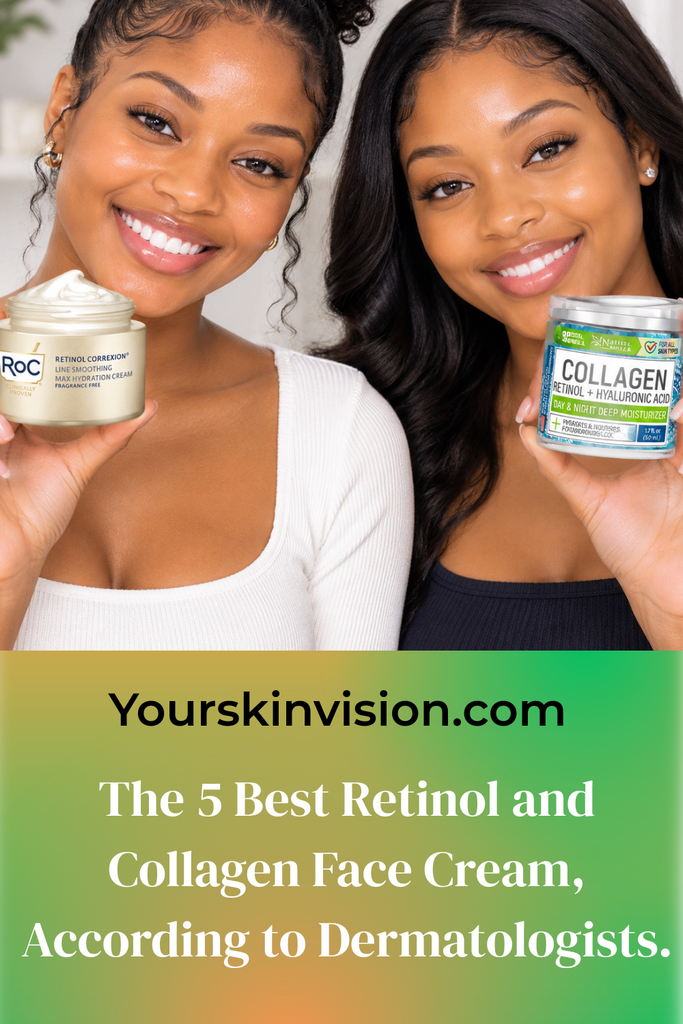
Table of Contents
Why Dermatologists Recommend Pairing Retinol With Collagen?
Retinol and collagen work through two different mechanisms, and that difference is exactly why dermatologists recommend combining them rather than picking one. Retinol accelerates cell turnover, which means your skin sheds old, dull cells and replaces them with newer ones faster than it would on its own.
Board-certified dermatologists explain that this turnover process also stimulates fibroblasts, the cells responsible for producing collagen deep in the skin. Over weeks and months, that stimulation is what actually rebuilds structural firmness, not just surface smoothness.
Collagen applied topically works differently. Because collagen molecules are too large to fully penetrate the skin barrier on their own, dermatologists note that the real benefit usually comes from collagen peptides rather than collagen itself.
Peptides send a signal that tells the skin to ramp up its own collagen production, while also holding moisture at the surface for a more immediate plumping effect. Together, the two ingredients cover both timelines. Collagen peptides deliver a faster, visible effect on hydration and texture, while retinol works on a slower, deeper timeline that produces lasting structural change.
Dermatologists frequently describe this combination as addressing what patients notice first (texture and plumpness) alongside what actually reverses long-term aging (collagen depletion). Dermatologists also caution that not every “collagen” claim on a label holds up.
Formulas listing plain collagen, without peptides or a delivery system built to support absorption, tend to underperform compared to peptide-based formulas, regardless of how prominently collagen appears in the marketing.
5 Retinol and Collagen Cream Dermatologist Rank as Over all Best.

1. Overall Best: Olay Regenerist Retinol 24 Triple Collagen Peptide Night Cream
Olay earns the top dermatologist recommendation in this category because it builds the entire formula around the retinol-collagen pairing rather than treating collagen as an afterthought. The cream combines Olay’s proprietary retinol complex with a triple collagen peptide blend, niacinamide, and vitamin B5, working together to smooth fine lines while actively supporting the skin’s own firmness over time.
Dermatologists point to formula balance as the reason this cream performs consistently well across skin types. A retinol product strong enough to matter often comes with dryness and irritation that make people quit before results show up.
Olay’s version pairs real retinol activity with enough hydration and peptide support to offset that adjustment period, which is often the difference between a cream that gets finished and one that sits half-used in a drawer.
The texture absorbs quickly without leaving residue, and the fragrance-free formulation reduces irritation risk for people who’ve reacted to scented anti-aging products in the past. Dermatologists generally note visible improvement in firmness and fine lines within four to six weeks of nightly use, with continued improvement through the twelve-week mark.
User Comments:
“My skin looked noticeably firmer around my cheeks after about a month, and mornings didn’t bring the dryness I expected from a retinol product. I use it every night now without any issues.”
“I’d tried pricier department-store creams with less impressive results, and this one surprised me. My skin felt smoother around my mouth within three weeks, and the price made it easy to commit to long-term.”

2: No7 Pure Retinol Night Cream
No7 earns dermatologist recommendations because it pairs 0.3% pure retinol, a step up from most beginner formulas, with a peptide-based collagen-boosting technology and hyaluronic acid. Dermatologists explain that this concentration sits in a useful middle ground: strong enough to produce faster, more visible firming than lower-percentage creams, but still manageable for most skin types when introduced gradually.
The formula’s collagen peptide technology works alongside the retinol rather than competing with it, supporting plumpness at the surface while retinol handles deeper structural renewal. Dermatologists generally recommend this cream for people who’ve already used a gentler retinol product for several months without irritation and are ready for something stronger.
User Comments:
“I noticed real improvement in the fine lines around my eyes after about five weeks, and the cream didn’t feel heavy or greasy overnight, which mattered a lot to me.”
“I had some mild flaking the first week, which I expected going in, but my skin firmed up noticeably by week six. I recommend it now to friends who ask about anti-aging creams.”

3: CeraVe Anti-Aging Retinol Serum
CeraVe earns its dermatologist recommendation by pairing encapsulated retinol with a ceramide-niacinamide-hyaluronic acid base, an approach dermatologists commonly cite as the most tolerable way to introduce retinol without sacrificing collagen-stimulating effectiveness.
Encapsulation releases the retinol gradually rather than all at once, which reduces the intensity of the initial adjustment period compared to unencapsulated formulas at a similar strength. Dermatologists explain that the ceramide component matters more than most people realize. Retinol temporarily disrupts the skin barrier as it accelerates turnover, and ceramides repair that barrier at the same time, allowing consistent use without the peeling and redness that derail a lot of retinol routines.
This makes the serum a common recommendation for sensitive or reactive skin that hasn’t tolerated retinol well in the past.
User Comments:
“I’d avoided retinol for years after a bad reaction to another brand, but this serum caused no irritation at all. My skin looked smoother and firmer around week five.”
“It layers well under my regular moisturizer, and after two months, my forehead lines are less noticeable and my overall texture has improved.”

4: Nature Theory Collagen Cream for Face with Retinol
If you want a moisturizer that gives your skin hydration while adding retinol to your routine, Nature Theory Collagen Cream is worth considering. The texture is lovely. It feels silky and lightweight, spreads easily, and sinks into the skin without leaving that greasy layer some richer creams can leave behind.
The formula combines retinol with marine collagen, hyaluronic acid, vitamin E, aloe vera, and nourishing oils like jojoba, coconut, and avocado. Together, they make the skin feel softer, smoother, and more comfortable, especially when your skin is dry or starting to look dull. I also like that it comes in an airless pump, which makes it easy to dispense the right amount without dipping your fingers into a jar.
With consistent use, the retinol may help improve the appearance of fine lines, uneven texture, and firmness. Some customers mention noticing changes within a couple of weeks, although results will vary from person to person. It is fragrance-free and made in the USA, which is another nice bonus.
One thing to keep in mind is that retinol can cause dryness or irritation, especially when you are new to it. Start slowly and use sunscreen during the day. Overall, this is a practical everyday cream for anyone wanting hydration plus gentle anti-aging care.

5: RoC Retinol Correxion Max Daily Hydration Cream
RoC has held a dermatologist-recommended reputation in drugstore skincare for decades, and this cream continues that track record. It pairs retinol with hyaluronic acid in a formula built specifically for daily use, which dermatologists note matters more than raw ingredient strength, since consistency drives the majority of visible results with retinol over time.
While the product doesn’t market itself primarily around collagen, its retinol complex works directly to stimulate the skin’s own collagen production with regular use. Dermatologists generally recommend this cream for people who want visible anti-aging results without navigating a complicated routine or a high price tag.
It won’t match a clinical-strength serum in speed, but it holds up consistently across most skin types, including sensitive skin, when used nightly.
User Comments:
“My fine lines looked visibly softer after about six weeks, and the price didn’t come with any of the irritation I experienced with pricier retinol products in the past.”
“I started using it after a friend recommended it, and I noticed firmer, smoother skin around my cheeks within a month. It’s a permanent part of my nightly routine now.”
How Should You Apply a Retinol-Collagen Cream for the Best Results?
Getting real results from a retinol-collagen cream depends as much on how you use it as which one you pick. Dermatologists give consistent guidance on building a routine that avoids irritation while still delivering visible change.
- Apply at night only, always. Retinol increases photosensitivity, so daytime use without diligent sunscreen reapplication works against the improvements you’re trying to build. Nighttime application also lines up with the skin’s natural repair cycle, which makes the ingredient more effective overall.
- Start two to three nights a week and build up gradually. Jumping straight to nightly use often causes more irritation than it prevents. Most dermatologists recommend increasing frequency every one to two weeks as your skin adjusts, reaching nightly use by around week four.
- Use a pea-sized amount for the entire face. More product doesn’t speed up results, it just raises the risk of dryness and redness. A pea-sized amount, applied after cleansing and patting the skin dry, covers the face adequately.
- Layer a plain moisturizer on top if your skin feels tight. Applying a fragrance-free moisturizer about fifteen minutes after the retinol-collagen cream, sometimes called the “sandwich” technique, softens the adjustment period without diluting the active ingredients underneath.
- Wear SPF 30 or higher every single morning. Since retinol increases sun sensitivity, skipping sunscreen undoes a meaningful portion of the progress the cream is working to build. Consistent daily SPF protects both the results and the skin itself.
Conclusion
Retinol and collagen do different jobs, and dermatologists agree that pairing them delivers a more complete result than relying on either ingredient alone. Olay’s Triple Collagen Peptide Night Cream earns the top recommendation because it balances real retinol activity with genuine hydration and peptide support, producing visible firmness without the harsh side effects that make people give up early.
Start two to three nights a week, build toward nightly use over about a month, and stay consistent with sunscreen every morning. Give any new formula at least six to eight weeks before judging the results. Because skin renews on its own timeline, the cream that actually gets used consistently will almost always outperform the strongest one sitting unused in a drawer.
