
Rosacea after 50 is a different challenge from rosacea at 30. The same condition chronic facial redness, visible capillaries, flushing episodes, and sometimes inflammatory papules now sits on skin that has also lost collagen, ceramides, and the barrier resilience that younger skin uses to protect itself from product triggers.
Foundation that a 35-year-old rosacea patient tolerated fine can produce full flares in a 55-year-old with the same condition, because the aging barrier allows ingredients to penetrate more readily and the skin’s reactive capacity has increased alongside its sensitivity.
Dermatologists who treat rosacea over 50 take both the condition and the skin’s maturity into account when recommending foundation, and they look for formulas that address redness coverage, aging skin needs, and the inflammatory triggers that rosacea-prone mature skin cannot afford. This article covers exactly those formulas, all on Amazon.
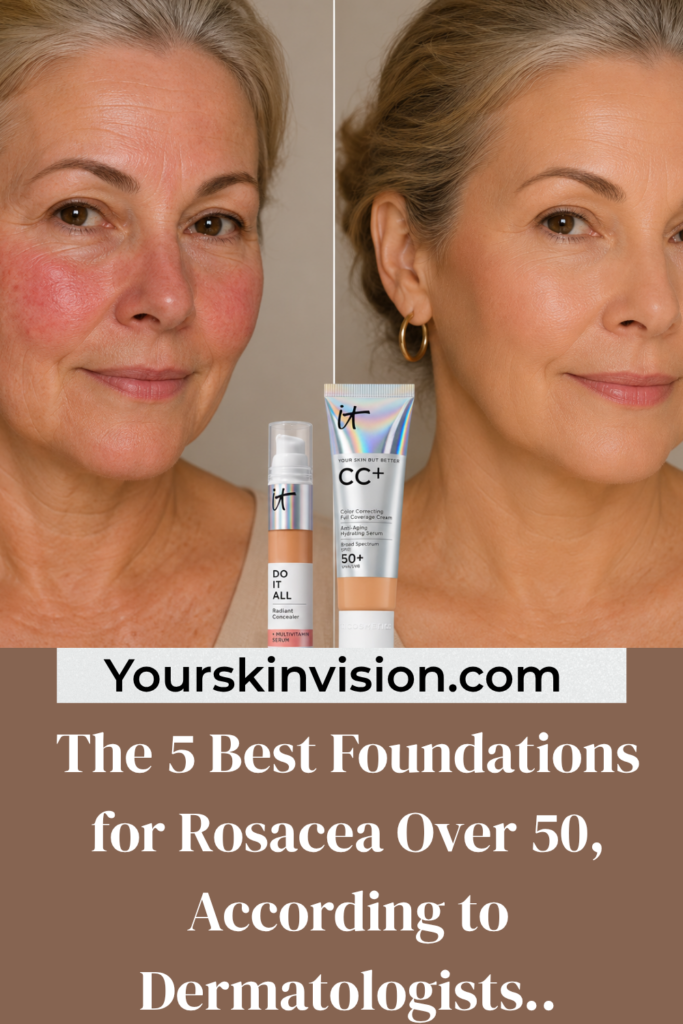
Table of Contents
This Is What Dermatologists Say About Foundation and Rosacea in Patients Over 50.
Dermatologists approach rosacea foundation recommendations for patients over 50 through two simultaneous lenses: what triggers the rosacea and what the aging skin needs from a daily foundation formula. Both considerations narrow the acceptable formula pool considerably.
Board-certified dermatologist Dr. Linda Stein Gold, director of dermatology clinical research at Henry Ford Health System and a widely cited expert in Dermatology Times and The Journal of Clinical and Aesthetic Dermatology, explains that rosacea over 50 requires heightened cosmetic vigilance because the aging barrier allows cosmetic ingredients to penetrate more deeply than in younger skin, increasing both the frequency and the severity of product-triggered flares.
Ingredients that cause mild irritation in younger rosacea skin cause significant flares in post-menopausal or significantly aged rosacea skin, making ingredient selection more critical with every passing decade. The formulation qualities dermatologists look for in foundations for rosacea over 50 include:
- Absolute fragrance-free formulation — synthetic fragrance is the most common cosmetic rosacea trigger. Post-50 skin with rosacea has a compromised barrier that allows fragrance compounds to penetrate the dermis and trigger both contact reactions and vascular inflammatory responses more readily than at younger ages.
- No alcohol, no essential oils, no menthol — all three cause vasodilation, physically widening blood vessels, which directly worsens the vascular redness component of rosacea. Dermatologists identify these three ingredients as among the most reliably documented rosacea triggers in cosmetics.
- Mineral SPF (zinc oxide and titanium dioxide) — UV exposure is one of the most potent rosacea triggers, causing both immediate flushing and long-term worsening of the condition through UV-driven vascular damage. Mineral SPF protects without chemical UV filters that can trigger sensitivity reactions in rosacea-prone mature skin. Zinc oxide additionally provides anti-inflammatory benefit that calms active rosacea.
- Ceramides and barrier-supporting ingredients — mature skin with rosacea has a doubly compromised barrier, compromised by age and by the chronic inflammation the condition creates. Ceramide-containing foundations rebuild the barrier that both aging and rosacea continuously erode, reducing the reactive sensitivity that makes rosacea worse over time.
- Green-toned or yellow-undertone color-correcting pigments — the most effective cosmetic approach to covering rosacea redness uses color theory: green neutralizes red on the color spectrum, and yellow-undertone foundations visually counteract the pink-to-red quality of rosacea skin. Foundations with these color properties require less coverage weight to achieve neutralization, which means less product on already-reactive skin.
- Lightweight, buildable coverage — heavy, full-coverage formulas require more product contact with reactive rosacea skin and create a more occlusive film that can worsen the warm, flushed environment that rosacea thrives in. Lightweight, buildable formulas achieve necessary coverage with less product and less occlusion.
- Cooling, soothing actives — ingredients like thermal spring water, centella asiatica, green tea extract, and aloe vera have documented anti-inflammatory and skin-soothing properties that dermatologists identify as beneficial specifically for rosacea skin.
Dermatologists also consistently remind patients over 50 with rosacea that foundation cannot replace medical treatment. Topical metronidazole, azelaic acid, ivermectin cream, or other rosacea treatments prescribed by a dermatologist address the condition’s underlying vascular and inflammatory mechanisms. Foundation manages the cosmetic appearance. The best outcomes occur when both medical treatment and cosmetic management work together.
Here Are The Foundations Dermatologists Rank As The Best for Rosacea Over 50?

1. Overall Best: bareMinerals ORIGINAL Loose Powder Mineral Foundation SPF 15
bareMinerals ORIGINAL earns the top position for rosacea over 50 because it simultaneously meets every dermatological requirement for both conditions: the five-ingredient formula (titanium dioxide, bismuth oxychloride, mica, iron oxides, lauroyl lysine).
It contains no fragrance, no alcohol, no essential oils, no preservatives, no emulsifiers, and no synthetic chemicals that trigger rosacea flares, while the titanium dioxide SPF 15 and zinc-containing minerals provide anti-inflammatory, UV-protective benefits that active rosacea skin specifically needs.
Dermatologists point to the mineral formula’s anti-inflammatory mechanism as particularly meaningful for rosacea over 50. Titanium dioxide and bismuth oxychloride both have documented anti-inflammatory properties that calm vascular redness in active rosacea skin rather than simply covering it. Consistent daily mineral application reduces the baseline inflammation intensity over time, a benefit that no standard liquid foundation provides.
The powder format avoids the occlusive film that liquid foundations create over rosacea-affected skin, which matters because heat and occlusion are established rosacea triggers. Powder allows normal skin breathing and temperature regulation rather than trapping the warmth that triggers vascular flushing in rosacea-prone skin.
For mature skin over 50, dermatologists recommend applying over a hydrating ceramide moisturizer and allowing full absorption before application. The moisturizer addresses the mature skin’s hydration needs while the mineral powder provides rosacea-compatible coverage above.
User Comments:
“I’ve had rosacea since my forties and finding foundation that didn’t trigger flares took years of frustrating trial and error. By my mid-fifties, my skin had become so reactive that even products claiming to be rosacea-safe caused problems. My dermatologist recommended bareMinerals ORIGINAL because the five-ingredient formula gave my reactive skin nothing to react to. The mineral formula has calmed my rosacea noticeably over consistent use, my dermatologist said the titanium dioxide’s anti-inflammatory effect was real and measurable. My coverage is excellent, and I haven’t had a foundation-triggered flare in eight months.”
“My rosacea got significantly more reactive in my late fifties, which my dermatologist said was typical as the skin barrier weakens with age. She recommended bareMinerals specifically because the absence of fragrance, alcohol, and synthetic chemicals was the only way to guarantee my reactive mature skin wouldn’t respond to the formula. Used over my ceramide moisturizer, it covers my redness well, and my skin stays calm throughout the day. The mineral formula also gives me the SPF I need for my rosacea; UV exposure always triggers my worst flares.”

2: Dermablend Continuous Correction Tone-Evening CC Cream Foundation SPF 50+
If you want makeup that gives your skin a more even, natural-looking finish while also providing daily sun protection, this CC cream is worth considering. It offers coverage that helps visibly reduce the appearance of redness, discoloration, dark spots, age spots, and other uneven areas, making the complexion look smoother and more balanced.
One of the biggest things I like about this CC cream is that it feels lightweight rather than heavy or cakey. It works well as an everyday base, especially when you want enough coverage to even out your skin without feeling like you are wearing a thick layer of foundation. The broad-spectrum SPF 50+ is also a major plus for daytime use, giving your skin added protection from the sun.
The formula is non-comedogenic, so it is designed not to clog pores, which makes it a practical choice for regular wear. It also claims fade-defying color that lasts for up to 24 hours, helping your complexion stay consistent throughout the day.
Another nice benefit is its radiance claim, with clinical testing showing visibly improved skin radiance after four weeks of use. Overall, this CC cream is a great option for anyone looking for coverage, correction, sun protection, and a lightweight feel in one product.

3: IT Cosmetics Your Skin But Better CC+ Cream with SPF 50+
IT Cosmetics CC+ Cream earns strong dermatologist recommendations for rosacea over 50 through the combination most important for this specific skin situation: niacinamide that actively reduces vascular redness, mineral SPF 50+ that protects against UV triggering of rosacea episodes, and a color-correcting formula that reduces how much coverage is needed to achieve a visually even result.
Dermatologists point to niacinamide’s vascular constriction mechanism as particularly meaningful for rosacea; niacinamide inhibits the inflammatory mediators that cause vascular dilation in rosacea-affected skin, reducing the intensity of redness during foundation wear.
Consistent daily niacinamide exposure through the formula builds this anti-inflammatory benefit cumulatively over weeks, producing measurable reduction in baseline rosacea redness alongside the cosmetic coverage benefit.
The SPF 50+ mineral formula uses titanium dioxide and zinc oxide, both of which provide anti-inflammatory properties alongside UV protection. Dermatologists identify UV as one of the most common and potent rosacea triggers and recommend SPF 50 as the minimum protective threshold for rosacea-affected skin.
User Comments:
“My rosacea flares worst in sun, I live in Arizona and UV exposure has always been my biggest trigger. My dermatologist said SPF 50 minimum was non-negotiable for my rosacea management and recommended IT Cosmetics CC+ Cream because the niacinamide and the mineral SPF 50+ addressed both my cosmetic and clinical needs simultaneously. The coverage handles my redness and the niacinamide has measurably reduced my baseline flushing over three months of daily use. My dermatologist documented the improvement at my last visit. This is now the only foundation I’ll wear.”
“My dermatologist had been pushing niacinamide for my rosacea for years; she said it was the most evidence-backed topical for reducing vascular redness. When I asked about foundation, she recommended IT Cosmetics CC+ Cream specifically because the niacinamide content was meaningful and the mineral SPF 50+ protected my rosacea from UV triggering. My redness is noticeably less intense after four months of daily use, both under the foundation and on bare skin in the morning. The color-correcting technology also means I need less coverage to look even-toned.”

4: CeraVe Hydrating Mineral Sunscreen Face Sheer Tint SPF 30
CeraVe Hydrating Mineral Sunscreen Sheer Tint earns dermatologist recommendations for rosacea over 50 through the same combination that makes it effective for sensitive and barrier-compromised skin generally.
Ceramides that repair the barrier damaged by both aging and chronic rosacea inflammation, zinc oxide that provides anti-inflammatory mineral SPF, and a completely fragrance-free, alcohol-free formula that avoids the triggers most likely to cause rosacea flares.
Dermatologists emphasize the ceramide component specifically for rosacea over 50 because chronic rosacea inflammation actively degrades the skin barrier over years of the condition’s activity.
By 50, rosacea patients who have managed the condition for a decade or more often have measurably more barrier damage than age-matched peers without rosacea, and that additional barrier compromise makes them more reactive to cosmetic ingredients and more susceptible to UV-triggered flares. Daily ceramide application rebuilds what both aging and rosacea have damaged.
Zinc oxide’s dual SPF and anti-inflammatory function suits rosacea over 50 particularly well; it protects against the UV trigger while calming the inflammatory component of the condition simultaneously.
User Comments:
“My rosacea over 50 has progressively affected my skin barrier; my dermatologist said the chronic inflammation had damaged my barrier beyond what normal aging alone would cause. She recommended CeraVe Sheer Tint for daily use because the ceramides would actively repair my barrier while the zinc oxide calmed my rosacea and protected it from UV. After six months of daily use, my skin barrier feels measurably stronger, and I react to fewer environmental triggers than before. My rosacea is better controlled, and my foundation looks naturally even without triggering anything.”
“My dermatologist recommended CeraVe Sheer Tint for my rosacea over 60 because she wanted ceramide barrier support in my coverage product, not just in my skincare. She said my barrier needed the ceramide exposure throughout the day, not just in the morning, because my rosacea kept breaking it down faster than standard morning moisturizer could rebuild it. The daily ceramide delivery through this formula has genuinely improved my skin’s resilience. My rosacea flares less readily, and my skin looks and feels calmer than it has in years.”

5: Neutrogena Hydro Boost Hydrating Tint SPF 30
Neutrogena Hydro Boost Hydrating Tint earns its position for rosacea over 50 from a different angle than the other formulas on this list; it addresses the dehydration component of rosacea-affected mature skin that many rosacea-focused formulas neglect.
Rosacea over 50 doesn’t just create redness. The chronic inflammatory state combined with aging barrier dysfunction creates significant moisture loss that makes the rosacea-affected skin look parched, uncomfortable, and more reactive than it would be with adequate hydration.
Dermatologists recommend this for rosacea over 50 patients whose condition presents with a significant dry, dehydrated quality alongside the characteristic redness, where the skin feels tight, uncomfortable, and reactive not just to cosmetic ingredients but to environmental dryness and temperature changes.
The water-lock hyaluronic acid maintains skin moisture throughout the day, reducing the dryness-driven reactivity that makes some rosacea presentations particularly hard to manage. The fragrance-free, SPF 30 mineral formula avoids the standard rosacea cosmetic triggers while the water-gel texture applies without the friction that triggers flushing in heat-sensitive rosacea skin.
Real User Experiences:
“My rosacea over 55 presented with both redness and significant dehydration; my skin felt dry and reactive constantly. My dermatologist said standard rosacea foundations weren’t addressing the dehydration component and recommended Neutrogena Hydro Boost Tint for the water-lock hyaluronic acid alongside the mineral SPF. The sustained hydration has reduced my skin’s reactive quality dramatically; hydrated skin reacts less readily to everything, including my rosacea triggers. The light, fragrance-free formula doesn’t trigger flares, and my skin feels comfortable throughout the entire day.”
“Florida climate is brutal for rosacea; heat and humidity trigger my flares constantly. My dermatologist said I needed a foundation that provided genuine hydration without occlusion and avoided all my known rosacea triggers. Neutrogena Hydro Boost Tint was her recommendation because the water-gel texture hydrated without trapping heat and the formula was completely free of my triggers. My skin feels comfortable and stays relatively calm even in Florida summer conditions. The SPF 30 mineral formula adds the UV protection my rosacea desperately needs in my climate.”
How Should You Apply Foundation on Rosacea-Affected Mature Skin to Minimize Flares?
Application technique for rosacea over 50 requires careful attention to both the mechanical process, which can trigger flushing, and the hygiene practices that prevent bacterial contamination of already-compromised rosacea skin.
- Apply in a cool environment if possible. Heat is a primary rosacea trigger. Applying foundation in a warm bathroom immediately after a shower in a steamy room significantly increases the chance of triggering a flushing episode during application. Dermatologists recommend allowing skin to completely cool and settle for at least five minutes after washing before applying any product in the rosacea-affected zone.
- Use clean fingertips or a clean, fresh sponge; never an unwashed brush. Rosacea-affected skin is more susceptible to bacterial and microbiome disruption than healthy skin. An unwashed foundation brush harbors bacteria that transfer directly to inflamed rosacea skin. Dermatologists recommend either clean fingertips or a fresh, washed beauty sponge changed weekly for rosacea application. If using a sponge, dampen it slightly; the cooling moisture can actually reduce heat-triggered flushing during application.
- Apply gently and avoid all friction. Rubbing, scrubbing, or pressing too firmly during foundation application creates skin warming and friction that trigger rosacea flushing. Use the lightest possible pressing and lifting motions. The goal is to deposit product on the skin surface with minimal mechanical contact, not to blend with force.
- Use a green color corrector under foundation for significant redness. For pronounced rosacea redness grade 2 or 3 presentation where the redness is deep and persistent, a thin layer of green color corrector applied specifically to the reddest areas before foundation significantly reduces the coverage weight needed above it. Less total product means less occlusion, less potential for heat buildup, and less ingredient exposure on reactive rosacea skin.
- Remove thoroughly with cool or lukewarm water and a gentle micellar water. Hot water is a rosacea trigger. Dermatologists specifically recommend removing foundation from rosacea-affected skin using cool or lukewarm water with a gentle, fragrance-free micellar water, pressed gently against the skin rather than rubbed or scrubbed. Complete, gentle removal prevents product accumulation on the rosacea-affected surface that can contribute to ongoing inflammation overnight.
Conclusion
Rosacea over 50 requires foundation that respects both the condition’s inflammatory nature and the skin’s reduced barrier resilience from aging. The two concerns together demand a formula free of every common rosacea cosmetic trigger, fragrance, alcohol, essential oils, and menthol, alongside ingredients that support the aging barrier and actively calm the vascular inflammation driving the redness.
bareMinerals ORIGINAL earns the overall top recommendation for rosacea over 50 because its five-ingredient mineral formula eliminates virtually every known cosmetic rosacea trigger while providing natural anti-inflammatory benefit from titanium dioxide, UV protection from mineral SPF 15, and buildable coverage that suits the varied presentation of rosacea through different times of day and different trigger exposures.
Always apply in a cool environment. Use clean, gentle tools. Apply minimal product with light pressing motions. Use a green corrector underneath for pronounced redness. Remove thoroughly with cool water and gentle micellar water.
That complete approach alongside appropriate medical rosacea treatment from your dermatologist is how patients over 50 achieve the best possible daily management of both rosacea and its cosmetic impact.
Other Related Articles
- 8 Best Setting Powder For Older Skin
- 5 Best Foundation Makeup For 70-Year-Old Woman
- 5 Best Chanel Moisturizer For Dry Aging Skin
- The 5 Best Foundations for Perioral Dermatitis, According to Dermatologists.
- The 5 Best Foundations for Pink Undertones, According to Dermatologists.
- The 5 Best Foundations for Senior Women, According to Dermatologists.
