
Pink undertones are one of the most misunderstood shade-matching challenges in foundation. Most people with pink undertones reach for the most neutral shade they can find and wonder why their foundation still looks off, either too pink and obvious, or too yellow and ashy.
Dermatologists and cosmetic chemists understand the science behind undertone mismatch: the pink in the skin comes from vascular visibility through the dermis, blood vessels showing through thinner, lighter, or more translucent skin.
A foundation that sits over pink skin without color-correcting beneath it will either amplify the pink or clash with it. The right foundation for pink undertones either neutralizes the pink through color theory principles or contains warm, yellow-based pigments that balance the skin’s natural pink quality without fighting it. This article covers the best foundations for pink undertones, as recommended by dermatologists and cosmetic experts, all available on Amazon.
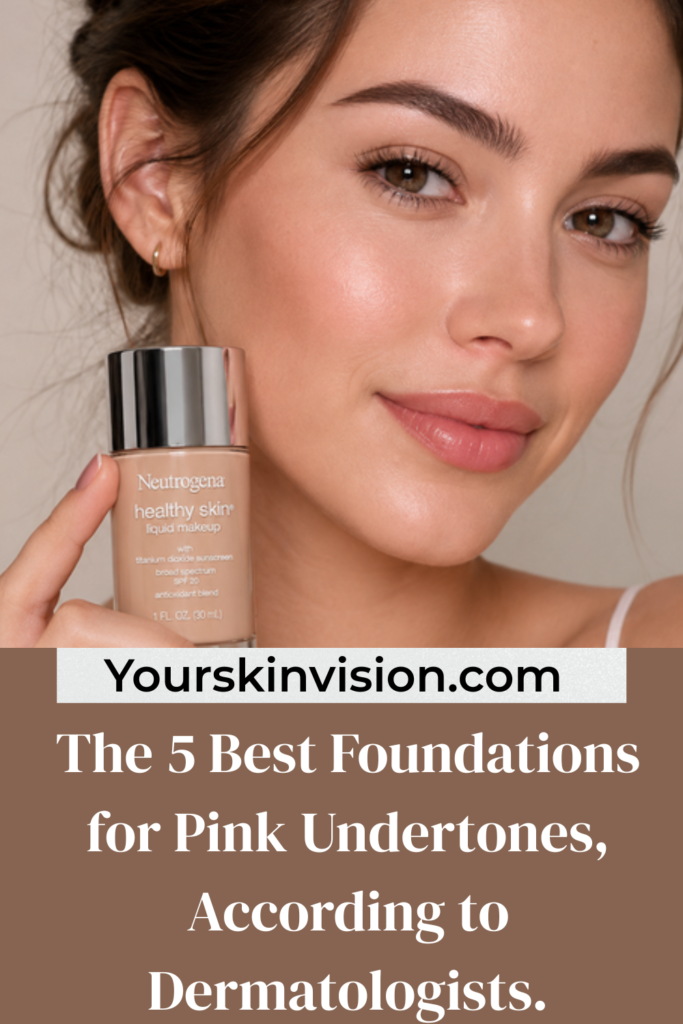
Table of Contents
What Dermatologists and Color Experts Say About Foundation for Pink Undertones?
Pink undertones in skin are a dermatological reality rooted in the biology of how light interacts with the skin’s vascular layer, and understanding this biology helps explain why shade matching for pink undertones requires more than just picking a “cool” foundation.
Board-certified dermatologist Dr. Jeanine Downie, director of Image Dermatology in Montclair, New Jersey, and a widely cited expert in Essence, Allure, and Good Housekeeping, explains that pink undertones come from the visibility of oxygenated blood in the superficial dermal capillaries through the skin’s outer layers.
People with lighter skin, thinner skin, or less melanin have more visible capillary networks, producing the pink or rosy quality that makes shade matching challenging. This is also why people with rosacea, post-acne inflammation, or fair complexions frequently present with pronounced pink undertones.
The foundation approach dermatologists and cosmetic chemists recommend for pink undertones involves understanding two distinct strategies:
Strategy 1: Yellow-based foundation neutralization: Most dermatologists and beauty professionals recommend choosing a foundation with yellow or golden undertones rather than pink, beige, or neutral undertones when covering skin with pink undertones. On the color wheel, yellow is opposite pink; it neutralizes pink tones rather than amplifying them. A yellow-based foundation of the correct value (lightness/darkness) looks natural on pink-undertoned skin in a way that pink-based or neutral foundations can’t achieve.
Strategy 2: Color correction before foundation: For pronounced pink undertones, rosacea-driven redness, significant post-acne flushing, or very pronounced pink skin, dermatologists recommend a green or peach color corrector underneath foundation before the main formula. Green cancels red and pink on the color spectrum, reducing the amount of foundation coverage needed to achieve an even result.
Additional formulation qualities dermatologists look for include:
- Anti-redness ingredients (niacinamide) — niacinamide reduces the inflammation that makes pink undertones more prominent by constricting surface blood vessels and reducing the vascular visibility driving the pink tone. Foundations containing niacinamide actually reduce the intensity of the pink undertone during wear rather than simply covering it.
- Mineral SPF with zinc oxide — zinc oxide has mild anti-inflammatory properties that calm vascular redness in the skin, reducing the visible pink component of inflammation-driven undertones with consistent daily use.
- Buildable coverage for flexible neutralization — pink undertones vary in intensity throughout the day, with stress, heat, and activity all increasing vascular flushing. Buildable coverage formulas let you adjust the level of neutralization based on how much pink the skin is showing at any given time.
Dermatologists also point out that pink undertone shade matching is easier with a wider shade range; more shades mean more yellow-undertone options across the value range, making it more likely that any given person finds an exact yellow-based match for their skin tone depth.
Here Are The Foundations Dermatologists Rank as the Best for Pink Undertones.

1. Overall Best: IT Cosmetics Your Skin But Better CC+ Cream with SPF 50+
IT Cosmetics CC+ Cream earns the top recommendation for pink undertones through a combination of color-correcting technology, active redness-reducing ingredients, and a shade range designed to provide yellow-undertoned options across multiple depth levels, the complete approach to pink undertone coverage that dermatologists identify as most effective.
The formula contains niacinamide, which dermatologists point to as the most impactful active ingredient for pink undertones; it reduces the vascular inflammation that creates the pink quality in skin, visibly decreasing the intensity of pink undertones during wear rather than just covering them. Over weeks of consistent daily use, the niacinamide’s anti-inflammatory effects build cumulatively, gradually reducing baseline pink tone intensity.
The CC+ Cream’s color-correcting technology uses light-diffusing pigments calibrated to neutralize redness across multiple skin tones. Dermatologists recommend selecting a shade one level warmer than would match perfectly; the formula’s slight yellow bias corrects the skin’s pink quality when the shade is matched correctly rather than chosen to match exactly.
The SPF 50+ mineral zinc oxide provides additional anti-inflammatory benefit that calms vascular redness in the skin’s surface capillaries during wear. The buildable medium-to-full coverage allows precise calibration of how much pink neutralization is needed: lighter application for mild pink undertones, additional layers for more pronounced redness.
User Comments:
“My pink undertones, partly from rosacea and partly just my natural complexion, made foundation shade matching a nightmare for years. Everything I tried either looked too pink and obvious or too yellow and ashy. My dermatologist recommended IT Cosmetics CC+ Cream and specifically told me to choose a shade slightly warmer than I thought I needed. She explained that niacinamide would calm the redness, while the formula’s color technology would correct the pink undertone. My skin looks genuinely even-toned and natural for the first time. The niacinamide has also reduced my baseline redness over three months of daily use.”
“Thirty years of trying to find foundation that works for my very pink, fair skin and nothing had ever looked right until my aesthetician, who works with a dermatologist, explained the yellow-undertone neutralization principle and recommended IT Cosmetics CC+ Cream. The right shade selection made the biggest difference, but the niacinamide actively calming my skin’s redness during wear takes it further. My skin looks naturally even rather than covered-up pink or obviously yellow. At 55, finally understanding what my skin actually needs in a foundation has been genuinely eye-opening.”

2: Maybelline Fit Me Foundation (Yellow-Undertone Shades)
Maybelline Fit Me earns its position specifically because its shade-naming system, using W (warm/yellow), C (cool/pink), and N (neutral) designations, makes choosing a yellow-undertone shade for pink-undertone skin straightforward, without requiring the trial and error that unmarked shade ranges demand.
Dermatologists recommend this formula for pink undertones because the transparency of the shade undertone system removes the most common mistake pink-undertoned skin types make: choosing a shade that amplifies their natural pink rather than neutralizing it.
The Matte + Poreless version of Fit Me provides the best result for normal-to-oily skin with pink undertones; the matte finish reduces the luminosity that makes pink tones more visible, and the pore control reduces the flushed, blotchy appearance that enlarged pores create alongside pink undertones. The Dewy + Smooth version suits dry skin with pink undertones that needs hydration alongside neutralization.
Dermatologists also point to the wide shade range as particularly valuable for pink-undertoned skin; the broad selection means people across multiple depth levels can find a W-designated shade that provides both correct depth and correct yellow undertone for neutralizing their skin’s pink quality.
User Comments:
“My pink undertones always made foundation shopping confusing. I never knew whether to go warmer or cooler. My dermatologist explained the yellow-neutralizes-pink principle and told me to always choose W (warm) shades in any foundation with that designation. Maybelline Fit Me with the W shade designation has solved my foundation matching problem completely. The warm undertone neutralizes my pink perfectly, and my skin looks naturally even-toned for the first time. The formula performs well all day, and the wide shade range meant I found my exact depth with the right undertone.”
“I’d been choosing ‘neutral’ shades thinking they were safe for my pink undertones. My dermatologist told me neutral shades actually emphasize pink undertones because they have no yellow to counteract the pink; she said I needed warm/yellow shades specifically. Maybelline Fit Me W shades have been the solution. The warm undertone balances my pink skin perfectly, and my foundation looks genuinely natural. The formula also holds up well in Texas heat. Understanding the undertone principle has changed how I shop for every makeup product.”

3: L’Oréal Paris True Match Foundation (W/Golden Shades)
L’Oréal’s True Match Foundation system builds its shade range around the most precise undertone categorization of any drugstore brand, using Cool (C), Neutral (N), and Warm (W) designations alongside a numbered value system that allows people with pink undertones to find both the correct depth and the correct yellow-based undertone in a single shade selection.
Dermatologists recommend True Match for pink undertones because the formula’s pigment quality produces a natural, skin-like finish that reads as genuinely even skin rather than obviously corrected skin.
The warm/golden shades contain enough yellow pigment to neutralize moderate-to-pronounced pink undertones without pulling too warm or golden; they balance rather than overcorrect, which produces a natural result in photographs and in natural light.
The hydrating, buildable formula suits multiple skin types and applies smoothly with a damp sponge, which dermatologists recommend for pink-undertoned skin because the pressing motion distributes coverage evenly across the face without gathering product in areas of pronounced redness or flushing. The shade range spans from very fair to deep, with warm undertone options across the full depth range.
User Comments:
“Finding a warm-undertone shade in my depth had always been frustrating because most brands didn’t have enough yellow in their formulas for my very pink skin. My dermatologist’s colorist recommended L’Oréal True Match W shades specifically because the warm pigment was strong enough to neutralize my pronounced pink without looking orange or overly golden. The formula looks like natural skin, nothing dramatic, just an even, healthy skin appearance. The shade system has made reordering straightforward because I know exactly which W shade is mine.”
“My pink undertones are pronounced enough that most ‘neutral’ foundations look almost purple on my skin. My dermatologist confirmed I needed specifically warm/yellow undertones and recommended True Match for its clear shade system and the quality of its warm pigments. The W shade I use neutralizes my pink beautifully and looks natural in every lighting. My foundation no longer looks mismatched or obviously applied. After years of struggling with shade matching, understanding my undertones and using the True Match system has been genuinely transformative.”

4: bareMinerals ORIGINAL Loose Powder Mineral Foundation SPF 15 (Warm/Golden Shades)
bareMinerals ORIGINAL earns its position for pink undertones through both its shade range and the anti-inflammatory properties of its mineral formula. Dermatologists recommend this for pink-undertoned skin specifically because titanium dioxide and zinc oxide in the formula provide natural anti-redness benefits while the warm-shaded options in the range provide yellow-based neutralization of pink undertones.
The mineral formula’s anti-inflammatory mechanism reduces vascular redness in the surface capillaries, which dermatologists identify as beneficial for pink undertones driven by inflammation, rosacea, or reactive skin.
Over consistent daily use, the zinc oxide and titanium dioxide’s calming effect reduces the baseline intensity of pink undertones that have an inflammatory component, producing gradual improvement beyond the immediate cosmetic coverage.
Dermatologists recommend choosing Golden Fair, Warm Ivory, Golden Beige, or similarly warm-designated shades in the bareMinerals range for pink undertones; the warm designation indicates sufficient yellow pigment to counteract the skin’s natural pink quality without pulling toward orange in lighter depths.
User Comment:
“My rosacea-driven pink undertones made shade matching nearly impossible; most foundations just made my redness look more covered-up rather than actually even. My dermatologist recommended bareMinerals in a warm shade for the combined anti-redness mineral benefit and the yellow-undertone neutralization. The titanium dioxide calms my vascular redness during wear, and the warm shade balances the remaining pink. My skin looks genuinely even-toned rather than obviously treated. After two months of daily use, my baseline redness has also reduced slightly; my dermatologist believes the consistent mineral SPF is helping.”
“I’ve had pink, fair skin my entire life and foundation has always been a challenge. My dermatologist told me to focus exclusively on warm-toned mineral foundations because the mineral formula would add anti-inflammatory benefit alongside the yellow-undertone correction. bareMinerals in a warm shade has been the closest to perfect I’ve found. The coverage is buildable for my redness-prone days, and the warm pigments balance my pink without looking orange or obviously different from my natural skin tone.”

5: Neutrogena Healthy Skin Liquid Makeup Foundation SPF 20 (Warm Shades)
Neutrogena Healthy Skin Foundation earns its position for pink undertones through a retinol-containing formula that dermatologists recommend for mature or pink-undertoned skin needing both color correction and active anti-aging treatment.
The SPF 20 protection prevents UV-driven vascular damage that worsens pink undertones over time, addressing the photodamage that makes capillaries more visible through aging and thinning skin.
Dermatologists recommend this for pink undertones accompanied by early signs of aging in fair or medium-fair skin, where the pink quality comes partly from the increased capillary visibility that occurs as skin thins with collagen loss.
The retinol component stimulates collagen production that gradually thickens the skin’s outer layers, reducing the capillary transparency that makes pink undertones visible. Over months of consistent use, the retinol’s structural improvement in skin thickness can measurably reduce the visibility of the capillary network driving pink undertones.
The warm shade options in the Neutrogena range provide yellow-based neutralization while the formula’s lightweight texture suits fair and medium-fair skin types that benefit most from the anti-transparency mechanism retinol provides.
User Comments:
“My dermatologist explained that my pink undertones had worsened as my skin thinned with age , the capillaries were becoming more visible as the skin above them lost collagen. She recommended Neutrogena Healthy Skin Foundation in a warm shade for both the yellow neutralization and the retinol that would gradually thicken my skin over time. After four months of daily use in a warm shade, my pink undertones look less intense both under the foundation and on my bare skin in the morning. The retinol is making the structural difference my dermatologist predicted.”
“My pink, fair skin had always been a foundation challenge, but it worsened noticeably in my late forties. My dermatologist said skin thinning from collagen loss was increasing my capillary visibility. She recommended Neutrogena Healthy Skin Foundation in a warm shade because the retinol would address the structural cause over time while the yellow undertone corrected the pink appearance daily. Six months of consistent use has produced real improvement; my skin looks genuinely more even-toned bare, not just under foundation. The warm shade neutralizes my remaining pink perfectly.”
How To Apply Foundation for Pink Undertones for the Most Natural Result?
Getting the shade right is step one. Applying it correctly is step two, and dermatologists point out that application technique significantly affects how well pink undertone neutralization actually works in practice.
- Always color-correct before foundation for pronounced pink undertones. If your pink undertones are intense, with significant rosacea flushing, pronounced redness, or very visible capillaries, apply a green or peach color corrector directly over the pinkest areas before foundation. Allow it to set for thirty seconds, then apply foundation above. This pre-correction means the foundation requires less coverage to achieve a natural result, which means less product and a lighter layer that looks more natural.
- Test foundation shades on the jawline in natural light. Foundation shade testing on the back of the hand frequently misleads pink-undertoned skin types because the hand doesn’t have the same level of pink undertones as the face. Test warm-undertone shades on the jawline and evaluate in natural daylight; the shade that disappears against the jaw rather than looking yellow or pink against it is the correct match.
- Apply with a damp sponge using pressing motions. Pressing motions deposit foundation evenly across areas of uneven redness and flushing without dragging the formula across the face in a way that creates uneven coverage over pink areas. A damp sponge produces the thinnest, most even layer that covers redness most effectively with the minimum product.
- Build coverage selectively on pinkest areas. After a thin all-over first layer, add coverage only to the zones of most pronounced pink, typically the center of the face, nose, and cheeks, rather than applying a heavy uniform layer everywhere. This selective building achieves natural-looking coverage across the face with a better overall result than a single heavy all-over application.
- Set strategically to maintain coverage over flushed areas. Pink undertones often intensify through the day with heat, stress, and activity. A light dusting of translucent powder in the zones most prone to flushing, using a pressing rather than sweeping motion, locks coverage in place in areas where pink tends to break through as the day progresses.
Conclusion
Pink undertones respond to foundation selection and application that works with color science rather than against it. Dermatologists understand the vascular biology behind pink skin and consistently point toward yellow-undertone formulas with anti-inflammatory actives as the most effective approach, reducing the pink visually through color neutralization while addressing the inflammatory mechanism making it visible.
IT Cosmetics CC+ Cream earns the overall top recommendation for pink undertones because it delivers the most complete approach: niacinamide that actively reduces the vascular redness driving the pink quality, color-correcting technology calibrated for redness, mineral zinc oxide that calms surface vascular reactivity, and buildable coverage that allows flexible neutralization across varying pink intensity.
Always choose warm/yellow-undertone shades. Color-correct underneath for pronounced pink. Apply with a damp sponge in thin, even layers. Build coverage selectively on pinkest zones. That approach, combined with the right formula, is what dermatologists recommend for foundation that genuinely makes pink-undertoned skin look naturally even rather than obviously corrected.
Other Related Articles
- The 9 Best Concealers for Older Women, According to Makeup Artists
- The 18 Best Concealers for All Skin Types, According to Makeup Artists
- 70 Year Old Makeup Tutorial: A Step-by-step Guide
- The 5 Best Moisturizers for Aging Skin Over 60, according to Dermatologists
- The 5 Best Foundations for Perioral Dermatitis, According to Dermatologists.
- The 5 Best Foundations for Senior Women, According to Dermatologists.
- The 5 Best Foundations for Rosacea Over 50, According to Dermatologists.
