
Your skin at 60 doesn’t want the same foundation it wanted at 30, and honestly, that’s not a loss. It’s just a shift. Skin gets drier, thinner, and a little less forgiving of heavy formulas, so the products that once gave you a flawless finish now sit in every crease and make you look tired instead of polished.
Dermatologists see this shift constantly, and they’ve gotten specific about what actually works. Hydration matters more than coverage. Ingredients matter more than hype. And a handful of formulas keep coming up again and again in expert recommendations and real shopper feedback.
This guide walks through what dermatologists say to look for, then reviews the standout picks you can find on Amazon, starting with the one that comes out on top overall.
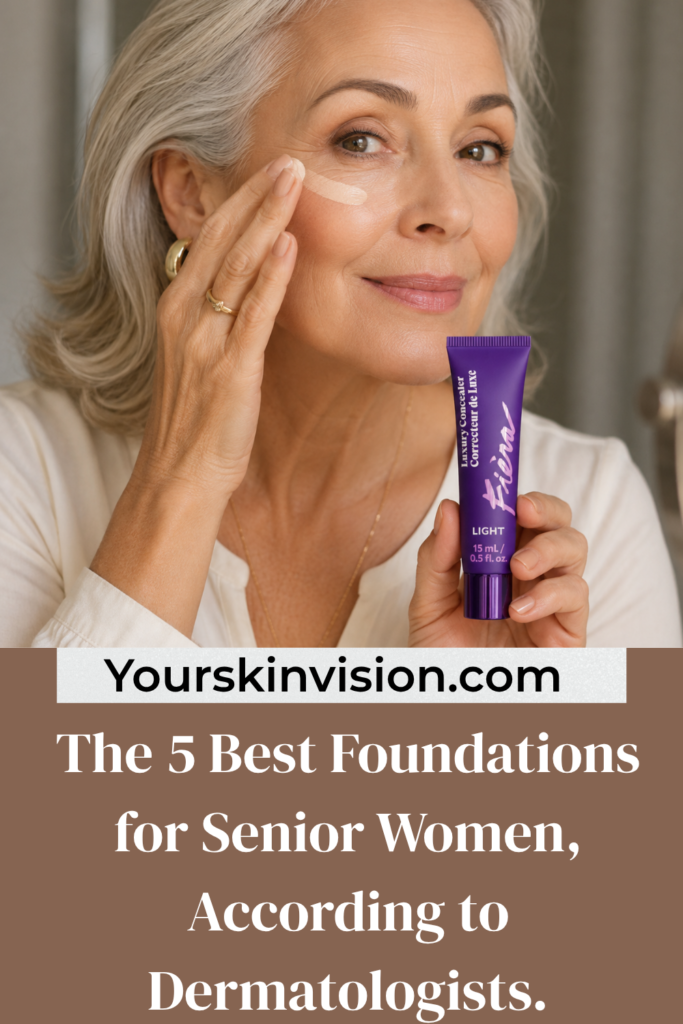
Table of Contents
This Is What Mature Skin Should Look for in a Foundation.
Mature skin loses sebum and ceramides over time, and that loss changes everything about how makeup behaves on your face. Dryness becomes the main concern, not oiliness, so a foundation built for younger, oilier skin often backfires here. It clings to flaky patches. It settles into lines by noon. It can even make wrinkles look deeper than they are.
Board-certified dermatologists point to a few ingredients as non-negotiable for this stage of skin. Hyaluronic acid pulls moisture into the skin and keeps that moisture there throughout the day. Ceramides rebuild the skin’s natural barrier, which thins with age.
Niacinamide (vitamin B3) calms redness and supports an even tone without feeling heavy. Vitamin C brightens dullness, which becomes more noticeable as cell turnover slows down. Because dead skin cells build up more slowly, they also shed more slowly, which leaves a duller, rougher surface for foundation to sit on.
A hydrating primer or serum underneath helps enormously here. So does choosing a foundation with a dewy or satin finish instead of a flat matte one, since matte formulas tend to emphasize texture rather than soften it.
Coverage Level Matters More Than You’d Think
Full coverage doesn’t automatically mean better coverage once you’re dealing with fine lines and textured skin. Heavy, cakey formulas pool into creases and draw attention to exactly what you’re trying to soften.
Medium, buildable coverage tends to work better because you can layer it only where you need it, like over age spots or redness, while leaving the rest of your face lighter and more natural.
A lighter formula also photographs better and looks more natural in daylight, which matters if you’re not used to wearing heavy makeup. You get the benefit of an even tone without anyone clocking that you’re wearing foundation at all.
Here are The 5 Best Foundations for Senior Women.

1. L’Oréal Paris Infallible Fresh Wear Foundation (Overall Best Pick)
This drugstore foundation punches well above its price point, and it’s become a favorite recommendation among both makeup artists and dermatologists for mature skin. It’s a serum-foundation hybrid, meaning it’s built around a hydrating core rather than treated as an afterthought.
Niacinamide sits at the center of the formula, working to calm redness and even out tone, while glycerin keeps the skin feeling hydrated instead of dry and tight by the afternoon. What makes this one stand out for senior skin specifically is how it wears. It doesn’t grab onto dry patches or settle into fine lines the way older matte formulas tend to.
Instead, it lays down a lightweight, breathable layer that looks like skin rather than makeup. Dermatologists have specifically pointed to this formula as one that won’t sit in creases, which is exactly the complaint most common among women over 60 trying full-coverage foundations for the first time in years.
It combines dermatologist-backed ingredients, a flattering satin finish, and a genuinely affordable price, which is a rare combination. For most senior women looking for one reliable everyday foundation, this is the one to start with.
User Comments:
A common theme among reviewers in their 60s and 70s is genuine surprise at how “skin-like” this foundation feels, especially compared to older formulas they’d used for decades. Several shoppers describe applying it with just their fingers and getting a smooth, hydrated finish without the greasy sheen some serum foundations leave behind. The most repeated complaint involves shade matching, since a few of the deeper and lighter shades can shift slightly warm or orange on some skin tones, so ordering two shades to compare in daylight is a smart move before committing.

2. IT Cosmetics CC+ Cream with SPF 50+
This CC cream has built a loyal following for a reason: it treats skincare and makeup as the same job instead of two separate steps. The formula includes hyaluronic acid, peptides, and niacinamide, layered under a genuinely high SPF 50+ rating, which is one of the strongest sun protection levels you’ll find in any foundation on this list.
The texture leans creamy and buildable, so a thin layer evens out mild discoloration, while a second pass over stubborn spots or redness adds targeted coverage without caking. Because it’s color-correcting by design, it handles redness and sallowness particularly well, which are two of the most common tone concerns dermatologists flag for mature skin.
The SPF 50+ rating alone makes this one worth considering for daily wear, and the anti-aging ingredient list checks nearly every box dermatologists recommend.
User Comments:
Reviewers frequently mention that this product feels more like a skincare step than a makeup step, crediting the peptide and hyaluronic acid blend for a noticeably smoother, plumper look throughout the day. Several longtime users describe sticking with this formula for years because it’s one of the few that doesn’t accentuate fine lines around the eyes and mouth. On the downside, a portion of reviewers with very dry skin mention needing a rich moisturizer underneath, since the formula can still cling slightly to flaky patches if skin isn’t properly prepped first.

3.Fièra Luxury Concealer & Foundation with Anti-Aging Ingredients – Light (0N)
Fièra Luxury Concealer & Foundation in Light (0N) is a great option if you want full coverage while giving your skin some added skincare benefits. Designed with mature skin in mind, this 2-in-1 cream helps cover dark circles, redness, age spots, discoloration, and other imperfections while leaving a dewy finish.
What makes this product different is its anti-aging formula. It contains hyaluronic acid, hydrolyzed collagen, vitamins, antioxidants, and peptides that help keep the skin looking hydrated, smoother, and brighter. It is also dermatologist-tested, cruelty-free, paraben-free, and GMO-free, making it appealing for different skin types, including sensitive and dry skin.
The coverage is full, but you are advised to use only about one-quarter of the amount you would normally use with a concealer. The trick is to warm the cream between your fingers before applying. Once it softens, it blends more easily and gives a smoother finish. This step is especially important because the formula can feel quite thick straight from the tube.
It sits in the premium range. Customer experiences are mixed, with many praising its coverage and ability to avoid settling into fine lines, while others find it difficult to blend or too heavy. If you prefer a rich, moisturizing concealer with strong coverage and added anti-aging ingredients, Fièra is worth trying.

4. Jones Road What The Foundation
This one takes a different approach entirely. Instead of a traditional liquid foundation, it functions more like a tinted moisture balm, infused with skin-loving oils that melt into the skin rather than sitting on top of it. Celebrity makeup artist Bobbi Brown developed this formula specifically with an eye toward low-maintenance, glowy coverage that flatters mature skin without looking like a mask.
Because it’s oil-based, it absorbs differently than typical foundations, sinking in rather than sitting on the surface. That absorption gives it a natural, slightly luminous finish that softens the look of fine lines instead of settling into them. It’s not a full-coverage product, so it works best for women who want their skin to look like their skin, just more even and a bit more radiant.
For women who want the lightest possible hand and a genuinely glowy, youthful finish, this is the pick that delivers the most natural-looking result on this list.
User Comments:
Reviewers in their 50s and 60s frequently describe this as the first foundation in years that didn’t “sit in their lines,” crediting the oil-based formula for a soft, natural glow rather than a flat or heavy finish. Several mention appreciating how quickly it applies, since it works well blended with just fingertips and doesn’t require brushes or sponges. The main criticism from reviewers relates to coverage level, since anyone dealing with significant redness or dark spots may find it too sheer on its own and end up reaching for a concealer to layer on top.

5. Laura Geller Baked Balance-n-Brighten Powder Foundation in Medium
If you want a powder foundation that gives your skin a smooth, natural finish without looking heavy, Laura Geller Baked Balance-n-Brighten in Medium is a great option to consider. The shade Medium (04) provides medium, buildable coverage that helps even out redness, discoloration, and other imperfections while still letting your skin look like skin.
What makes this foundation stand out is its self-adjusting, color-correcting formula. The multicolored pigments work together as you blend, helping balance uneven tones instead of leaving you with a flat or overly made-up appearance. I also love that it is handmade in Italy, where the cream-based formula is baked for 24 hours on terracotta tiles to create its silky, lightweight texture.
This powder is especially appealing if you have mature or sensitive skin and worry about foundation settling into fine lines. It feels comfortable, blends easily, and gives a natural finish without looking chalky or cakey. Ingredients like Centella Asiatica, Green Tea Extract, Vitamin E, and Jojoba Oil add to its skin-friendly appeal.
The compact 9g size is convenient for touch-ups, while the buildable coverage works for both everyday makeup and evening looks. If you want an easy-to-use foundation that evens your complexion, feels lightweight, and gives mature skin a beautiful finish, this one is worth trying.
How Should You Apply Foundation to Avoid Looking Cakey?
Application technique changes just as much as the formula itself once skin matures, and dermatologists say this step gets overlooked more than any other. A foundation brush that worked beautifully at 30 can drag product into fine lines at 60, simply because the bristles don’t distribute the formula the same way on thinner, drier skin.
Damp makeup sponges tend to work better for mature skin because they press product into the skin rather than dragging it across the surface. That pressing motion helps the foundation sit flush with your skin instead of resting on top of dry patches, where it can flake or crack later in the day. Fingertips work well too, especially with lighter, serum-style formulas, because your own body heat helps melt the product in for a more natural, second-skin look.
Prep matters just as much as application. A hydrating moisturizer needs a few minutes to fully absorb before foundation goes on, or the product will slide around and pill instead of blending smoothly. If your skin still feels tight or dry after moisturizer, a hydrating primer adds an extra buffer layer that helps foundation glide on evenly and last longer without settling into creases.
Should You Set Foundation with Powder If You Have Mature Skin?
This is one of the most common questions dermatologists get from women over 60, and the answer is usually a soft no, or at least not everywhere. Powder can absorb the very hydration your foundation is working to provide, and it tends to sit in fine lines rather than smoothing over them, which undoes a lot of the benefit of a good hydrating formula in the first place.
If shine control is a real concern, especially through the T-zone by midday, a light dusting of powder only in the areas that need it works far better than an all-over application. Some women skip loose or pressed powder entirely and instead reach for blotting papers, which absorb excess oil without disturbing the makeup underneath or adding extra dryness anywhere else on the face.
Common Questions About Foundation for Mature Skin
- Does foundation make wrinkles look worse? It can, but usually only when the formula is too heavy, too matte, or applied with the wrong tools. Thick formulas cling to texture and pool into fine lines, which is why dermatologists steer mature skin toward lighter, hydrating formulas instead. A satin or dewy finish reflects light softly, and that soft reflection actually blurs the appearance of lines rather than deepening their shadows.
- How often should you switch foundations as you age? There’s no fixed schedule, but it’s worth reassessing every year or two, especially if your skin has become noticeably drier, your usual shade looks off, or your current formula has started settling into creases it never used to. Skin changes gradually, so a formula that worked perfectly a few years ago can quietly stop being the right fit without you noticing right away.
- Is it better to use a foundation with SPF or a separate sunscreen? Ideally, both. Foundation SPF adds a helpful layer of protection, but most people don’t apply enough to hit the number on the label. A dedicated sunscreen underneath, followed by an SPF-infused foundation on top, gives you more reliable coverage than relying on either product alone.
- What’s the difference between a CC cream and a traditional foundation? CC stands for color-correcting, and these formulas typically include a lighter texture along with pigments designed to neutralize redness or sallowness before you even add coverage. They tend to feel more like skincare than makeup, which is part of why they’ve become popular among women managing dryness and sensitivity alongside typical coverage needs.
- Can you still wear full-coverage foundation after 60? Yes, but the key is choosing a full-coverage formula built with hydrating ingredients rather than an older, heavier formula designed for oily or younger skin. Buildable, medium-to-full coverage products let you layer only where needed, like over dark spots or redness, while keeping the rest of your face lighter and more natural-looking.
Conclusion
The right foundation for senior skin isn’t about finding the heaviest coverage or the trendiest formula. It’s about hydration, gentle ingredients, and a finish that works with your skin instead of against it.
L’Oréal’s Infallible Fresh Wear stands out as the best overall pick because it balances dermatologist-approved ingredients with an accessible price, but each option on this list solves a slightly different problem, whether that’s sun protection, sensitivity, or a barely-there glow.
Because skin changes year to year, it’s worth re-testing your shade and formula every so often rather than sticking with the same product out of habit. What worked five years ago might not be doing your skin any favors today, and a small switch can make a noticeably bigger difference than you’d expect.
Other Related Articles
- The 5 Best Foundations for Large Pores and Oily Skin, According to Dermatologists.
- The 5 Best Foundations for Dry Flaky Skin According to Dermatologists
- The 5 Best Foundations for Over 40 Women, According to Makeup Artists
- The 5 Best Foundations for Perioral Dermatitis, According to Dermatologists.
- The 5 Best Foundations for Pink Undertones, According to Dermatologists.
- The 5 Best Foundations for Rosacea Over 50, According to Dermatologists.
