
If you’ve ever noticed a bald patch on your cat’s fur and panicked, you’re not alone. Ringworm in cats is one of those conditions that sounds terrifying but is actually more common than most pet owners realize. Here’s the first thing you need to know: it has nothing to do with worms. Not even slightly. Ringworm is a fungal infection, technically called dermatophytosis, and it can affect your cat’s skin, hair, and nails.
What makes it genuinely tricky is how easily it spreads. Your cat can pass it to you, your kids, your dog, and even your furniture. So understanding this condition isn’t just about keeping your cat comfortable; it’s about protecting your whole household.
This article covers everything: what causes it, what it looks like, how vets diagnose and treat it, what home remedies are worth trying (and which ones to skip), and how to stop it from coming back.
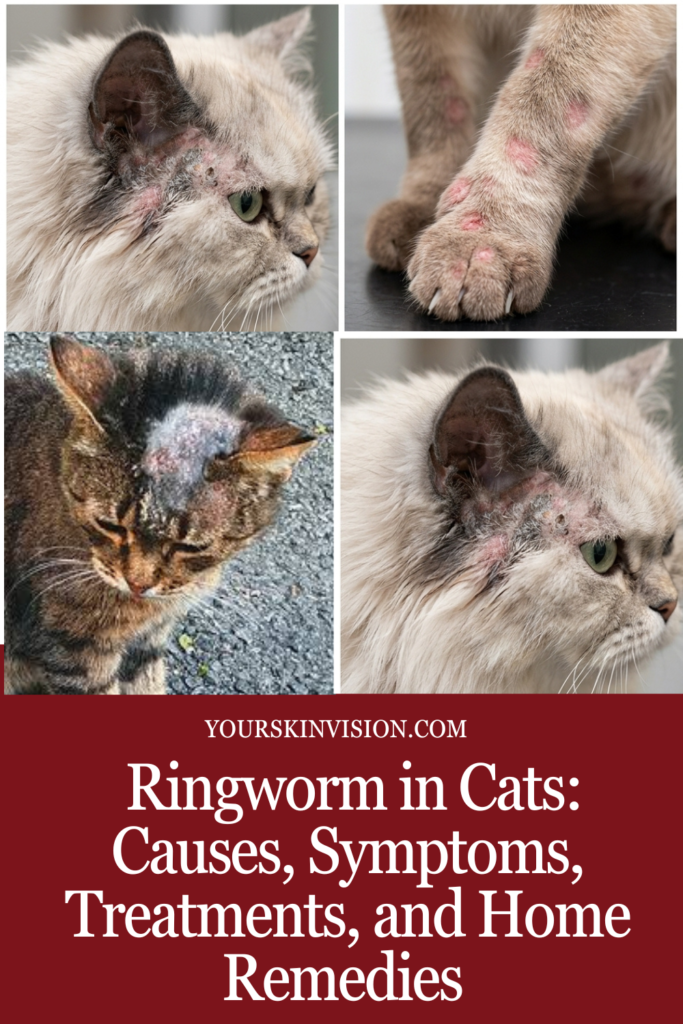
Table of Contents
What Exactly Is Ringworm in Cats, and Why Is It Called That?
Ringworm gets its name from humans, not cats. When the fungal infection appears on human skin, it tends to form a circular, ring-shaped lesion with a scaly red border, hence the name. In cats, however, the shape isn’t always a perfect ring, which makes diagnosis trickier for owners trying to identify it at home.
The scientific name for this condition is dermatophytosis, and it comes from a group of fungi called dermatophytes. These fungi feed on keratin, the protein found in skin cells, hair follicles, and nails. According to the International Cat Care organization, the species most responsible for feline infections is Microsporum canis, which accounts for roughly 98% of all cat ringworm cases.
What’s important to understand is that this fungus doesn’t need a wound or a bite to enter the body. It simply needs contact with infected skin or contaminated surfaces to establish itself. And once it does, it’s stubborn.
What Causes Ringworm in Cats? Is Your Cat at Risk?
The Fungal Culprits Behind the Infection
Three specific fungi cause most feline ringworm cases. Microsporum canis is by far the most common and almost always originates from an infected cat. Microsporum gypseum typically comes from cats that dig in contaminated soil. Trichophyton mentagrophytes infects cats through exposure to rodents or their burrows.
Cats pick up these fungi through direct contact with an infected animal or by touching contaminated objects, bedding, grooming tools, food bowls, or even furniture. The fungal spores are resilient. They can survive in your home environment for up to 18 months, according to Hill’s Pet Nutrition, which means even a thoroughly cleaned house can harbor lingering spores in carpets or upholstered surfaces.
Which Cats Are Most Vulnerable?
Not every cat that encounters ringworm spores will develop an infection. A cat’s immune system plays a huge role in whether the fungus takes hold. According to veterinary sources, including PetMD and Cats.com, the following cats are at higher risk:
- Kittens — their immune systems aren’t fully developed yet
- Senior cats — especially those with an immune system decline
- Cats with underlying illnesses — like FIV, FeLV, or other conditions that suppress immunity
- Cats in shelters or multi-pet homes — where exposure is constant, and stress is higher
- Long-haired breeds — because spores can hide deep in dense fur
Outdoor cats face greater exposure than indoor cats because they encounter wildlife, infected strays, and contaminated soil far more often. However, indoor cats are not completely safe. Spores can travel indoors on clothing, shoes, or other pets.
What Does Ringworm Look Like in Cats? How Do You Spot the Symptoms?
This is where things get confusing, because ringworm in cats doesn’t always look the way you’d expect.
The Classic Signs
The most obvious sign is patchy hair loss, small, roughly circular bald spots that often appear first on the ears, face, paws, or tail. The skin underneath may look red, scaly, or crusty. Some cats scratch at these spots constantly. Others barely react at all.
In more severe cases, the skin lesions become raised and nodular. These are called granulomas, and they sometimes produce discharge. According to Cats.com, common visible symptoms include:
- Patchy or widespread hair loss
- Crusty or scabby skin
- Red or inflamed skin patches
- Sores or open lesions
- Brittle, broken nails
- General itchiness and discomfort
The Silent Carriers
Here’s the part that catches a lot of owners off guard: many cats, especially long-haired breeds, carry ringworm without showing any symptoms at all. They look completely healthy. Their coat looks fine. But they’re actively shedding millions of microscopic spores into your home and onto anyone who touches them.
This is why ringworm spreads so easily in households, and why it’s so important to get a proper diagnosis rather than simply waiting to see if things improve.
When Symptoms Appear
The incubation period, the time between exposure and visible symptoms, is typically 7 to 14 days. In some cases, it can take 3 to 4 weeks before any signs show up, according to PetMD. So if your cat was in contact with an infected animal, don’t assume they’re in the clear just because they look fine a week later.
How Do Vets Diagnose Ringworm in Cats?
Getting an accurate diagnosis matters more than many owners realize. Several other skin conditions, including allergies, flea allergy dermatitis, bacterial infections, and mange, can look almost identical to ringworm. Treating the wrong condition wastes time and can make things worse.
Wood’s Lamp Examination
The first tool most vets reach for is a Wood’s lamp, an ultraviolet light that causes some (not all) ringworm-infected hairs to glow yellow-green. However, this test only picks up about 50% of Microsporum canis infections, according to the ABCD Cats and Vets guidelines. A negative result doesn’t rule ringworm out.
Fungal Culture
The gold standard for diagnosis is a fungal culture, samples of hair and skin scales taken from the edge of a lesion, then grown on a culture medium over 10 to 14 days. This method accurately identifies the species of fungus present and guides treatment decisions. The downside is the wait time.
PCR Testing and Skin Biopsy
Polymerase chain reaction (PCR) testing offers faster results and high accuracy. A 2024 study published in Veterinary Dermatology found that adhesive tape impression cytology actually outperformed Wood’s lamp examination and trichogram analysis for diagnosing dermatophytosis in dogs and cats. Your vet may also recommend a skin biopsy in complicated or stubborn cases.
What Are the Best Treatments for Ringworm in Cats?
Treatment for ringworm in cats usually involves a combination of topical and oral antifungal medications, along with thorough environmental decontamination. There’s no single quick fix; consistency is the key.
Topical Antifungal Treatments
Topical treatments work by killing fungal spores on the skin’s surface. Your vet may prescribe:
- Antifungal creams or ointments applied directly to lesions
- Antifungal shampoos are used to bathe the whole body twice weekly
- Lime sulfur dip — one of the most effective whole-body treatments, used twice per week at a 0.2% enilconazole solution or diluted lime sulfur concentration
Topical treatment typically continues for several weeks, even after visible symptoms clear up. Stopping too early is one of the most common mistakes cat owners make, because the fungus can still be present even when the skin looks healed.
One important note: if your vet prescribes a topical cream, keep your cat from licking it off. Apply it during mealtime or playtime as a distraction, and offer treats to buy yourself a few extra minutes.
Oral Antifungal Medications
For moderate to severe cases, or when topical treatment alone isn’t working, vets prescribe oral antifungal medications. According to International Cat Care, these are typically given for a minimum of six weeks. Common options include:
- Itraconazole — the most widely used oral antifungal for cats
- Terbinafine — sometimes used as an alternative
- Griseofulvin — less commonly prescribed today due to potential side effects
Your vet will monitor your cat’s response to medication and may adjust the dosage or duration depending on how the infection responds. Side effects are possible, so never use leftover human antifungal medication on your cat without veterinary guidance.
Shaving or Clipping the Fur
In some cases, especially with long-haired cats, your vet may recommend clipping the fur around lesions or even a full-body clip. This removes a major source of spores and makes topical treatments more effective. It also makes monitoring the skin for improvement much easier.
How Long Does Treatment Take?
Treatment takes a minimum of six weeks, and in some cases, significantly longer. According to Vetster, most cat owners should expect treatment to continue at home over many weeks to months. You should see some improvement within 2 to 3 weeks of starting treatment, according to PetMD, but that doesn’t mean the infection is gone.
Are There Home Remedies for Ringworm in Cats? What Actually Works?
This is one of the most searched questions about feline ringworm, and the answer requires some honest nuance. Most veterinary sources are cautious, or outright skeptical, about home remedies as standalone treatments. However, some supportive measures can complement veterinary care.
Coconut Oil
Coconut oil has demonstrated some antifungal properties in human skin studies. Applied directly to the affected area two to three times per day, it’s one of the gentler options. Catster notes that even if it doesn’t fully clear the infection, it won’t harm your cat and may provide some relief for irritated skin. It also keeps the coat moisturized during a period when skin integrity is already compromised.
Diluted Lemongrass Essential Oil
Lemongrass oil can kill a variety of fungi, which makes it a candidate for ringworm treatment. However, it’s critical to dilute it properly before applying it near a cat; undiluted essential oils can be toxic to felines. Use coconut oil as a carrier oil and apply sparingly to affected areas.
Myrrh Oil (Diluted)
Myrrh oil, derived from the sap of trees native to Africa and Asia, has known antifungal properties. Like lemongrass oil, it must be diluted before use. Some sources suggest that a properly diluted poultice applied to ringworm patches may accelerate healing.
Environmental Cleaning, The Most Important “Home Remedy”
Honestly, the most effective thing you can do at home isn’t something you apply to your cat; it’s cleaning your living space. Because ringworm spores can survive in the environment for up to 18 months, decontamination is non-negotiable. Follow these steps consistently throughout the treatment period:
- Isolate your infected cat to one room that’s easy to clean
- Vacuum all carpets and upholstered surfaces daily; don’t sweep, as this spreads spores through the air
- Damp mop or Swiffer hard floors instead of dry sweeping
- Steam clean carpets where possible
- Wipe hard surfaces with diluted bleach, one part bleach to nine parts water, and leave it on for at least 10 minutes
- Wash all bedding, blankets, and soft toys in hot water regularly
- Replace the grooming tools that the infected cat used
According to Best Friends Animal Society, restricting the infected cat to one area during treatment is one of the most effective ways to prevent household-wide spread.
What to Avoid
Hydrogen peroxide is a common suggestion you’ll find online, but veterinary sources confirm it’s not effective against ringworm fungi. The fizzing action may also stress your cat unnecessarily. Similarly, apple cider vinegar, another popular suggestion, lacks clinical evidence of effectiveness and may irritate already-sensitive skin.
Can Ringworm Spread from Cats to Humans? How Do You Stay Safe?
Yes, ringworm is a zoonotic disease, which means it spreads between animals and people. This is important for every family member, not just your cat. Humans typically develop the classic ring-shaped, itchy red lesion on the skin when infected.
Children, elderly people, and anyone with a compromised immune system are at higher risk of contracting it. According to Long Beach Animal Hospital, a cat can transmit ringworm to a person without ever showing any symptoms itself.
To protect your household during an active infection:
- Wear gloves when handling your cat or cleaning affected areas
- Wash your hands thoroughly with soap and water after every interaction
- Keep children from handling the infected cat during treatment
- See a doctor promptly if any household member develops unexplained skin lesions
The good news is that ringworm in humans responds well to over-the-counter antifungal creams in most cases. Scalp infections, however, require prescription oral medication.
How Do You Prevent Ringworm from Coming Back?
Prevention isn’t foolproof, but a few consistent habits significantly lower your cat’s risk.
Keep Your Cat Indoors
Indoor cats have far less exposure to infected animals, wildlife, and contaminated soil. This alone dramatically reduces the likelihood of future infections.
Quarantine New Cats
Before introducing any new cat to your home, quarantine them for at least two weeks and have them tested for ringworm, especially if they show signs of an unhealthy coat or skin. Shelters and breeders are common sources of ringworm exposure, and a newly adopted cat may be an asymptomatic carrier.
Support Immune Health
A healthy immune system is your cat’s best defense. Feed a high-quality diet formulated for your cat’s life stage, maintain regular veterinary check-ups, and keep up with vaccinations and parasite prevention. According to Hill’s Pet Nutrition, cats in optimal health are far less likely to develop active ringworm infections even if they encounter the fungal spores.
Keep the Home Clean
Regular vacuuming, frequent washing of pet bedding, and periodic wiping of hard surfaces reduce the environmental spore load. If your cat has had ringworm before, this habit is especially worth maintaining year-round.
Regular Vet Check-Ups
Catching underlying conditions early, such as immune disorders, viral infections, or chronic diseases, prevents them from lowering your cat’s defenses. A cat dealing with a chronic illness is significantly more susceptible to ringworm.
Conclusion
Ringworm in cats sounds alarming, but the reality is that it’s one of the most manageable feline skin conditions when caught early and treated properly. The infection responds well to antifungal medication, and most cats recover fully with consistent treatment over six weeks or more.
The real danger lies in waiting. Without treatment, ringworm can take anywhere from nine months to a full year to resolve on its own, and during that entire period, your cat is uncomfortable and spreading spores to every person and pet in your home.
If you notice unexplained bald patches, scaly skin, or crusty lesions on your cat, get to a vet. Don’t try to guess based on appearance alone, because other conditions can look identical. Once you have a confirmed diagnosis, stick to the treatment plan, thoroughly clean your environment, and isolate your cat during treatment.
Other Related Articles
- Is Coconut Oil Safe for Cats? What Every Owner Must Know
- Ringworm in Dogs: Causes, Symptoms, Treatments
- My Child Has Ringworm: What Every Parent Needs to Know Right Now
- Ringworm in Humans: Causes, Symptoms, Treatments
- The 6 Best Antifungal Sprays for Dogs, According to Veterinary Doctors
- The 5 Best Coconut Oils for Dogs’ Teeth, According to Veterinarians
Sources
- International Cat Care (updated September 2025)
- PetMD (reviewed by Dr. Katie Grzyb, DVM)
- Vetster; Hill’s Pet Nutrition
- Cats.com
- Best Friends Animal Society
- ABCD Cats and Vets Clinical Guidelines
- Long Beach Animal Hospital
- GoodRx Pet Health (reviewed by Dr. Sarah J. Wooten, DVM, CVJ, updated August 2025).
