
Dark spots are one of the most persistent skin concerns dermatologists treat, and they’re also one of the most mismanaged. Most people attack them with serums, spot treatments, and masks while completely overlooking the cleanser step.
That’s a missed opportunity. The right facial cleanser for dark spots does more than remove makeup and debris. It delivers active brightening ingredients niacinamide, alpha arbutin, kojic acid, or low-concentration AHAs- directly to hyperpigmented skin twice daily during the cleansing contact period. It also prepares the skin surface so that subsequent brightening treatments penetrate more effectively.
The wrong cleanser actively worsens dark spots by stripping the barrier, triggering inflammation, or leaving behind ingredients that stimulate the melanin production it was supposed to reduce. Dermatologists select cleansers for dark spots with the same precision they apply to treatment serums. This article covers their top recommendations, all on Amazon.
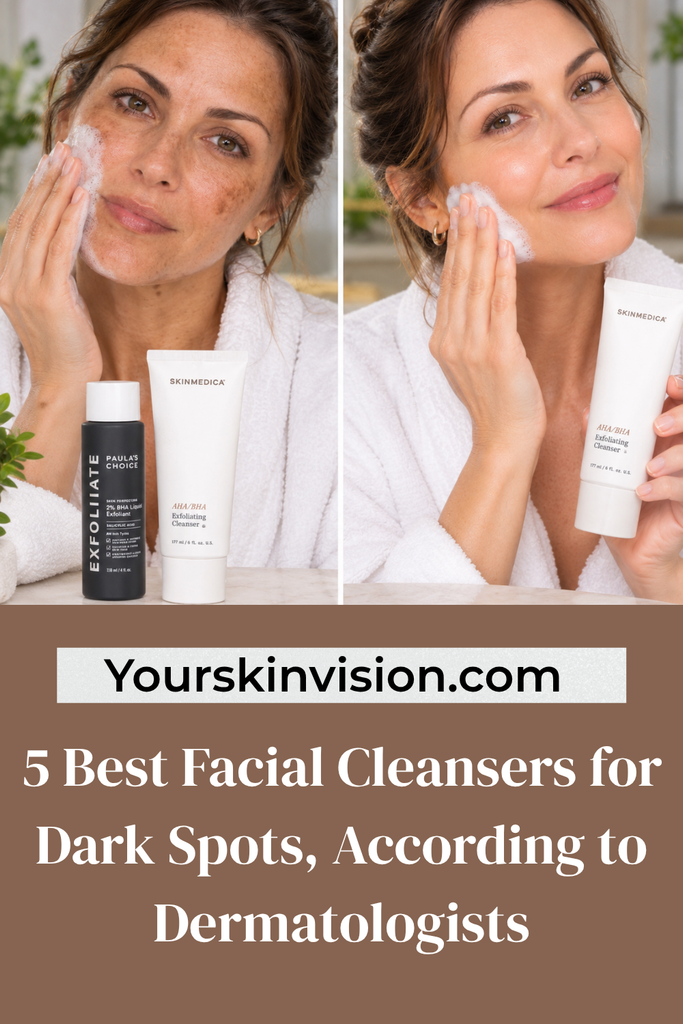
Table of Contents
How Do Cleansers Affect Dark Spots on the Skin?
Dermatologists consistently emphasize that dark spot treatment requires a whole-routine approach, and the cleanser sits at the foundation of that routine, determining how effectively every subsequent step performs. A cleanser can actively contribute to dark spot fading or actively undermine it.
Board-certified dermatologist Dr. Corey L. Hartman, founder of Skin Wellness Dermatology in Birmingham, Alabama, and a widely cited expert in Men’s Health, Allure, and Essence, explains that dark spots, whether from post-inflammatory hyperpigmentation (PIH), sun damage, melasma, or age spots, share a common driver: excess melanin produced by overactive or dysregulated melanocytes.
The most important daily habit for dark spots isn’t any treatment product. It’s consistent broad-spectrum SPF application, because UV exposure reactivates melanocyte overproduction every single day, darkening spots that brightening treatments are working to fade.
The cleanser’s role in dark spot management includes:
- Delivering brightening actives during the cleansing contact period — ingredients like niacinamide, kojic acid, alpha arbutin, and glycolic acid in a cleanser formula provide twice-daily active exposure to hyperpigmented skin even at brief contact times. Niacinamide at 2-5% in a cleanser inhibits melanin transfer during cleansing. Glycolic acid at 1-3% in a rinse-off formula provides gentle surface exfoliation that removes pigmented surface cells.
- Exfoliating the pigmented surface layer — dark spots sit primarily in the upper layers of the epidermis. Regular AHA exfoliation accelerates the removal of these pigmented cells, bringing the lighter cells below to the surface faster than the skin’s natural turnover would achieve. Dermatologists recommend low-concentration AHA cleansers for this daily surface exfoliation role.
- Removing the SPF completely — every dermatologist treating dark spots emphasizes that SPF worn during the day must be completely removed in the evening to prevent it from occluding the skin and interfering with overnight brightening treatments. A cleanser effective enough for complete SPF removal is essential in any dark spot routine.
- Avoiding ingredients that worsen pigmentation — fragrance, alcohol, and certain preservatives trigger the low-grade inflammation that activates melanocytes and worsens dark spots. Dermatologists specifically recommend fragrance-free cleansers for any patient with hyperpigmentation concerns because fragrance-triggered contact dermatitis is a well-documented cause of PIH, particularly in deeper skin tones.
- Preparing for brightening treatment penetration — a clean, lightly exfoliated skin surface allows vitamin C serums, niacinamide treatments, and retinol to penetrate more effectively in the post-cleanse window. Dermatologists recommend applying brightening actives within sixty seconds of cleansing when the prepared skin surface is most receptive.
Here are 5 Facial Cleansers Dermatologists Rank as the Best Overall for Dark Spots

1. Overall Best: The Inkey List Salicylic Cleanser
The Inkey List Salicylic Cleanser earns the top dermatologist recommendation for dark spots because niacinamide, at the 2% concentration in this formula, delivers twice-daily melanin transfer inhibition during the cleansing step, addressing the pigmentation mechanism directly rather than simply preparing the skin for treatment.
Dermatologists point to Salicylic’s specific mechanism for dark spots as particularly valuable in a cleanser format: niacinamide inhibits the transfer of melanosomes (melanin-containing organelles) from melanocytes to surrounding keratinocytes.
This inhibition occurs at the cellular communication stage, before the pigment reaches the surface where it becomes a visible dark spot. Even at brief cleanser contact times, consistent twice-daily niacinamide application to hyperpigmented skin produces measurable melanin transfer inhibition that compounds over weeks of use.
Clinical studies published in the International Journal of Cosmetic Science confirm that 5% topical salicylic acid produces significant lightening of hyperpigmented lesions within four weeks of twice-daily application. The 2% in this cleanser operates at a lower concentration through a rinse-off format, but the twice-daily consistency over months produces meaningful cumulative brightening alongside the primary brightening treatment in the routine.
The sulfate-free formula suits hyperpigmentation-prone skin types, including deeper skin tones that are more susceptible to PIH from barrier disruption and inflammation. The gentle surfactant system cleans without stripping, which can trigger compensatory inflammation that worsens dark spots.
User Comments:
“My post-acne PIH marks were my biggest skin concern, and my dermatologist told me niacinamide was the most important active for inhibiting melanin transfer at the source. She recommended starting with The Inkey List Salicylic Cleanser to get twice-daily niacinamide exposure from the very beginning of my routine. After eight weeks of morning and evening use, my dark spots are fading noticeably faster than before I added this cleanser. My marks that typically took six months to clear are significantly lighter at two months. The consistent twice-daily niacinamide delivery has made a real difference.”
“My dermatologist said my dark spots needed niacinamide at every possible step in my routine. Starting with the cleanser made sense; I was getting salicylic twice a day before anything else even touched my skin. The Inkey List Salicylic Cleanser has been the foundation of the routine that finally started moving my dark spots. After three months of consistent use alongside my niacinamide serum and vitamin C, my hyperpigmentation is the most improved it’s been in years. The cumulative twice-daily cleanser exposure was the piece I hadn’t been using before.”

2: Paula’s Choice Smoothing Treatment Cleanser with Niacinamide and AHA
Paula’s Choice Smoothing Treatment Cleanser combines niacinamide’s melanin transfer inhibition with low-concentration lactic acid exfoliation, addressing dark spots through two complementary mechanisms in a single cleanser that dermatologists identify as one of the most comprehensive accessible options for hyperpigmentation-focused cleansing.
Dermatologists recommend lactic acid specifically for dark spots because its exfoliation of the surface epidermis removes pigmented cells while simultaneously providing hydration through its humectant properties, important for darker skin tones and dry skin types where aggressive exfoliation can cause the post-inflammatory irritation that worsens the very PIH it’s intended to treat.
The niacinamide prevents new melanin from reaching the surface while the lactic acid removes the existing pigment, a two-layer approach that addresses both the ongoing production and the accumulated deposit of hyperpigmentation simultaneously.
Paula’s Choice formulates without fragrance and essential oils across its range, a choice dermatologists value for dark spot treatment because fragrance can trigger the inflammation that drives PIH.
User Comments:
“My sun spots and post-acne marks needed an exfoliating approach alongside niacinamide. My dermatologist recommended Paula’s Choice Smoothing Cleanser for the lactic acid plus niacinamide combination; she said the two mechanisms working together would produce faster results than either alone. After six weeks of daily evening use, my surface pigmentation has visibly lifted, and my dark spots are fading faster than they did on my previous brightening-only routine. The exfoliation reveals the lighter skin cells beneath the pigmented layer consistently.”
“My dermatologist said my dark spots were sitting in the superficial epidermis and that regular AHA exfoliation would accelerate their removal significantly. She recommended Paula’s Choice for the lactic acid at an appropriate concentration that wouldn’t irritate my somewhat sensitive skin. Combined with the niacinamide in the same formula, my dark spots have responded better to this single cleanser change than to the expensive brightening serum I’d been using on its own. The cleanser does the foundational work that makes everything else more effective.”

3: Neutrogena Rapid Tone Repair Retinol + Vitamin C Serum Cleanser
Neutrogena’s Rapid Tone Repair Cleanser earns dermatologist recommendations for dark spots through a formula that addresses hyperpigmentation at the collagen and cell-turnover level, combining retinol with vitamin C in a cleanser format that delivers two of the most evidence-backed brightening actives to dark spot-prone skin at the cleansing step.
Dermatologists recommend retinol for dark spots because it accelerates cell turnover at the follicular and epidermal level, pushing pigmented cells to the surface and shedding them more rapidly than the skin’s natural cycle achieves. The retinol concentration in a rinse-off cleanser is lower than leave-on treatments, but consistent twice-daily exposure provides cumulative cell turnover support that compounds over months.
Vitamin C provides antioxidant protection that prevents the UV-triggered melanocyte stimulation that darkens existing spots and creates new ones, addressing the environmental driver of hyperpigmentation alongside the cellular turnover mechanism that retinol provides. The combination of both in a morning cleanser gives dark spot-prone skin antioxidant defense before SPF even goes on.
User Comments:
“My sun damage and age spots needed both cell turnover acceleration and antioxidant protection. My dermatologist recommended Neutrogena Rapid Tone Repair Cleanser for the retinol plus vitamin C combination that addressed both mechanisms. After eight weeks of daily morning use, my age spots are visibly lighter, and my overall skin tone is more even. The vitamin C component means I’m getting antioxidant protection before my SPF, which my dermatologist said was an additional layer of protection against UV-triggered darkening.”
“I live in a high-UV environment, and my dark spots from sun damage were my primary concern. My dermatologist recommended this cleanser specifically because the vitamin C provided morning antioxidant protection against the UV melanocyte stimulation that was re-darkening spots my evening treatments were lightening. After three months of consistent morning use, my sun spots are fading more consistently than before. The antioxidant protection in the morning cleanser step was the piece my routine was missing.”

4: CeraVe Renewing SA Cleanser with Salicylic Acid
CeraVe Renewing SA Cleanser earns dermatologist recommendations for dark spots, specifically for skin where hyperpigmentation accompanies oiliness, congestion, or acne, where BHA exfoliation addresses both the pigmentation and the underlying pore congestion or post-acne breakouts that drive PIH.
Dermatologists recommend salicylic acid cleansers for PIH in acne-prone skin because treating the underlying acne directly reduces the frequency of new inflammatory events that create new PIH marks. Consistent BHA exfoliation keeps pores clearer, reduces active breakouts, and, through its surface exfoliation of follicular debris, removes some of the superficial pigmented cells that contribute to dark spot visibility.
The ceramides in this formula suit skin prone to post-inflammatory hyperpigmentation in deeper skin tones, which tends to be more reactive to barrier disruption than lighter skin, the ceramide barrier support prevents the irritation-triggered PIH that aggressive surfactant cleansers can cause in sensitive skin types dealing with existing hyperpigmentation.
User Comments:
“My dark spots came directly from acne; every breakout left a PIH mark. My dermatologist said treating the acne through BHA would reduce the new mark formation, and the surface exfoliation would help existing marks fade faster. CeraVe Renewing SA Cleanser addressed both at once. After three months, my breakout frequency has reduced significantly, and my existing marks are fading faster. The ceramide base meant my skin didn’t get irritated by the salicylic acid, no new inflammation created new marks while I was clearing old ones.”
“My oily, acne-prone skin with PIH marks needed a BHA cleanser, but my previous salicylic acid cleanser irritated my skin and seemed to create new marks from the irritation itself. My dermatologist recommended CeraVe Renewing SA for the ceramide buffer alongside the salicylic acid; it treats the acne driving my PIH without the barrier disruption that causes PIH through irritation. After six weeks, my marks are fading, and my skin barrier feels significantly more resilient. The combination of BHA and ceramides was exactly right for my skin type.”

5: SkinMedica AHA/BHA Exfoliating Cleanser
SkinMedica AHA/BHA Exfoliating Cleanser is a great option if your skin looks dull, feels rough, or you’re dealing with clogged pores and uneven texture. It gives you that satisfying deep-clean feeling without leaving your face feeling completely stripped.
What I like most is the combination of AHAs and BHA. Lactic, glycolic, citric, and malic acids help lift away dead skin cells and improve the look of uneven texture, while salicylic acid works inside the pores to help clear away excess oil and buildup. The jojoba spheres add gentle physical exfoliation, so your skin feels noticeably smoother after cleansing.
The cleanser foams nicely, and only a small amount is needed, making the bottle last longer. With regular use, skin can look fresher, brighter, and more polished, and it also helps create a smoother base for serums and moisturizers.
That said, this is an exfoliating cleanser, so I wouldn’t overuse it if your skin is sensitive or already irritated. Start slowly and see how your skin responds. Since it contains AHAs, sunscreen is especially important during the day.
If you want a cleanser that tackles dullness, rough texture, clogged pores, and excess oil in one step, this is definitely worth considering.
How To Build a Complete Dark Spot Cleansing Routine.
The cleanser is step one of a dark spot routine that requires every subsequent step to support the brightening work the cleanser initiates. Dermatologists build dark spot routines around the same framework for most patients.
- Morning dark spot routine: Cleanse with your niacinamide or brightening cleanser. Apply vitamin C serum immediately while skin is still slightly damp; the post-cleanse sixty-second window provides maximum vitamin C penetration. Follow with niacinamide serum if not already included in your cleanser. Apply non-comedogenic moisturizer. Apply broad-spectrum SPF 30 or higher; this is the most critical step in any dark spot routine. Every morning without SPF re-darkens the spots that your evening treatments lightened.
- Evening dark spot routine: Cleanse thoroughly to remove SPF completely; incomplete SPF removal leaves an occlusive film that interferes with overnight brightening treatments. Apply your primary brightening treatment: alpha arbutin serum, tranexamic acid, or prescription azelaic acid. Apply retinol or adapalene to accelerate cell turnover. Finish with a ceramide moisturizer that supports the barrier during the overnight treatment cycle.
- Track dark spots monthly with consistent photography. Dark spot fading is gradual enough that daily observation misses the progress. Monthly photos in consistent lighting, same time, same location, same distance- reveal the cumulative improvement that feels invisible week to week. Dermatologists consistently recommend this for dark spot patients to prevent premature treatment abandonment when progress is happening below the visible threshold.
Conclusion
Dark spots respond to consistent, multi-step treatment, and the cleanser that starts every morning and evening session either supports that treatment or works against it. Dermatologists choose cleansers for dark spots based on which active ingredients they deliver, how effectively they exfoliate the pigmented surface layer, and whether they avoid the inflammation-triggering ingredients that worsen hyperpigmentation rather than improving it.
The Inkey List Niacinamide Cleanser earns the overall top recommendation because niacinamide’s melanin transfer inhibition addresses the root mechanism of dark spot formation at the very beginning of every skincare routine, delivering active pigmentation management twice daily through the step that most people treat as purely functional.
Use your brightening cleanser consistently twice daily. Apply vitamin C within sixty seconds of cleansing every morning. Apply your primary brightening treatment every evening after thorough SPF removal. Protect with SPF 30 or higher every single morning without exception.
Track monthly with photos. Give the routine sixteen weeks. That complete approach, built from the evidence-backed ingredients dermatologists recommend for hyperpigmentation, produces the gradual, consistent dark spot fading that single-product approaches consistently fail to deliver.
Other Related Articles
- The Best Facial Treatment for Acne Marks, According to Dermatologists
- The 5 Best Facial Treatments for Bumps, According to Dermatologists
- The 5 Best Clotrimazole Creams, According to Dermatologists
- The 6 Best Men’s Facial Cleansers for Oily Skin, According to Dermatologists
- The 6 Best Facial Cleansers for Blackhead Removal, According to Dermatologists
- The 6 Best Acne Treatment Kits, According to Dermatologists
