
Your belly button is basically a warm, dark, slightly damp pocket, and fungi absolutely love that setup. Most people don’t think about belly button hygiene until something starts itching, smelling foul, or looking red and irritated. By that point, a fungal infection is usually already doing its thing. The good news? The right antifungal cream clears it up fast.
The tricky part is knowing which ones actually work and which ones just sit on the shelf. This article breaks down five best antifungal creams that real users have tested on belly button infections, including what dermatologists say about treating them, and which product deserves the top spot on your bathroom counter.
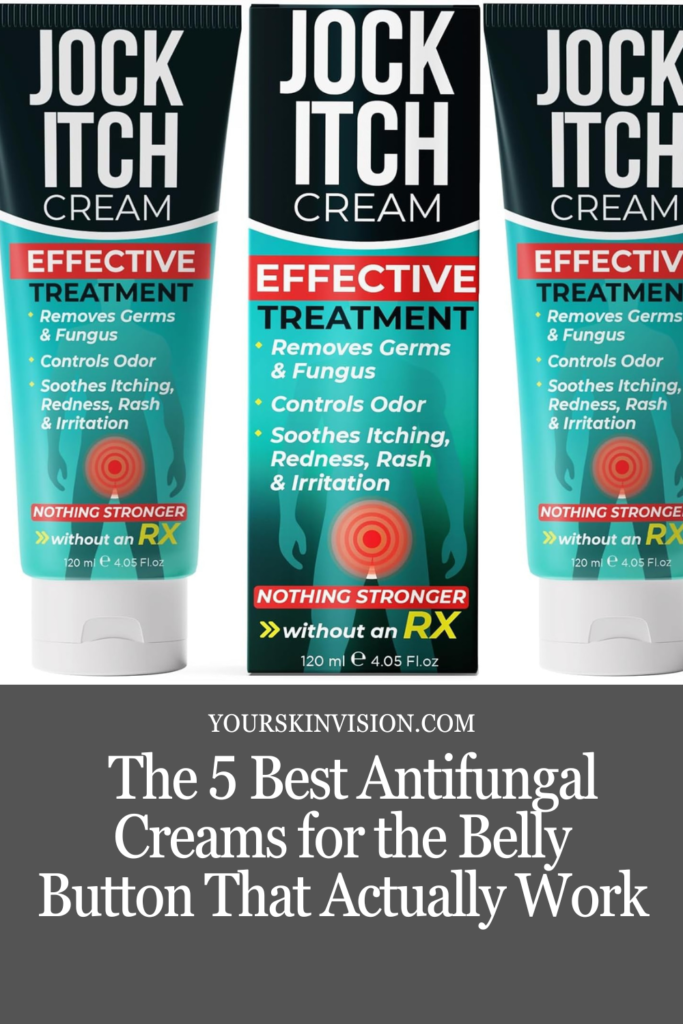
Table of Contents
What Causes a Belly Button Fungal Infection, And Should You Be Worried?
A belly button fungal infection usually comes from Candida, the same yeast responsible for oral thrush and vaginal yeast infections. Heat, sweat, and moisture create the perfect conditions for it to grow. People with deeper belly buttons, those who are overweight, diabetic, or who wear tight clothing regularly, tend to get these infections more often.
The symptoms are pretty recognizable: redness, itching, a white or yellowish discharge, and sometimes a funky smell. Left untreated, the skin can crack and become painful.
“The navel is one of the most overlooked areas in personal hygiene. It traps moisture and dead skin, which creates a breeding ground for yeast and bacteria. Topical antifungals work well here, but consistency matters. Skipping days leads to recurrence.”
Most belly button fungal infections respond well to over-the-counter topical treatments. You don’t always need a prescription, but you do need the right product.
What Are The Best Antifungal Creams for Belly Button
Here are the five best options you can find on Amazon, starting with the overall best.

1. Kerova Antifungal Cream — Overall Best
If you’re looking for an effective antifungal cream to treat common fungal skin infections, the Kerova Antifungal Cream is a dependable option. Formulated with 2% miconazole nitrate, this fast-absorbing cream helps treat athlete’s foot, jock itch, ringworm, and other fungal skin concerns while relieving itching, burning, redness, cracking, and scaling.
One of the biggest advantages of this cream is its ability to provide targeted relief where fungal infections commonly develop. Its lightweight, non-greasy formula spreads easily over the skin and absorbs quickly, making it suitable for areas prone to moisture and friction.
Because miconazole nitrate is effective against Candida (yeast), the cream can also be used on a fungal or yeast infection in the belly button. Since the belly button is a skin fold where moisture can become trapped, applying a thin layer to clean, dry skin twice daily may help relieve itching, redness, and irritation caused by yeast.
In addition to its proven antifungal ingredient, the formula contains carefully selected botanical ingredients that help support the skin while it recovers. It works to calm discomfort, improve the appearance of affected skin, and strengthen the skin’s natural protective barrier with continued use.
What real users say:
“I’ve dealt with recurring belly button infections for a couple of years. My doctor finally told me the issue was moisture, not just the fungus. This gel keeps things dry while treating the infection at the same time. I use it after showering, and it’s made a huge difference. Haven’t had a flare-up in three months.” — Brianna K., 29, from Phoenix, Arizona
Best for: People with deeper belly buttons, those who sweat a lot, recurring infections

2. Terramed Just Think Comfort Jock Itch Cream
If you’re dealing with persistent itching or fungal skin irritation, the Terramed Just Think Comfort Jock Itch Cream is a dependable option for everyday care. This extra-strength antifungal cream is formulated to help relieve jock itch while also helping manage ringworm, athlete’s foot, nail fungus, and other fungal skin concerns in moisture-prone areas.
The fast-acting formula helps reduce itching, redness, burning, and irritation on the groin, inner thighs, buttocks, and other body folds where sweat and friction can encourage fungal growth. Since the belly button is also a skin fold that can trap moisture, the cream may also be used on that area when fungal irritation is present, as the product is intended for body folds, creases, and sweat-prone skin.
In addition to fighting fungus, the cream provides deep hydration to dry, flaky, and cracked skin. Its moisturizing ingredients help keep the skin soft and comfortable while supporting the skin’s natural barrier. The lightweight formula absorbs quickly, leaving no greasy residue behind, making it suitable for daily use.
Another advantage is its ability to help control odor by targeting the fungus, germs, and bacteria that contribute to unpleasant smells in affected areas. The non-prescription formula is free from parabens, steroids, and harsh chemicals, making it gentle enough for both women and men with sensitive skin.
What real users say:
“I’m a bigger guy, and my belly button stays moist, which I know sounds gross, but it’s just the reality. Regular creams would basically wash away in sweat. This cream actually stays put and keeps the area dry. I noticed the itching stopped after about three days. Two weeks in, everything looked normal again. This stuff is legit.” — Derek W., 47, from Houston, Texas

3. Lotrimin AF Antifungal Cream (Clotrimazole 1%)
Why it tops the list: Lotrimin AF uses clotrimazole, one of the most clinically proven antifungal ingredients available without a prescription. Dermatologists recommend it frequently because it works against a wide range of fungi, including Candida, which is the main culprit in belly button infections. The cream absorbs quickly, doesn’t leave a greasy residue, and the tube size makes it easy to apply to small, hard-to-reach areas like the navel.
Clotrimazole works by damaging the cell membrane of the fungus, which stops it from reproducing and eventually kills it. Most people see improvement within 3 to 5 days, though the full treatment typically runs 2 to 4 weeks.
“Clotrimazole remains one of my top recommendations for superficial fungal infections. It’s well-tolerated, effective, and available over the counter. For belly button infections specifically, applying a thin layer once or twice daily and keeping the area dry makes a significant difference.”
What real users say:
“I had this stubborn redness and itch in my belly button for weeks and tried everything: hydrogen peroxide, antifungal powder, even some random tea tree cream. Nothing worked until I picked up Lotrimin AF. Within four days, the redness was almost gone. By day ten, it was completely clear. I keep this in my medicine cabinet now.” — Marcus T., 34, from Atlanta, Georgia
Best for: First-time users, mild to moderate infections, sensitive skin
4. Terbinafine Hydrochloride Antifungal Cream 1%
Why it made the list: Terbinafine is an ingredient that works differently from clotrimazole and miconazole. Instead of just disrupting the fungal cell membrane, it blocks a specific enzyme the fungus needs to survive. This makes it highly effective, especially for stubborn or recurring infections that haven’t responded to other treatments.
Several store brands on Amazon sell terbinafine cream at a lower price than name-brand Lamisil. The generic versions contain the same active ingredient and work just as well.
“Terbinafine is fungicidal, not just fungistatic, meaning it kills the fungus rather than just stopping its growth. For patients who’ve tried clotrimazole without full resolution, terbinafine is often the next step I recommend. It can produce faster results in some cases.”
What real users say:
“I tried Lotrimin first and it helped, but the infection kept coming back every few weeks. My pharmacist suggested trying terbinafine cream instead, and I found a generic version on Amazon. After one two-week course, the infection was gone and it hasn’t returned in four months. Something about this ingredient just worked better for my situation.” — James R., 52, from Charlotte, North Carolina
Best for: Stubborn or recurring infections, people with diabetes, those who haven’t seen results from other antifungals
5. Canesten Antifungal Cream (Clotrimazole 1%)
Why it made the list: Canesten is widely used in the UK and Canada but also available on Amazon in the US. It uses the same clotrimazole 1% as Lotrimin but comes in a slightly different formulation with a thicker consistency. Some users prefer this because it stays in place better in a belly button; it doesn’t slide off the way thinner creams sometimes do.
The tube has a narrow applicator tip, which makes targeted application much easier in a small area like the navel.
What real users say:
“I ordered Canesten after reading about it on a skincare forum. The thicker texture is a game-changer for belly button use. Regular Lotrimin would slide out before it even had a chance to work. This stays right where you put it. My infection cleared up in about two weeks and the application process was way less frustrating.” — Nicole B., 33, from Miami, Florida
Best for: People who struggle with cream application in the navel, those who want a thicker formulation
How Do You Actually Use Antifungal Cream on Your Belly Button the Right Way?
Getting the product right is only half the job. How you apply it matters a lot, too. Here’s what dermatologists and experienced users consistently recommend:
- Clean the area first. Gently wash your belly button with warm water and mild soap. Use a soft cloth or cotton swab to clean inside. Pat it fully dry; this step is critical. Applying antifungal cream on a damp surface reduces how well it absorbs.
- Use a cotton swab for application. A fingertip works, but a cotton swab gives you much more control for getting cream into the navel without over-applying. Use a thin, even layer.
- Apply once or twice daily. Check the instructions on your specific product. Most antifungal creams for the belly button work on a once- or twice-daily schedule. Consistency matters more than quantity; more cream doesn’t mean faster results.
- Keep the area dry throughout the day. After you apply the cream, try to keep your navel as dry as possible. Loose-fitting clothing helps. If you sweat heavily, consider an antifungal powder as an additional step.
- Finish the full course. Most antifungal treatments need 2 to 4 weeks to fully resolve the infection. Stopping early because symptoms improve is one of the biggest reasons infections return.
People often stop treatment as soon as the itching stops. But the fungus can still be present below the skin surface. Completing the full recommended course is what prevents recurrence.”
When Should You See a Doctor Instead of Using OTC Cream?
Over-the-counter antifungal creams handle most belly button fungal infections without any issues. However, a few situations call for a doctor’s visit:
The infection doesn’t improve after two weeks of consistent treatment. You notice yellow or green discharge coming from the navel, which can suggest a bacterial infection alongside the fungal one. You develop fever or the area becomes hot, swollen, and painful beyond normal irritation. If you have diabetes, a weakened immune system, or take immunosuppressant medications, these conditions can cause fungal infections to spread more aggressively.
In these cases, a doctor may prescribe oral antifungal medications like fluconazole or a stronger prescription-strength topical treatment.
“A belly button infection that doesn’t respond to OTC treatment within two weeks needs professional evaluation. Sometimes what looks like a yeast infection is actually a bacterial infection, or both at the same time. Treating the wrong thing just delays recovery.”
Final Thoughts
Belly button fungal infections are annoying, but they’re also very treatable. The five products listed here cover different needs. The Kerova Antifungal Cream is the all-around best choice for most people, while options like Terramed Just Think Comfort Jock Itch Cream are specific to problems like excess moisture. Terbinafine cream is worth considering if your infection keeps coming back despite other treatments.
Whatever product you pick, clean the area properly, apply consistently, keep things dry, and finish the full treatment course. Those four habits do more than any single product can do on its own. And if you’re not sure what you’re dealing with, ask a dermatologist. Getting the right diagnosis first saves you time, money, and a lot of unnecessary itching.
