
Hair loss sneaks up on people. One day your part looks a little wider, and a few months later you’re googling devices with names like “LLLT” at 11 p.m. Laser combs sound like something out of a sci-fi movie, but the technology behind them is decades old and surprisingly well-studied.
These handheld devices use low-level laser light to wake up hair follicles that have gone dormant, and cosmetologists have started recommending them as a non-invasive first step before anyone considers stronger treatments. This article breaks down the five best laser combs for hair growth that actually show up in real customer results, starting with the one that earns the most consistent praise overall.
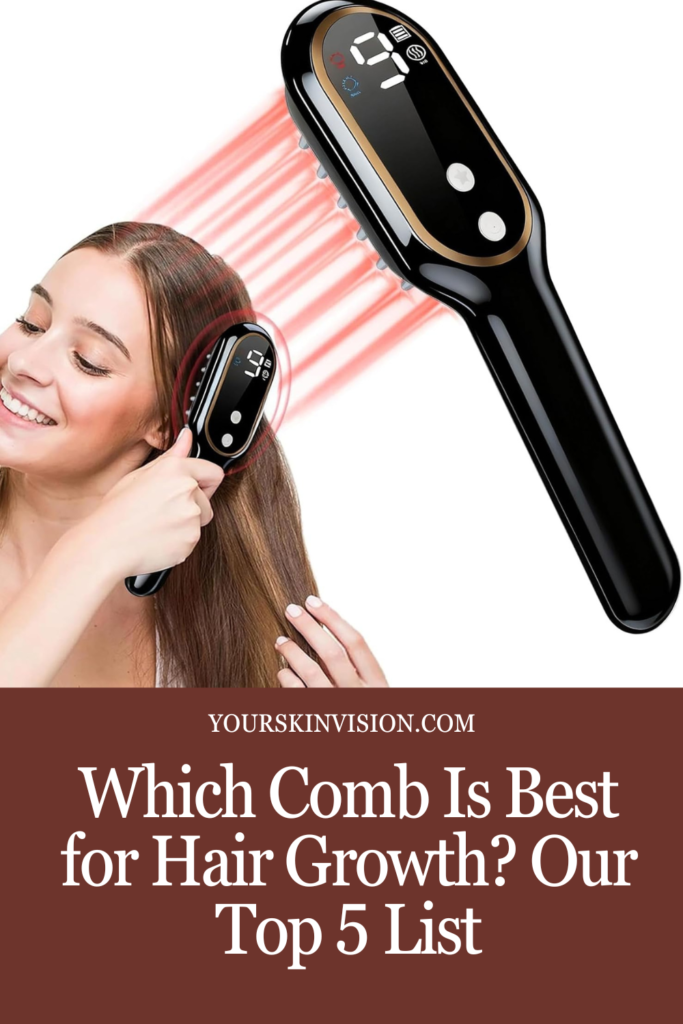
Table of Contents
What Makes a Laser Comb Effective for Hair Regrowth?
Not every laser comb on the market does what it claims. A few features separate the ones that work from the ones that just look nice in a bathroom cabinet.
FDA clearance matters most. Devices cleared for androgenetic alopecia have gone through testing that confirms the wavelength and laser density actually reach the follicle. Most effective combs use a 650nm red light, since that wavelength penetrates the scalp without causing heat damage.
Consistency also plays a bigger role than raw power. A comb with fewer lasers used three times a week for months will usually beat a flashier device that sits in a drawer. Board-certified dermatologist Dr. Neda Mehr has pointed out that the teeth design matters too, because parting the hair properly lets the light reach the scalp instead of getting blocked by strands sitting on top.
How Long Does It Take to See Results from a Laser Comb?
Patience separates people who see results from people who give up early. Most users notice less shedding within the first month, but visible density changes take longer.
Clinical data on these devices generally shows the earliest measurable improvement around 12 to 16 weeks, with more noticeable density gains closer to six months. Hair grows in cycles, so a comb can’t speed up biology beyond what a follicle allows. However, sticking to the recommended schedule, usually three sessions a week, gives follicles the steady stimulation they need without overdoing it.
Hair transplant surgeon Dr. Nader Ronaghi has noted that laser therapy tends to work best as part of a broader routine rather than a standalone fix. That doesn’t mean it’s ineffective on its own. It just means expectations should stay realistic, especially for anyone dealing with more advanced thinning.
Is Laser Hair Therapy Safe for Everyday Use at Home?
Safety is probably the biggest reason cosmetologists recommend laser combs over other treatments. Unlike stronger in-office lasers, low-level laser therapy doesn’t generate heat that could burn the scalp.
Most home devices ship with FDA clearance specifically for consumer use, which means the intensity has already been calibrated to avoid overexposure. Side effects are rare and usually mild, like slight scalp warmth or temporary redness for people with sensitive skin. Skin cancer and cosmetic dermatology specialist Dr. Taylor Bullock has spoken favorably about the safety profile of well-designed laser devices for hair regrowth, noting their appeal for patients who want an alternative to medication.
Anyone with a history of scalp conditions, active skin cancer, or who is pregnant should still check with a doctor first. That’s just common sense with any device that interacts with your skin daily.

1. HairMax Ultima 12 Classic LaserComb (Best Overall)
The HairMax Ultima 12 comes with a more traditional comb-shaped approach, and it’s our overall pick for anyone who wants a focused, budget-friendlier entry into the HairMax lineup. It houses 12 medical-grade lasers arranged along a slim handheld body, and treatment sessions run about eight minutes.
This device works well for targeting specific thinning areas, like a widening part line or a receding hairline, since you can concentrate the comb exactly where you need it. It runs on a rechargeable battery and includes a straightforward one-button start, so there’s no learning curve. For people managing early-stage thinning rather than more widespread loss, the targeted design often feels more practical than a full-scalp device.
What buyers are saying: A lot of reviewers describe using this comb specifically on their crown or hairline rather than their whole head, and several report visible baby hairs appearing after three to four months of consistent use. Some buyers mention pairing it with a scalp serum for extra benefit, while others simply appreciate how compact and travel-friendly it is compared to bulkier laser caps they previously owned.

2. HairMax LaserBand 82
The LaserBand 82 on our list solves the biggest complaint about laser combs: the sheer time commitment. Instead of slowly combing through small sections of hair, this device uses a flexible band with 82 medical-grade lasers that cover a wider strip of scalp per pass. Sessions run around 90 seconds per section, which adds up to a full-scalp treatment in a fraction of the time older comb designs require.
The soft-touch teeth part hair automatically as you glide the band across your scalp, so the light actually reaches the follicle instead of bouncing off stray strands. It’s rechargeable, cordless, and the beep-and-vibrate feedback tells you exactly when to move to the next section. For anyone who has abandoned a laser comb because the process felt tedious, this design removes most of that friction.
What buyers are saying: Reviewers on Amazon consistently mention how much faster this device feels compared to older comb-style laser products they’ve tried before. A common thread among longtime users describes noticeably less shedding within the first six to eight weeks, along with comments about the device feeling sturdy and well-built rather than flimsy. Several buyers also bring up the customer support experience, saying the company was responsive when they had questions about treatment frequency.

3. Actonis 18 Dual Action LaserComb
This one stands out because of its dual-wavelength laser setup, something most competitors don’t offer. The Actonis 18 combines two different laser wavelengths in a single device, which the manufacturer says helps address both circulation and follicle stimulation at once. With 18 medical-grade lasers total, sessions only take about three minutes, three times a week.
Because the treatment window is so short, this comb fits easily into a morning routine without requiring any real lifestyle adjustment. It’s also FDA-cleared and recommended by physicians for androgenetic alopecia, giving it credibility beyond marketing claims. The trade-off is a higher price point, but for anyone who wants the newest laser technology in a comb format, it’s a reasonable investment.
What buyers are saying: Reviewers frequently highlight how quick the sessions feel compared to other devices they’ve owned, with several noting they can finish treatment while getting ready for work. A recurring comment involves the noticeable improvement in hair thickness and shine, not just growth, which a few buyers say surprised them since they expected only a change in density. A handful of reviews mention the higher cost but say the results justified it for them.

4. NBWTYA Laser Comb
For shoppers who want FDA clearance without the higher price tag of the HairMax lineup, the NBWTYA Laser Comb is a solid middle-ground option. It uses red light therapy at a professional-grade level and is marketed toward both men and women dealing with fuller-to-thinning hair transitions.
The comb design keeps things simple: part your hair, glide the device across your scalp, and let the built-in timer handle the rest. It’s lightweight enough for daily use without arm fatigue, and the battery holds a charge for multiple sessions before needing a recharge. This device won’t have quite the same brand recognition as HairMax, but the core laser technology performs similarly for a noticeably lower cost.
What buyers are saying: Many reviewers mention buying this as a lower-cost alternative to try laser therapy before committing to a pricier device, and a good number say they were pleasantly surprised by the build quality for the price. A common observation involves reduced hair fall in the shower drain within the first few weeks, which several buyers describe as their first sign that the device was actually doing something. A few reviews note the instructions could be clearer for first-time users.

5. Apbier Laser Hair Growth Comb (Best Budget Pick)
If cost is the deciding factor, the Apbier comb rounds out this list as the most accessible option. It uses the same 650nm red light wavelength found in higher-priced devices and carries FDA approval for hair loss treatment, which is worth confirming before buying any budget device in this category.
The cordless design makes it easy to use anywhere, and the compact size fits into a travel bag without adding bulk. It won’t have the coverage speed of a laser band or the dual-wavelength tech of pricier combs, but for someone dipping a toe into laser therapy for the first time, it removes the financial barrier that keeps a lot of people from trying this treatment at all.
What buyers are saying: Reviewers frequently describe this as their introduction to laser hair therapy, often mentioning they wanted to test the concept before spending more on a premium device. Several buyers report the handle feels comfortable for the full 15-minute session without hand fatigue, and a number of reviews mention gifting the device to a parent or partner dealing with thinning hair. A few reviewers note the battery life runs shorter than expected with heavy use.
Final Thoughts on Choosing the Right Laser Comb
Picking the right laser comb comes down to how much time, money, and patience you’re willing to put in. The HairMax Ultima 12 Classic LaserComb and HairMax LaserBand 82 make sense for anyone who wants full-scalp coverage without spending twenty minutes combing through hair every session. Budget-conscious shoppers, on the other hand, can start with something like the Apbier comb and still get the same core wavelength technology.
Whichever comb you choose, consistency matters more than the specific device you pick. Skipping sessions or expecting results in two weeks sets most people up for disappointment. Because hair growth follows biological cycles that no laser can override, sticking with a treatment for at least three to six months gives it a fair shot at working.
If shedding continues to worsen despite consistent use, that’s a sign to loop in a dermatologist rather than switching devices repeatedly. Laser combs work well as a supportive tool, not a replacement for professional care when hair loss points to something more serious. For most people dealing with early or moderate thinning, though, these five devices represent some of the most trusted, well-reviewed options on the market right now.
