
Most people treat wound care as an afterthought: clean the cut, slap on some ointment, cover it with a bandage, move on. Dermatologists treat it as the difference between a wound that heals cleanly in days and one that gets infected, scars badly, or lingers for weeks.
The antibacterial cream you choose matters more than most people realize. The wrong product, including some that have been household staples for decades, can actually slow healing, cause contact allergies, or create antibiotic-resistant bacteria in minor wounds.
Dermatologists have updated their wound care recommendations significantly in recent years as evidence around common ingredients has evolved. Some old favorites have fallen out of favor. Some newer formulas have earned consistent clinical endorsement. This article covers the best antibacterial creams for wounds that dermatologists specifically recommend, all available on Amazon, with honest experiences from real people.
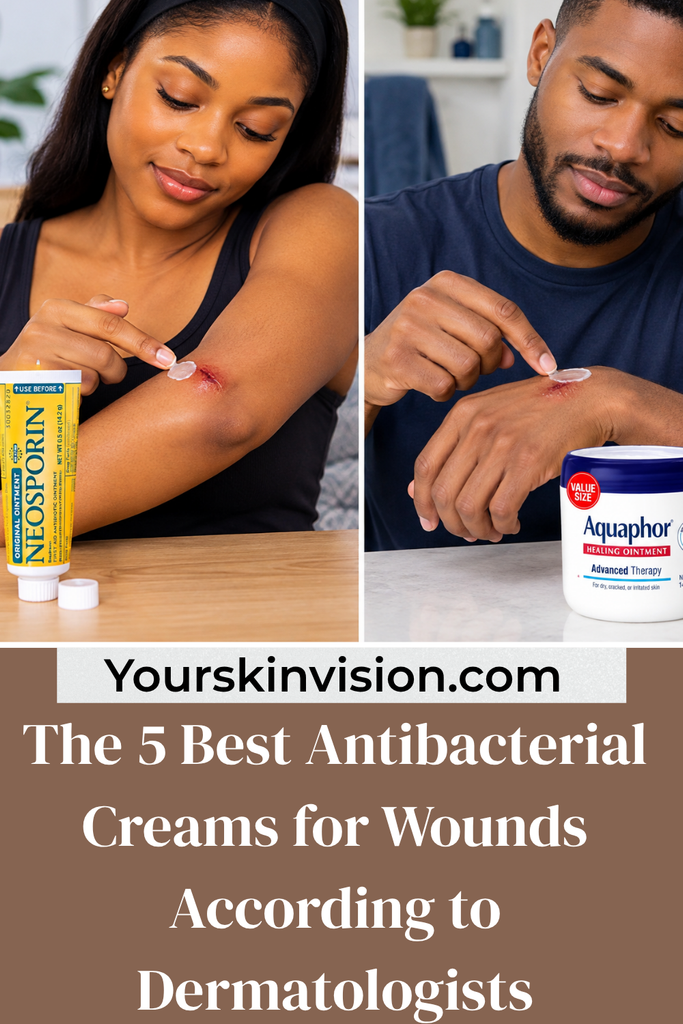
Table of Contents
What Dermatologists Actually Say About Antibacterial Creams for Wounds?
Wound care guidance from dermatologists has evolved considerably, and some of what people were taught about wound care twenty or thirty years ago is now considered outdated or even counterproductive. Dermatologists prioritize evidence-based wound care over brand familiarity.
Board-certified dermatologist emphasizes several updated principles in wound care that differ from conventional wisdom. First, keeping wounds moist, not dry, consistently produces better healing outcomes. Moist wound environments heal faster, scar less, and hurt less than wounds allowed to dry and crust. This is the clinical basis for petroleum-based products like plain petrolatum earning consistent dermatologist recommendation over antibiotic ointments for many minor wounds.
Second, neomycin, an ingredient in the most popular triple-antibiotic ointment, causes contact dermatitis in a significant percentage of people and has been removed from many dermatologists’ recommendations for routine wound care. The American Contact Dermatitis Society has repeatedly identified neomycin as a “Contact Allergen of the Year” due to its high sensitization rate in topical applications.
Third, the choice of antibacterial agent should match the wound type. Clean cuts from sharp objects in non-contaminated environments rarely need antibiotic action; moist barrier maintenance suffices. Wounds with contamination risk, puncture wounds, or those showing early signs of infection benefit from active antibacterial treatment.
- When to see a doctor instead of using OTC products: Dermatologists consistently advise seeking medical care for wounds showing signs of infection (increasing redness spreading from the wound, warmth, swelling, pus, red streaking, or fever), deep puncture wounds, animal or human bites, wounds that won’t stop bleeding after ten minutes of direct pressure, wounds with embedded debris, and any wound on the face, hands, or genitals where scarring or functional concern is significant. OTC antibacterial creams suit minor wounds only.
The qualities dermatologists look for in antibacterial wound creams include:
- Bactericidal mechanism — killing bacteria rather than simply inhibiting them
- Broad-spectrum coverage — addressing both Gram-positive and Gram-negative bacteria
- Moist wound environment support — a petrolatum or similar occlusive base that prevents the wound from drying
- Low sensitization potential — avoiding neomycin and other high-sensitization contact allergens
- Evidence-based formulation — clinical data supporting wound healing outcomes rather than marketing claims alone
Here are the Best Antibacterial Creams Dermatologists Recommend for Wounds.

1 Overall Best: Neosporin Original First Aid Antibiotic Ointment (Bacitracin + Polymyxin B Formulation)
Important clarification: Dermatologists recommend the version of Neosporin containing only bacitracin and polymyxin B, not the triple-antibiotic formulation that additionally contains neomycin. The neomycin-free formulation provides effective antibacterial coverage without the significant contact dermatitis risk that neomycin carries. Always check the label.
The bacitracin and polymyxin B combination earns consistent dermatologist recommendation because these two antibacterials work through complementary mechanisms: bacitracin disrupts bacterial cell wall synthesis while polymyxin B damages bacterial cell membranes, providing broad-spectrum coverage against the most common wound-infecting organisms including Staphylococcus aureus and Gram-negative bacteria.
Dermatologists recommend this specifically for minor cuts, scrapes, and abrasions where contamination risk warrants antibacterial treatment. The petrolatum base maintains the moist wound environment that clinical evidence consistently shows produces faster healing, less scarring, and reduced pain compared to wounds allowed to dry and crust. This occlusive base also physically prevents external contamination from reaching the healing wound bed.
Apply a thin layer to the cleaned wound, cover with a sterile bandage, and reapply once or twice daily after gentle cleaning. Dermatologists recommend discontinuing use if any redness, rash, or itching develops around the wound edge, signs of contact sensitization to one of the active ingredients.
User Comments:
“I cook professionally, and cuts are a regular occupational hazard. My dermatologist specifically told me to use the bacitracin-polymyxin B version rather than triple antibiotic because she said neomycin was a common sensitizer that could cause reactions. I switched, and the difference in how my minor cuts heal has been noticeable: faster closure, less scabbing, and no irritation around the wound edges. The moist healing environment the ointment maintains speeds everything up compared to just covering cuts and letting them dry.”
“My daughter is active and gets scrapes regularly. My dermatologist reviewed our wound care routine and said we needed to stop using triple antibiotic and switch to the two-ingredient version to avoid the neomycin sensitization risk. The bacitracin-polymyxin B formulation heals her scrapes faster, and we haven’t had any reactions. Her wounds close cleanly without the crusting that used to happen when we let them air dry.”

2: Aquaphor Healing Ointment
Aquaphor earns one of the strongest dermatologist recommendations for wound care, and the recommendation surprises most people because Aquaphor isn’t an antibiotic at all. The active ingredient is simply 41% petrolatum alongside panthenol, glycerin, lanolin alcohol, and bisabolol.
Dermatologists recommend it because clinical evidence consistently shows that maintaining a moist wound environment, which Aquaphor achieves through its occlusive base, produces healing outcomes equivalent to antibiotic ointment for clean minor wounds in low-infection-risk scenarios.
A landmark study published in the Journal of the American Academy of Dermatology found that petrolatum-based ointments produced equivalent healing outcomes to bacitracin ointment for wounds after minor dermatological procedures, with fewer adverse reactions. This evidence has significantly influenced dermatological wound care recommendations over the past two decades.
Dermatologists recommend Aquaphor for clean cuts from non-contaminated sources, post-procedure wounds, healing after dermatological treatments, and anyone with known sensitivity to antibiotic ingredients. The panthenol provides additional wound healing support beyond simple occlusion, and the bisabolol adds mild anti-inflammatory benefit that reduces the redness that typically surrounds healing wounds.
User Comments:
“My dermatologist recommended Aquaphor over antibiotic ointment for the incisions after my skin biopsy. She said clinical evidence showed it healed just as well for clean wounds and had no sensitization risk. The healing was genuinely faster than I expected, smooth, with minimal scarring, and comfortable throughout. I now use Aquaphor for all minor cuts and scrapes in my house. My dermatologist’s evidence-based recommendation changed how I approach wound care entirely.”
“I developed a contact allergy to bacitracin after years of using it. My dermatologist switched me to Aquaphor for all minor wound care and explained the research showing petrolatum-based ointments performed equivalently for clean minor wounds. My wounds heal just as fast without any of the allergic reactions I was experiencing. For anyone sensitized to antibiotic ointments, Aquaphor is genuinely the solution.”

3: Polysporin First Aid Antibiotic Ointment (Bacitracin + Polymyxin B)
Polysporin earns strong dermatologist recommendations specifically because it is formulated with only two antibiotics, bacitracin and polymyxin B, and explicitly excludes neomycin. Dermatologists recommend Polysporin as the preferred two-antibiotic option for patients who need antibacterial action for higher-risk minor wounds but whose provider has recommended avoiding neomycin.
Dermatologists describe the two-antibiotic combination as providing adequate broad-spectrum antibacterial coverage for the most common wound-infecting organisms while eliminating the most common antibiotic sensitizer from the formula. The petrolatum base maintains the moist wound environment that evidence consistently supports for optimal healing.
Polysporin suits minor wounds with moderate contamination risk, scrapes from dirty surfaces, cuts sustained in outdoor environments, or wounds in people with higher infection risk. Dermatologists recommend it as the go-to antibiotic ointment when an antibacterial ingredient is genuinely warranted, as opposed to Aquaphor for clean wounds where simple occlusion suffices.
User Comments:
“My dermatologist specifically recommended Polysporin over Neosporin because it didn’t contain neomycin. She said the two-antibiotic combination was all I needed for wound coverage and that neomycin added sensitization risk without meaningful additional antibacterial benefit. My wound from a gardening cut healed cleanly and quickly without any skin reaction around the wound edge that I’d experienced before with triple antibiotic products.”
“I work outdoors and deal with cuts and scrapes in potentially contaminated environments regularly. My dermatologist said I needed actual antibacterial coverage for my wound type but specifically recommended Polysporin to avoid the neomycin in other products. The two-antibiotic formula has kept every minor wound clean and healing without infections or antibiotic reactions. My dermatologist reviews my wound care regularly and is satisfied with how my skin responds to Polysporin.”
4: Bacitracin Zinc Ointment (Single Antibiotic)
Bacitracin Zinc Ointment earns dermatologist recommendations for wound care specifically for patients with known sensitivity to polymyxin B, providing effective antibacterial coverage against Gram-positive bacteria, including the Staphylococcus species most commonly responsible for minor wound infections, without the additional ingredient exposure of combination products.
Dermatologists recommend single-agent bacitracin for post-procedure wound care in their own practices, after mole removals, biopsies, excisions, and other dermatological procedures where infection risk is present but where contamination with Gram-negative organisms (which bacitracin doesn’t cover) is unlikely in the controlled post-procedure environment. The simplicity of a single active ingredient minimizes sensitization risk compared to combination products.
The petrolatum base provides the moist wound environment that evidence supports for optimal surgical wound healing. Dermatologists consistently recommend thin application, a layer barely thicker than the ointment itself, covering with a clean bandage changed daily after gentle wound cleaning.
Real User Experiences:
“After my mole removal, my dermatologist gave me bacitracin zinc ointment specifically and said it was what she used for her post-procedure patients. She explained the single-ingredient approach minimized sensitization risk while still providing the antibacterial protection the healing wound needed. My incision healed beautifully, smooth, minimal scarring, and I had no reactions around the wound edge throughout the healing period.”
“My dermatologist discovered I was sensitive to polymyxin B when I had a reaction to a two-antibiotic ointment. She switched me to single-ingredient bacitracin zinc for my wound care needs. It provides the antibacterial coverage I need without the ingredient causing my reactions. My wounds heal cleanly, and my skin doesn’t react around the wound edges. Single-ingredient products are genuinely better for people who’ve identified sensitivities to combination formulas.”

5: Medline Remedy Phytoplex Nourishing Skin Cream
Medline Remedy Phytoplex earns dermatologist consideration for wound care in a specific clinical context: skin that is already compromised by chronic conditions like eczema, psoriasis, or diabetic skin changes, where standard antibiotic ointments’ sensitization risk is amplified and where the wound occurs in a skin environment that requires additional barrier and nourishment support alongside wound management.
Dermatologists recommend this formula for patients whose compromised skin baseline means standard wound care products are insufficient or inappropriate; the nourishing ingredients provide the barrier support, anti-inflammatory benefit, and skin conditioning that compromised skin needs during the healing period alongside the antimicrobial protection the wound itself requires.
The formula uses dimethicone alongside zinc oxide and vitamins to provide barrier protection, moisture support, and mild antimicrobial benefit in a format appropriate for fragile, compromised skin.
Dermatologists who work with geriatric patients, patients with diabetes, or patients with chronic dermatological conditions recommend this as the wound care product best suited to skin that standard first-aid products may irritate or inadequately support.
User Comments:
“My diabetic skin is fragile and reacts to many standard wound care products. My dermatologist recommended Medline Remedy Phytoplex specifically for my skin type after standard antibiotic ointments caused reactions. The nourishing formula suits my compromised skin during healing and provides adequate antimicrobial protection without the sensitization risks that my sensitive diabetic skin was experiencing with traditional options.”
“My skin is very fragile due to long-term steroid use, and I get small tears and wounds easily. Standard wound care products often irritated my paper-thin skin. My dermatologist recommended Medline Remedy Phytoplex for the nourishing, barrier-supporting formula that suits fragile skin while still providing wound care protection. The healing has been noticeably more comfortable and effective than with standard antibiotic ointments.”
This is How to Apply Antibacterial Cream to Wounds Correctly.
Correct wound care technique matters as much as the product choice. Dermatologists give specific guidance for minor wound management that differs from what most people were taught.
- Clean the wound thoroughly before any cream application. Rinse the wound under cool running water for at least two minutes to remove debris, bacteria, and contamination. Use mild soap around, not inside, the wound. Dermatologists specifically recommend against hydrogen peroxide, iodine, and alcohol for wound cleaning because these antiseptics damage healthy tissue cells alongside bacteria, slowing the healing they’re intended to support.
- Apply the thinnest possible layer. A thin layer of antibacterial cream, barely more than what coats the wound surface, provides the same protection as a thick layer while reducing the sensitization risk from extended ingredient contact with healing skin. Thicker application doesn’t improve antibacterial efficacy.
- Cover with a clean, appropriately sized bandage. The bandage maintains the moist environment the cream creates and prevents external contamination. Change the dressing once daily or when it becomes wet, dirty, or loose. When changing dressings, gently clean the wound with water before reapplying cream and a fresh bandage.
- Watch for signs of infection or allergic reaction. Increasing redness spreading beyond the wound edge, warmth, swelling, pus, or red streaking requires medical evaluation; these indicate infection that OTC antibacterial cream alone cannot adequately treat. Redness or rash specifically at the wound edge (forming a ring around the cream contact area) indicates contact dermatitis from a product ingredient, not wound infection; discontinue the product and consult a dermatologist.
- Stop antibiotic ointment use when healing is underway. Dermatologists recommend transitioning from antibiotic ointment to plain petrolatum (Aquaphor or Vaseline) once the wound has closed and healing skin is forming. Continued antibiotic ointment beyond the infection-risk period serves no additional benefit and unnecessarily extends the sensitization exposure window.
Conclusion
Antibacterial cream for wounds works best when the right product matches the wound type and when the application supports the moist wound healing environment that evidence consistently shows outperforms dry wound management.
Dermatologists make these distinctions carefully because the wrong wound care product can cause contact dermatitis, slow healing, or contribute to antibiotic resistance through unnecessary use.
The neomycin-free bacitracin and polymyxin B formulation earns the overall top recommendation for minor wounds with contamination risk because it provides genuine broad-spectrum antibacterial coverage through two complementary mechanisms without the significant sensitization risk that neomycin carries.
For clean minor wounds without significant contamination risk, dermatologists increasingly recommend plain petrolatum-based products like Aquaphor as the evidence-supported, no-sensitization-risk alternative.
Clean wounds thoroughly with water, not antiseptics. Apply the thinnest effective layer. Cover and change dressings daily. Switch to plain petrolatum once healing begins. Seek medical care for any signs of infection, spreading redness, or wounds beyond minor. That evidence-based approach is what dermatologists consistently recommend for wound care that heals quickly, cleanly, and without complications.
Note: This article covers over-the-counter products for minor wounds only. Any wound showing signs of infection, any bite wound, any deep puncture wound, or any wound that doesn’t begin healing within a few days warrants professional medical evaluation.
