
Hair loss doesn’t wait for a convenient moment. It shows up in the shower drain, in old photos, in the way light hits your scalp under a bathroom bulb you never noticed before. Most people panic and buy the first miracle serum an influencer pushes.
That’s the wrong move. Real results come from a short list of treatments the FDA has actually cleared or approved for hair regrowth, not from marketing hype. In this article, we will break down the five FDA-Approved Hair Regrowth Products that dermatologists point to. We will also show what real buyers experience after using each one.
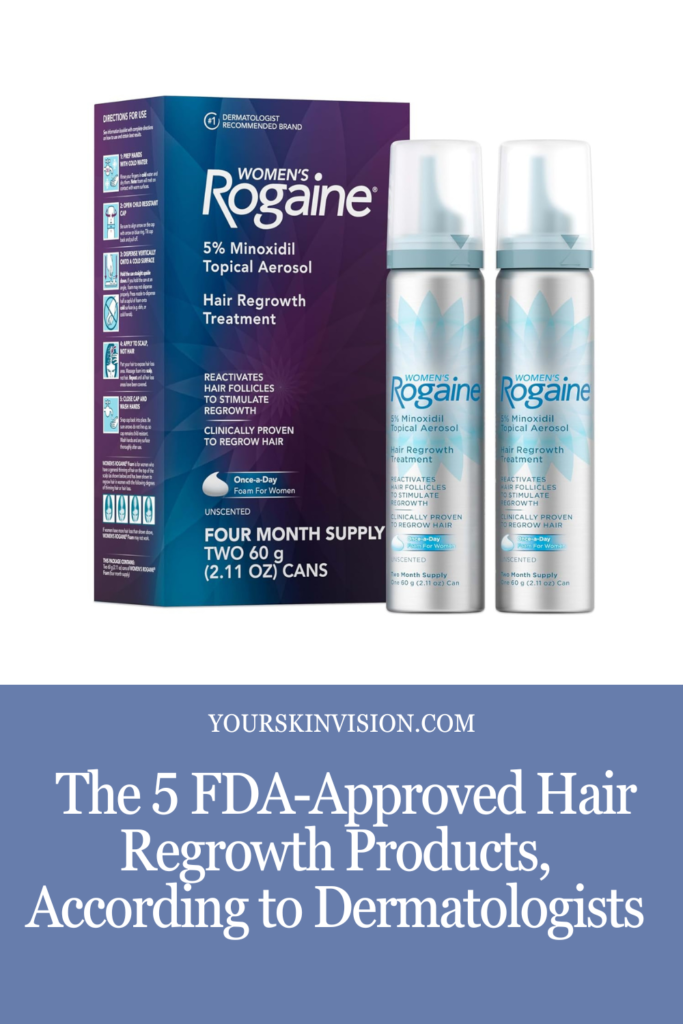
Table of Contents
What Does “FDA-Approved” Really Mean for Hair Regrowth Products?
People throw around the phrase “FDA-approved” pretty loosely, and that confuses. Only one active ingredient carries a true FDA approval for hair regrowth: minoxidil. The FDA reviewed clinical trial data on minoxidil as a drug and approved it for treating androgenetic alopecia, the medical term for pattern hair loss.
Laser and light-based devices work differently. The FDA clears these products through a process called 510(k), which confirms a device is safe and works similarly to an already-approved device. That’s still a meaningful regulatory bar. However, it’s a different bar than drug approval.
So when dermatologists say a product is “FDA-approved for hair regrowth,” they usually mean one of two things: it contains FDA-approved minoxidil, or it’s an FDA-cleared laser therapy device. Both routes have solid science behind them. This article covers products from both categories because dermatologists frequently recommend combining them.
What Do Dermatologists Say About Treating Hair Loss?
Before ranking any product, let’s hear directly from the people who treat hair loss for a living. Their guidance shapes almost every recommendation in this article.
Dermatologist Dr. Casey has noted that self-reported response rates to minoxidil vary significantly and tend to run higher in men than in women, adding that results depend heavily on what’s actually causing the hair loss in the first place. That’s a useful reminder: minoxidil isn’t magic, and it works best when the underlying cause is androgenetic alopecia rather than something else like a thyroid issue or nutrient deficiency.
Hair restoration specialists also stress that no single treatment does everything. According to research compiled by the International Society of Hair Restoration Surgery, exactly three treatments carry FDA clearance or approval for hair loss: minoxidil, finasteride, and laser-based photobiomodulation therapy, and each one targets a different population of hair follicles through a different mechanism.
Dr. Leonard, a longtime practitioner of laser-based hair treatments, makes a similar point about stacking therapies for better results, noting that combining approaches beats relying on just one.
Dr. Wasserbauer, another expert frequently cited on this topic, explains that laser therapy essentially signals follicle cells to increase production of the growth factors that support the hair cycle. In plain terms, the light doesn’t just sit on the scalp doing nothing. It triggers a biological response inside the follicle.
The takeaway from these experts is consistent. Minoxidil remains the gold standard drug treatment. Laser devices offer a legitimate, drug-free alternative or add-on. And patience matters more than any single product, because hair growth cycles take months, not days.
What Are the Best FDA-Approved Hair Regrowth Products on Amazon?
Here are the five products dermatologists and hair restoration specialists reference most often, ranked from best overall down. Every product on this list ships through Amazon, so you can compare prices and reviews before buying.

1. iRestore Laser Hair Growth System (Overall Best Pick)
The iRestore Laser device takes the top spot because it delivers the FDA-approved gold standard for hair regrowth. This helmet-style device covers the entire scalp at once rather than requiring you to move a comb or band around, which makes sessions more passive and easier to stick with long-term.
Board-certified dermatologists have highlighted its design for exactly this reason. According to reviews from clinicians who’ve evaluated the device, it uses medical-grade lasers and LEDs to deliver thicker, fuller hair with consistent at-home use. That full-scalp coverage is the main advantage over comb- or band-style competitors.
Steven, a 39-year-old from Georgia, liked that he could wear the helmet while checking email or watching TV instead of standing still holding a device. He noticed the biggest difference around month six, mainly in overall hair density rather than a dramatically lower hairline. He describes it as “a slow, steady improvement rather than an overnight fix.”
Linda, a 55-year-old from Arizona, had tried topical treatments before and found them messy with her styling routine. She switched to this device for that reason alone and reports noticeably less visible scalp through her part after roughly five months of consistent use. She does mention the helmet feels a bit heavy during longer sessions, though she got used to it after the first couple of weeks.
Why it ranks first: convenient full-scalp coverage, but a higher price point than the topical options above it.

2. Men’s Rogaine 5% Minoxidil Foam
The Men’s Rogaine 5% minoxidil is in a foam formula that absorbs quickly without leaving residue. Clinical data support this ingredient more strongly than any other product on this list, and dermatologists consistently cite it as the first-line treatment for male pattern hair loss.
Independent research supports why this product ranks first. In a large one-year study of men using 5% minoxidil, researchers found the treatment very effective in 15.9% of patients and effective in another 47.8%, while hair loss areas on the scalp actually shrank in 62% of participants. That’s a strong track record for an over-the-counter treatment.
Real buyers back this up too. Marcus, a 34-year-old from Ohio, started using the foam after noticing thinning near his temples. He says the first three months felt like nothing was happening, but by month five, his barber pointed out new growth along his hairline before he’d even spotted it himself. He now applies it every morning before work and calls it “part of the routine, like brushing my teeth.”
Jason, a 41-year-old from Texas, had a rougher start. The foam initially left his scalp a little itchy, so he switched to applying it at night instead of after his morning shower. Once he adjusted the timing, the irritation disappeared completely. He’s now used it for over a year and reports visibly thicker coverage on the crown, an area he’d nearly given up on.
Why it wins: proven ingredient, fast-absorbing foam, budget-friendly compared to prescription routes, and decades of clinical backing.

3. Women’s Rogaine 5% Minoxidil Foam
Women’s Rogaine takes third place because it brings the same FDA-approved minoxidil formula to female pattern hair loss, which behaves differently than male pattern loss and often shows up as diffuse thinning rather than a receding hairline. The foam version was specifically formulated to reduce the risk of unwanted facial hair growth, a concern some women have with liquid minoxidil formulas.
Dermatologic guidance increasingly favors this formulation for women. Clinical sources note that dermatologists increasingly prescribe 5% minoxidil for women, typically as a foam, specifically to minimize the risk of facial hypertrichosis. That single detail makes this product meaningfully different from older 2% solutions still on shelves.
Amanda, a 38-year-old from California, tried this product after two years of postpartum shedding that never fully reversed. She noticed her part line looked less noticeable within four months and says her hairdresser commented on new baby hairs along her forehead during a routine trim. She applies it once daily and keeps a phone photo log to track progress, which she says helps her stay motivated during slow weeks.
Priya, a 29-year-old from New Jersey, had a different experience worth mentioning. She saw results faster, around eight weeks, but also dealt with some initial shedding first. Dermatologists call this “dread shed,” a normal early phase where weaker hairs fall out to make room for stronger regrowth. Once that phase passed, she noticed thicker strands overall and stuck with the product because the payoff matched the temporary discomfort.
Why it ranks third: same trusted active ingredient as the top pick, formulated specifically for women’s hair loss patterns, and foam texture that layers well under styling products.

4. HairMax LaserBand 82
The HairMax LaserBand 82 earns fourth place as the top laser-based option on this list. It was one of the earliest device types the FDA cleared for hair regrowth, and it uses a wide comb-style band that treats a larger scalp area per session than older laser combs.
The historical significance here matters. As hair restoration clinics note, 2007 marked the year the FDA cleared the first low-level laser therapy device, the HairMax LaserComb, for treating pattern hair loss in men. The LaserBand builds on that same cleared technology with a faster, hands-free design.
David, a 46-year-old from Florida, picked this device because he wanted to avoid daily topical products. He runs it for the recommended session length three times a week while reading on the couch. After around four months, he noticed his scalp looked less shiny under bright light, a subtle but telling sign that new fine hairs were filling in.
Rebecca, a 51-year-old from Illinois, combines this device with a topical minoxidil routine, following the multimodal approach dermatologists often recommend. She says the laser band alone felt slow at first, but once she added minoxidil, she noticed faster, more visible thickening within about ten weeks. She now treats the two products as a team rather than competitors.
Why it ranks fourth: genuinely FDA-cleared technology, no daily mess or scalp residue, though it does require a real time commitment.

5. Capillus SPECTRUM Laser Red Light Therapy Cap
The Capillus SPECTRUM Laser Red Light Therapy Cap rounds out the list in fifth place. This flexible, low-profile cap uses 100% medical-grade 312 laser diodes and fits discreetly under a baseball hat, which appeals to people who don’t want to sit still during treatment sessions.
Clinical guidance around laser caps like this one points to a favorable safety profile. Reports on this device category note that the wavelengths used in these devices fall within a range considered safe, with minimal side effects such as occasional mild scalp irritation. That safety margin explains why dermatologists feel comfortable recommending at-home laser caps without close supervision.
Michael, a 43-year-old from New York, wears the cap under a hat during his morning commute, which makes it the easiest product on this list to fit into a busy schedule. He noticed thicker-looking hair at his crown after about five months and appreciates that he never has to remember a separate step in his routine.
Karen, a 48-year-old from Michigan, was initially skeptical that a “hat with lights” could do much of anything. After sticking with it for four months, she noticed less hair on her pillow in the mornings, a small but reassuring sign that shedding had slowed. She now treats it as a permanent part of her hair care routine rather than a temporary experiment.
Why it ranks fifth: comfortable and genuinely portable, but the highest price tag on this list and slower visible results compared to minoxidil-based options.
How Do You Choose the Right Hair Regrowth Product for You?
Picking between these five options comes down to your hair loss pattern, your budget, and how much daily effort you want to put in. Minoxidil foam remains the cheapest and most researched starting point for most people, which is why it is on the list. Laser devices cost more upfront but appeal to anyone who wants to skip daily topical application.
Because dermatologists frequently recommend combining treatments, you don’t necessarily have to pick just one. Many of the buyers featured above eventually paired a topical option with a laser device and saw faster results than either product delivered alone. Talk to a dermatologist before starting, especially if you’re pregnant, dealing with a scalp condition, or unsure whether your hair loss is hormonal, medical, or stress-related.
Consistency beats intensity every time with these treatments. Hair grows in cycles that take months to complete, so skipping days or expecting results within a few weeks sets you up for disappointment. Give any product on this list at least four to six months before judging whether it’s working for you.
Conclusion
Hair regrowth isn’t about finding a secret product nobody else knows about. It’s about picking one of the treatments that actually has FDA backing and sticking with it long enough to see real change. The iRestore Laser Hair Growth System remains the best overall choice because of its strong clinical track record, though it is a highly premium product. The other laser-based options on this list offer legitimate alternatives if you’d rather skip daily topical application.
Whichever product you choose, patience and consistency will matter more than the packaging or the price tag. Talk to a dermatologist if you’re unsure which route fits your specific hair loss pattern, and give your chosen treatment the months it needs to actually work.
