
Most skincare trends fade after a season. Red light therapy did the opposite. It started in dermatology offices and wound clinics, then quietly worked its way into bedrooms and home gyms across America, and now it sits right next to the coffee maker in a lot of morning routines. That staying power says something. A gadget that survives past the influencer hype cycle usually works, at least for the right person and the right skin concern.
This article breaks down the five best red light therapy panels for home use. You’ll get an honest look at what each panel does well, where it falls short, and who should actually buy it. No filler, just straight answers.
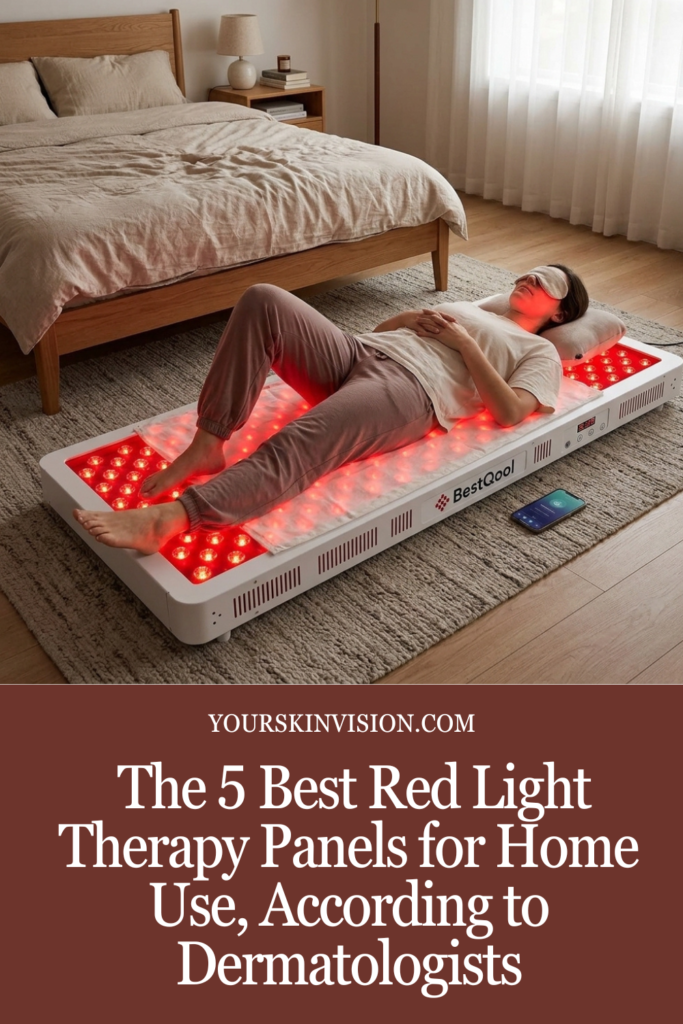
Table of Contents
What Makes a Red Light Therapy Panel Actually Work?
Not every red light panel on the market delivers real results, and that’s the uncomfortable truth nobody selling one wants to admit. Wavelength matters more than almost anything else. Research summarized in a recent clinical product guide points to red and near-infrared wavelengths between roughly 620 and 850 nanometers as the range that actually triggers skin benefits, because these wavelengths reach deep enough into tissue to affect mitochondria without causing damage.
Irradiance matters just as much, though it gets far less attention in marketing copy. This measures how strong the light actually is once it reaches your skin. Heather Rogers, MD, a double board-certified dermatologist, recommends looking for irradiance under 50 mW/cm² for facial use, because slower sessions at lower power tend to work better and feel more comfortable than short, high-intensity blasts.
Also, don’t ignore FDA clearance. It doesn’t guarantee miracle results, but it does mean a manufacturer submitted safety and performance data instead of just slapping “clinically proven” on a box. For example, several panels on this list carry FDA clearance for specific uses like temporary muscle relief or circulation, which tells you the company backed its claims with actual testing.
How Did We Pick These 5 Red Light Panels?
Dermatologists don’t just look at price tags or star ratings, and neither did we. This list weighs four factors that actually predict whether a panel works: verified wavelength accuracy, independently tested irradiance, treatment area size, and consistent buyer feedback over time.
Because unbranded panels sometimes list wavelengths they don’t truly emit, third-party testing carries a lot of weight here. A panel that claims 660nm and 850nm needs to actually produce those numbers, not just print them on the box. So every product below either has independent optical testing behind it or a long enough track record on Amazon to confirm its claims hold up in the real world.
However, price still matters to most people shopping for one of these. That’s why this list includes options ranging from budget-friendly entry panels under $200 to full-body units built for daily, long-term use.
What Do Dermatologists Say About At-Home Red Light Therapy?
Skepticism around at-home devices used to be the default position among dermatologists. That’s shifted. Rhonda Klein, MD, a board-certified dermatologist at Modern Dermatology, explains that red light therapy stimulates cellular activity and blood flow while lowering inflammation and boosting collagen and elastin production. She’s also quick to set expectations, noting that results build gradually and consistent use matters more than any single session.
Zakia Rahman, MD, a clinical professor of dermatology at Stanford, points out that longer wavelengths penetrate deeper into skin, which is why devices combining red and near-infrared light tend to outperform red-only panels for anti-aging and recovery purposes. She also cautions that some devices sold online skip the correct wavelengths entirely, so buyers need to check the actual specs rather than trusting the packaging alone.
Jacob Beer, MD, a board-certified dermatologist, adds that the benefits shift depending on wavelength and can include faster wound healing, hair restoration, more collagen, and calmer, less inflamed skin, which explains why red light therapy works for such a wide range of concerns. Taken together, these three perspectives point to the same conclusion: wavelength accuracy and consistency beat flashy marketing every time.
What Are The Best Red Light Therapy Panels for Home Use

1. Hooga ULTRA1500 Therapy Panel — Best Overall Red Light Therapy Panel
The Hooga ULTRA1500 Red Light Therapy Panel is a large, high-output device designed for people who want to make red and near-infrared light therapy part of their home wellness routine. With 300 quad-chip LEDs and four wavelengths, 630nm, 660nm, 810nm, and 850nm, it provides broad light coverage for the body rather than limiting treatment to a small area.
The combination of red and near-infrared wavelengths makes this panel useful for different wellness goals. Red light can support healthier-looking skin and everyday skincare routines, while near-infrared light is commonly used in wellness routines focused on muscle comfort, relaxation, and post-workout recovery.
For people who regularly experience tired muscles or everyday aches after exercise, the panel can be used as part of a relaxing recovery routine, although it should not be viewed as a treatment for medical conditions.
One feature that makes the ULTRA1500 especially practical is its touchscreen control system. You can adjust the brightness, set your session time, and manage the light settings directly from the panel. The red and near-infrared lights can also be controlled separately, while the pulse mode gives you another way to customize your sessions.
The large panel design is convenient when you want to work on bigger areas of the body without constantly repositioning a smaller device. Its 3-year warranty and 60-day trial also provide extra reassurance when investing.
The Hooga ULTRA1500 is a strong choice for anyone wanting a customizable red light therapy setup for relaxation, skincare, muscle comfort, and everyday self-care at home.
Best for: People who want full-body coverage and are ready to invest in a panel built to last for years.

2. Hooga HG300 — Best Value Red Light Therapy Panel
The Hooga HG300 proves you don’t need to spend a fortune to get a legitimately effective panel. It hits the sweet spot between price and performance, with tested irradiance that holds up against panels costing two or three times as much.
Low EMF output sets this panel apart from many budget competitors. Cheaper panels sometimes forgo EMF shielding entirely, which can cause a slight buzzing or humming sensation when held up close. The HG300 avoids that issue, which matters if you plan to use it for extended sessions near your face or body.
Reviewers frequently describe this as their “starter panel that never got replaced.” A common piece of feedback involves buyers expecting a budget compromise and instead finding a panel that performs close to premium options for a fraction of the price. Several verified reviews also mention using it consistently for joint discomfort and noticing gradual improvement over a few weeks, which lines up with what dermatologists say about needing patience with red light therapy.
This panel treats a smaller area than the BioMax 900, so full-body sessions take longer and require repositioning. That’s the tradeoff for the lower price.
Best for: First-time buyers who want proven performance without the premium price tag.

3. Mito Red Light Pro Series — Best for Beginners
Mito’s Pro series makes sense for anyone who feels overwhelmed by wavelength charts and irradiance specs. The panel keeps things simple: it produces reliable red and near-infrared light without a confusing array of settings or modes to figure out.
Because the learning curve is nearly nonexistent, this panel works well for people who want results without becoming red light therapy experts first. You plug it in, position it, and use it. That simplicity shows up again and again in buyer feedback, with reviewers describing it as the panel they actually remember to use because it doesn’t require extra steps.
Irradiance testing on this panel lands in a solid mid-range position, strong enough for real skin and recovery benefits without the intensity of professional-grade units. Buyers commonly mention noticing softer skin texture and less visible redness after a few weeks of near-daily sessions, particularly around the face and neck.
A few reviewers also note using it before workouts to loosen up joints and report less stiffness afterward. The tradeoff is treatment area. This panel works best for face, neck, and smaller body areas rather than full-body sessions.
Best for: Beginners who want something simple to use consistently, especially for facial skin concerns.

4. Bestqool P300 — Best Budget Entry Panel
Bestqool built a reputation for offering genuine therapeutic panels at prices that don’t require a second mortgage. The P300 keeps costs down without cutting corners on the wavelengths that actually matter for skin and recovery benefits.
This panel earns its spot through consistency rather than flashy features. It sticks to the two most researched wavelengths, red and near-infrared, and delivers them at a strength that’s been independently verified. That’s a smarter approach than budget competitors that add extra colored lights with little to no research behind them.
Feedback from buyers tends to focus on affordability paired with surprisingly solid performance. A frequent comment involves people buying this as a low-commitment way to try red light therapy and ending up impressed enough to recommend it to family members. Others mention using it specifically for minor joint aches, describing gradual relief that builds over repeated sessions rather than instant results.
Because it runs smaller than full-body panels, sessions take longer if you’re trying to cover your entire back or legs. Most buyers get around this by focusing sessions on one area at a time.
Best for: Anyone curious about red light therapy who wants to start small before committing to a bigger investment.

5. Rhmip LED Red Light Therapy Device — Best Compact Amazon Pick
Rhmip built its following through Amazon specifically, and it’s earned a reputation as one of the most beginner-friendly compact panels on the platform. This isn’t a full-body panel, and it doesn’t try to be. Instead, it focuses on convenience, portability, and an easy setup process that works well for apartments or smaller spaces.
Because the panel is smaller and lighter than the other four options here, it works especially well for targeted treatment on the face, hands, or smaller joints. Reviewers frequently mention keeping it on a nightstand or desk since it doesn’t require a dedicated spot like larger panels do.
Verified buyer feedback often highlights how quickly this panel becomes part of a daily routine, mostly because it takes almost no effort to use. A common thread among reviews involves people using it for ten to fifteen minutes while working at a desk or watching television, then noticing gradual improvement in skin tone and texture over several weeks. Others mention using it specifically to calm redness after switching skincare products, with visible improvement showing up after consistent use.
The lower price point means lower irradiance and a smaller treatment area, so this works better as a targeted tool than a full-body solution.
Best for: Anyone short on space who wants an easy, low-commitment way to try red light therapy for the face or hands.
How Often Should You Use Red Light Therapy at Home?
Consistency beats intensity with red light therapy. Most dermatologists recommend sessions of 10-15 minutes, three to five times per week, for at least eight to twelve weeks before judging results.
Skin cells respond to light exposure gradually. Collagen production increases over time, so daily marathon sessions won’t speed things up; they may actually irritate the skin instead. A steady routine works better than an aggressive one.
One dermatologist who frequently discusses at-home devices with patients puts it simply: “Red light therapy rewards patience. Patients who stick to a realistic schedule see gradual, natural-looking improvement, while patients who overdo it often see no extra benefit at all.”
Morning or evening both work fine, as long as skin is clean and free of sunscreen or heavy makeup during the session, because these products can block light absorption.
Does Red Light Therapy Actually Work for Skin?
Yes, and clinical research backs this up. Red light therapy stimulates fibroblasts, the cells responsible for producing collagen and elastin. This leads to firmer skin, reduced fine lines, and a more even tone over time.
Studies also show benefits for inflammatory skin conditions like acne and rosacea, because red light reduces inflammation at a cellular level. It won’t replace prescription treatments for severe cases, but it works well as a supportive therapy.
Which Red Light Therapy Panel Should You Actually Buy?
Your decision really comes down to two things: how much area you want to treat and how much you’re willing to spend upfront. If you want full-body coverage and plan to use it for years, the PlatinumLED BioMax 900 makes the most sense despite the higher price. If you’re testing the waters or working with a tighter budget, the Hooga HG300 and Bestqool P300 both deliver real results without the premium cost.
For beginners specifically focused on facial skin concerns, the Mito Red Light Pro series keeps things simple without sacrificing effectiveness. And if space or portability matters more than treatment area, the Rhmip device fits neatly into a nightstand drawer or desk setup.
Whichever panel you choose, remember what Rhonda Klein emphasized earlier: red light therapy works gradually, not overnight. Give any panel at least four to six weeks of consistent use before judging results, and keep your regular skincare routine, sunscreen included, running alongside it rather than replacing it.
Final Thoughts
Red light therapy isn’t magic, and no dermatologist quoted here claims otherwise. What it offers is a legitimate, research-backed way to support skin health, ease minor aches, and add a genuinely calming ritual to your day.
The panel you choose matters less than the consistency you bring to using it. Pick one that fits your space, your budget, and your daily routine, and give it the weeks it needs to actually show results.
