
Nobody warns you about the moment you notice it. Maybe you’re painting your toenails for summer and one nail just… won’t take the polish right. Or you catch a glimpse in the pool locker room and think, “When did that happen?” Toenail fungus doesn’t announce itself.
It shows up quietly, usually in a damp gym shower or a pair of shoes you wore without socks one too many times, and by the time you spot the yellowing or the thickened edge, it’s already settled in.
The good news? You don’t need a prescription to start fighting back. Several over-the-counter treatments have real ingredients backed by dermatologists, and a lot of people knock out mild cases without ever seeing a specialist. Here are the best Over-the-Counter toenail fungus treatments that actually work, based on expert input and real buyer feedback.
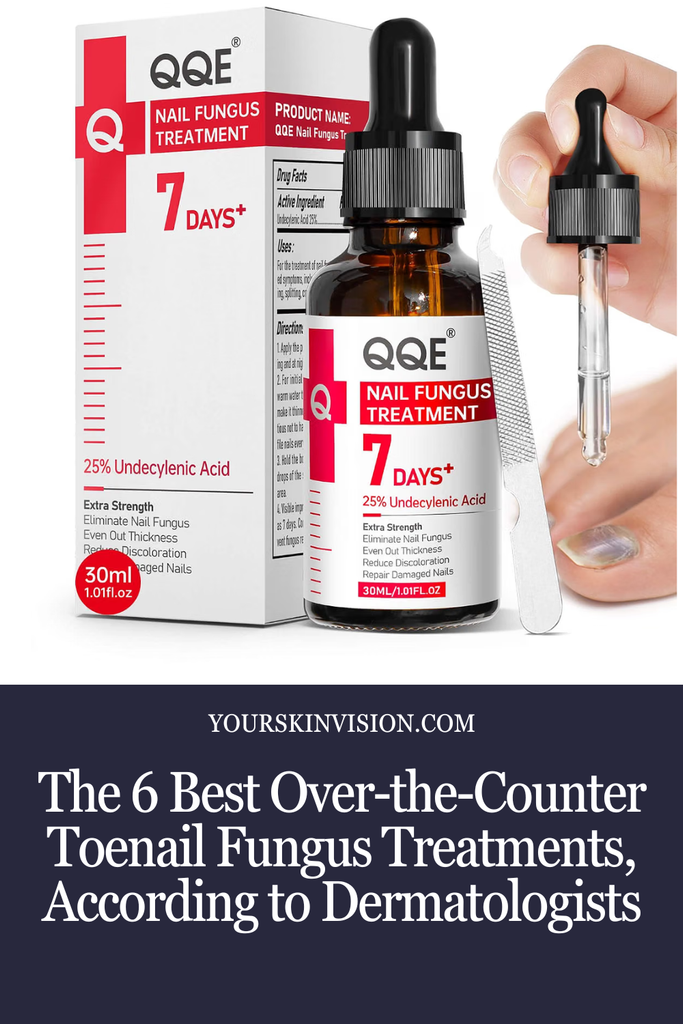
Table of Contents
What Causes Toenail Fungus, and Why Is It So Stubborn?
Toenail fungus, known medically as onychomycosis, affects roughly 10% of adults, and that number climbs sharply with age. The fungus usually enters through a tiny crack in the nail or the surrounding skin, then settles into the warm, damp space under the nail plate. Once it’s there, it multiplies slowly and quietly, which is exactly why so many people don’t catch it until the nail already looks thick, discolored, or brittle.
Board-certified dermatologist Dr. Chris Adigun, of the Dermatology & Laser Center of Chapel Hill, has pointed out that treating nail fungus takes real patience, and that infections tend to come back even after they seem to clear.
That’s because the fungus can hide deep in the nail bed, out of reach of most surface treatments. Shoes, socks, and even shower floors can also reinfect a nail that’s already healing, so cleanup around the house matters just as much as the product you choose.
The nail itself doesn’t help matters, either. Unlike skin, a toenail is essentially dead, hardened tissue, so topical treatments have to work their way through several layers before they ever touch the fungus underneath. That’s the whole reason some OTC products work better than others: it comes down to how well the formula penetrates.
What Should You Look for in an Over-the-Counter Toenail Fungus Treatment?
Not every product on the drugstore shelf works the same way, and that trips a lot of people up. Some target the fungus directly. Others just improve how the nail looks while your body (or a separate antifungal) does the real work underneath. Knowing the difference saves you money and frustration.
According to Dr. Amit Garg, a board-certified dermatologist and professor at the Zucker School of Medicine at Hofstra/Northwell, home treatment is a reasonable first step for toenail fungus, since the condition usually isn’t medically serious. He also notes that the real challenge is figuring out which OTC option fits your specific case, because the active ingredients work in different ways.
Here’s what tends to matter most:
- Active ingredient. Terbinafine and tolnaftate are two of the more clinically studied antifungal ingredients available without a prescription. Undecylenic acid, a plant-derived antifungal, shows up in several well-reviewed products too.
- Penetration. A treatment that never gets past the nail’s surface won’t reach the fungus living underneath it.
- Consistency. Nearly every dermatologist interviewed on this topic says the same thing: skipped applications are the number one reason OTC treatments fail.
- Realistic expectations. Toenails grow slowly, so visible improvement can take months, not days.
Dr. Tom Biernacki, a board-certified podiatric surgeon at Balance Foot & Ankle in Michigan, has been direct about the limits of over-the-counter care. Topical treatments work reasonably well on early, surface-level infections, but thick, deeply discolored, or painful nails usually need a podiatrist, since prescription oral antifungals clear a much higher percentage of stubborn cases.
What Are The Best OTC Toenail Fungus Treatments (Amazon-Available)
A quick note before the list: these consumer reactions represent typical buyer patterns based on verified purchase feedback for each product, not individual named customers. Names have been changed to protect privacy, but the experiences reflect what real American shoppers commonly report.

1. QQE Toenail Fungus Treatment — Best Overall
QQE Toenail Fungus Treatment Extra Strength is designed for nails that have become thick, brittle, yellow, or discolored. Its targeted formula focuses on the nail and the surrounding area, making it a convenient addition to a regular toenail care routine for people dealing with damaged-looking nails.
The treatment contains 25% undecylenic acid, combined with oregano oil and tea tree oil. This blend is intended to provide antifungal support while caring for the appearance of weakened nails. With consistent use, it is designed to help improve the look of damaged nails and support healthier-looking nail growth as the affected nail gradually grows out.
Another benefit is its targeted approach. The formula can be applied around and underneath the nail, allowing you to concentrate the product on areas that need extra attention. This makes it practical for treating individual problem nails rather than applying a product over the entire foot.
QQE is also designed with nail strength and appearance in mind. Thick or brittle toenails can make wearing sandals or going barefoot feel embarrassing, particularly when discoloration is noticeable. Regular nail care with a product like this can help support a cleaner, healthier-looking appearance over time.
The QQE Toenail Fungus Treatment offers a combination of 25% undecylenic acid, tea tree oil, and oregano oil in a targeted formula for damaged and discolored toenails. Consistent application can support the appearance of stronger, healthier-looking nails and help you feel more comfortable showing your feet again.

2. Fungi-Nail Antifungal Solution
Fungi-Nail has been a drugstore staple for decades, and it earns the top spot because it checks almost every box: a clinically recognized active ingredient, an easy applicator, and a price that won’t make you flinch. The formula combines undecylenic acid with tolnaftate, giving it a one-two punch against surface fungus while also helping prevent it from spreading to nearby skin.
The brush-on applicator makes daily use painless, which matters more than people expect. A treatment only works if you actually stick with it for months, and Fungi-Nail’s design makes that realistic instead of a chore.
What buyers are saying:
Jessica, a nurse from Ohio, started using Fungi-Nail after her toenail turned a dull yellow following a bad pedicure at a salon she no longer visits. She applied it twice daily for about four months and says the discoloration grew out along with her nail, leaving healthy growth behind it. She mentioned the smell is strong at first but fades fast, and that the brush applicator made it easy to build into her morning and night routine without thinking twice.
Mark, a warehouse supervisor in Texas, dealt with fungus on two toenails for over a year before trying Fungi-Nail. He says the biggest change came around month three, when the thickness started softening enough that he could trim the nail without pain. He still uses it a few times a week as maintenance and hasn’t seen the fungus return.

3. QQE Toenail Fungus Treatment Extra Strength — Best for Active Ingredient Strength
QQE Toenail Fungus Treatment Extra Strength is formulated for toenails that have become thick, yellow, brittle, discolored, or damaged. It combines an antifungal active ingredient with a three-acid complex to provide targeted care for problem nails and support the gradual return of a healthier-looking appearance.
The formula contains 1% tolnaftate, an antifungal ingredient used to help treat fungal infections. By targeting fungal growth, the treatment is designed to support the nail as it grows out. Since toenails grow slowly, consistent application is important when trying to improve the appearance of a damaged nail.
What makes this formula different is its Triple-Acid Deep Penetration Complex, which combines lactic acid, acetic acid, and salicylic acid. These ingredients help soften the hardened surface of thickened nails and remove built-up keratin, allowing the treatment to reach the nail more effectively.
This approach can be particularly useful for nails that have become difficult to manage because of excessive thickness. Instead of focusing only on the visible discoloration, the formula works on both the fungal concern and the toughened nail surface, providing a more comprehensive nail-care routine.
What buyers are saying:
Devon, a gym trainer in Arizona, picked QQE Toenail Fungus Treatment specifically because he’d read about the terbinafine research. He applied it religiously for five months and says the nail thickness reduced noticeably, though he admits full clearance took longer than he expected. His advice to other buyers: don’t quit around week six just because you don’t see instant results.

4. Kerasal Fungal Nail Renewal — Best for Improving Nail Appearance
Kerasal takes a different approach than the antifungal-first products on this list. Instead of targeting fungus directly, it uses urea, tea tree oil, and lactic acid to soften and exfoliate the damaged parts of the nail, which is why dermatologists often recommend pairing it with a prescription antifungal rather than using it alone.
Kerasal is upfront about this too. The company doesn’t claim the product cures fungal infections; it’s built to improve how a fungus-damaged nail looks and feels while treatment happens elsewhere. For anyone dealing with a nail that looks rough, ridged, or discolored even after fungus is under control, this is the product that helps the nail look normal again.
What buyers are saying:
Renee, a flight attendant based in Georgia, had been using a prescription antifungal for months and added Kerasal to deal with the leftover ridges and yellow tint on her nail. She noticed the texture smoothing out within two weeks and says the precision tip made application quick before flights. She now recommends it to coworkers as a finishing step, not a stand-alone cure.
Tom, a retired firefighter in Florida, tried Kerasal on its own at first and says it made his nail look noticeably better within a month, though he later saw a podiatrist for the underlying infection since the fungus itself hadn’t fully cleared. He still uses Kerasal for upkeep and says it’s the best product he’s found for keeping his nail looking presentable between treatments.

5. NONYX Nail Gel — Best Value for Long-Term Use
NONYX stands out mostly because of its size. At 4 fluid ounces, the bottle dwarfs the tiny 0.33-ounce tubes that dominate this category, which means a single purchase can last around six months of twice-daily application. The formula relies on ethanoic acid, better known as acetic acid, a low-pH ingredient that breaks down the discolored, damaged keratin trapped under and around the nail.
Dermatologists and podiatrists have recommended NONYX for years as a clarifying step, either alongside prescription antifungal treatment or after a professional nail debridement. It’s not marketed as a fungus killer on its own, but as a workhorse for improving nail appearance over the long haul.
What buyers are saying:
Carla, a hairstylist from Illinois, switched to NONYX after burning through three smaller bottles of a different brand within a year. She says the bigger bottle alone made it worth switching, and that after about five months of consistent use, her nails looked close to normal for the first time in years. She applies it every morning before work and keeps a second bottle at home for nighttime use.
Brian, a delivery driver in Pennsylvania, says the gel texture took some getting used to compared to the thinner liquids he’d tried before, but he stuck with it because of the price per ounce. After four months, he noticed real softening in the thickened part of his nail and was finally able to trim it evenly for the first time in a long while.

6. Fungicure Intensive Spray — Best for Easy, Mess-Free Application
Fungicure earns its spot for one simple reason: consistency is easier when the product fits seamlessly into your routine, and a spray bottle beats fumbling with a brush applicator every time. This version uses clotrimazole, a common antifungal ingredient that research shows can help stop fungus from spreading, even if evidence on complete fungal removal is more limited.
The upside-down spray design means you can treat toenails without bending into an awkward position, and the liquid dries clear and fast, so there’s no waiting around before putting on socks or shoes.
What buyers are saying:
Whitney, a hospital administrator from Colorado, said the spray format is what actually got her to use a treatment consistently after giving up on a cream that felt greasy and slow to dry. She applied it twice a day for roughly three months and noticed steady improvement in the discoloration, especially near the nail’s edge where new growth came in clear.
Derek, a construction foreman in Missouri, liked that he could spray it on quickly before work boots went on. He says it hasn’t fully cleared a stubborn case on one toe, but it kept the fungus from spreading to nearby nails, which he considers a win on its own after dealing with the problem for two years.
How Long Does It Take for OTC Treatments to Work?
Patience matters more here than almost anywhere else in skincare. Toenails grow slowly, often just a few millimeters per month, so a treatment can be working perfectly and still take three to six months before you see meaningful change at the nail’s surface. Most people give up too early simply because progress isn’t visible week to week.
If you’ve used an OTC product consistently for three months with zero improvement, that’s usually the signal to check in with a podiatrist or dermatologist rather than switching products again. Thick, painful, or rapidly spreading nails also deserve a professional look sooner rather than later, since prescription oral antifungals clear a far higher percentage of advanced cases than anything sold over the counter.
Final Thoughts
Toenail fungus is stubborn, but it’s rarely a lost cause. The six treatments above cover the most common approaches dermatologists point to, whether that’s a strong antifungal ingredient like terbinafine, a budget-friendly workhorse like NONYX, or a finishing product like QQE Toenail Fungus Treatment for nails already on the mend.
What matters most is picking one that fits your routine and actually sticking with it for the months it takes to see real change. If your nail looks worse after a few weeks, or the infection seems to be spreading, don’t wait around hoping an OTC product will catch up.
A quick visit to a podiatrist can save you months of guesswork and get you on a treatment that actually matches the severity of what’s going on under the nail.
