
If you have ever wondered why the foundation that looked flawless at 40 now settles into every fine line by noon, you are not alone. Skin changes after 60. It becomes drier, thinner, and less able to reflect light evenly, and the wrong formula can emphasize exactly what you hoped to soften. The right foundation, on the other hand, can leave skin looking fresh, hydrated, and naturally radiant without a heavy, mask-like finish.
Here is the quick answer for readers who want the shortlist first:
- Giorgio Armani Luminous Silk Foundation – A weightless, buildable liquid with a soft glow, famous among professionals for looking like skin, not makeup.
- L’Oréal Paris Age Perfect Radiant Serum Foundation with SPF 50 – An affordable, serum-infused foundation that hydrates and brightens while adding sun protection.
- Charlotte Tilbury Beautiful Skin Foundation – A skincare-inspired, medium-coverage formula that blurs lines and delivers a luminous finish.
- Estée Lauder Futurist Hydra Rescue Moisturizing Makeup SPF 45 – A moisturizing foundation designed to keep dry, mature skin comfortable all day.
- Bobbi Brown Intensive Skin Serum Foundation SPF 40 – A hydrating, serum-based formula with a natural, radiant finish and a wide shade range.
We pulled together the principles professional makeup artists repeat most often when working with mature clients: prioritize hydration, choose light-reflecting finishes over matte ones, build coverage in thin layers, and always prep the skin well. Then we applied those principles to select five foundations that consistently suit skin over 60.
Keep reading for the full reviews, a shade-matching article, application tips from makeup artists, and answers to the most common questions about foundation after 60.
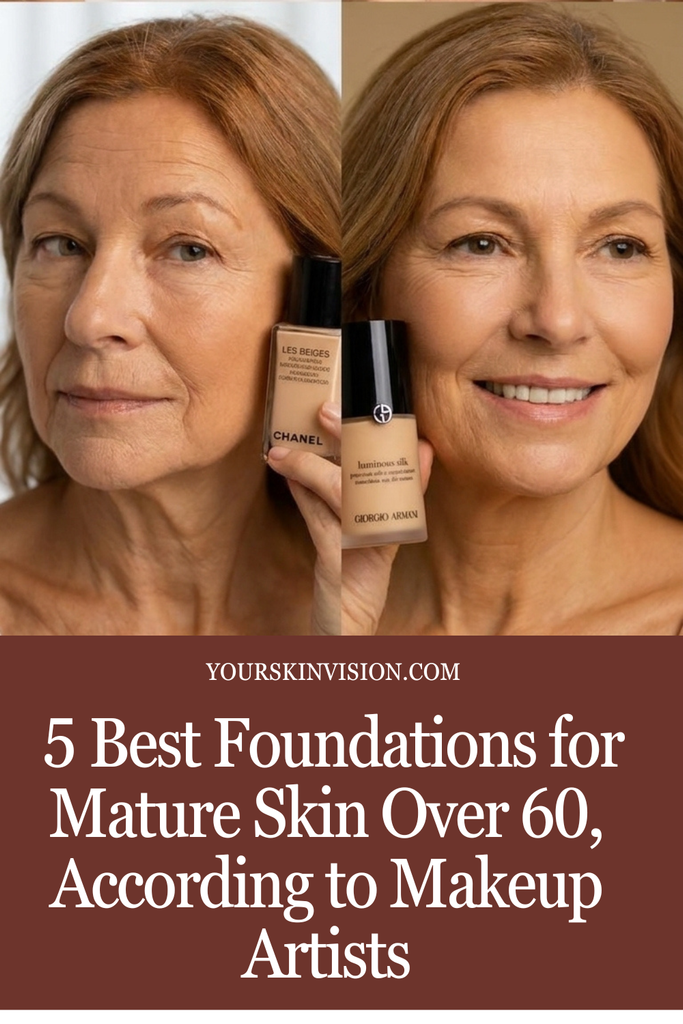
Table of Contents
Why Does Foundation Look Different on Skin Over 60?
Understanding what is happening to your skin makes it far easier to choose the right product. After menopause, estrogen levels drop, and the skin produces less collagen, less natural oil, and less hyaluronic acid. The result is skin that is often drier, thinner, and more textured. Surface cells also turn over more slowly, so dry patches can cling to makeup and look flaky.
Texture matters too. Fine lines around the eyes, mouth, and forehead catch pigment, which is why heavy, full-coverage, matte foundations tend to look cakey on mature skin. Makeup artists consistently describe the goal as “skin-like” coverage: enough pigment to even out redness and age spots, but enough translucency that your natural skin still shows through.
Finally, skin tone often changes with age. Many women notice more redness, sallowness, or uneven pigmentation from years of sun exposure. A foundation that you matched ten years ago may no longer be your best shade, so it is worth being re-matched periodically.
What Should You Look for in a Foundation for Mature Skin?
Makeup artists tend to evaluate foundations for older skin using the same handful of criteria. Use this checklist when you shop.
Is a Hydrating Formula Really Necessary?
Yes. Hydration is the single most important factor. Look for ingredients such as hyaluronic acid, glycerin, squalane, and ceramides, which help hold water in the skin and keep makeup from clinging to dry patches. Serum-style and skin-care-infused foundations are generally the most forgiving.
Which Finish Is Best: Matte, Satin, or Dewy?
For most women over 60, a satin or natural-radiant finish is the sweet spot. Matte formulas can accentuate texture and make skin look flat, while very dewy or glittery finishes can emphasize pores and uneven areas. A soft, luminous finish reflects light gently and makes skin look healthier without looking oily.
How Much Coverage Do You Actually Need?
Light to medium, buildable coverage is usually ideal. A thin layer can even out tone, and you can add a second layer only where you need it, such as around the nose or over discoloration. Building coverage in this way is far more flattering than applying a thick layer all over the face.
Should Your Foundation Contain SPF?
Sun protection is a bonus, not a replacement for sunscreen. A foundation with SPF adds a helpful layer of daily protection against further sun spots and sagging, but makeup artists and dermatologists agree that you should still apply a dedicated sunscreen underneath, because most people do not apply enough foundation to reach the stated SPF level.
What About Skin-Care Ingredients?
Peptides, antioxidants like vitamin C and vitamin E, and niacinamide are valuable extras. They will not replace your skincare routine, but they can improve comfort and give skin a more refined look over time.
Is Lightweight Really Better?
Absolutely. A lightweight, flexible formula moves with your expression instead of creasing. If a foundation feels heavy in the bottle or on the back of your hand, it will likely feel heavy on your face as well.
Does Skin Sensitivity Change What You Should Buy?
Mature skin is often more reactive, so check the label for fragrance, alcohol, and other potential irritants if you are sensitive. Look for dermatologist-tested or non-comedogenic formulas, and patch test any new product before using it on your whole face.
What Are The Best Foundations for Mature Skin Over 60
Each review below includes why makeup artists tend to recommend the formula, who it suits best, and a representative user experience to help you picture how it wears in real life.

1. Giorgio Armani Luminous Silk Foundation: Best Overall for a Natural, Skin-Like Finish
Why We Love It: Luminous Silk has long been a favorite in professional makeup kits, and it is easy to see why. The formula is fluid and lightweight, with a silky, buildable coverage that blends into the skin rather than sitting on top of it. It leaves a soft, luminous finish that reflects light gently, which helps skin look smoother and more even without emphasizing fine lines. The shade range is extensive, with options that account for different undertones, which matters because mature skin often has more variation in color.
Perfect For: Women who want a refined, natural finish and are comfortable investing in a luxury foundation they can wear every day or on special occasions.
How to Use It: Makeup artists typically suggest applying it with a damp sponge or a dense brush, starting at the center of the face and blending outward. Use a very small amount, since the formula builds easily.
User Experience: Margaret, 64, describes wearing the foundation to a family wedding after years of avoiding liquid foundations. “I expected to feel the makeup on my face by lunchtime,” she says. “Instead, my skin looked even and a little glowy, and I did not see any settling around my mouth when I checked photos later.” She notes that she uses a small amount and presses it in with a sponge, and that she needed only a light touch of concealer under her eyes.
Things to Consider: It is a premium-priced product, and people with very dry skin may want to use a rich moisturizer underneath. Those who prefer full, long-lasting coverage may find it too sheer.

2. L’Oréal Paris Age Perfect Radiant Serum Foundation with SPF 50: Best Drugstore Pick
Why We Love It: Formulated specifically with mature skin in mind, this serum-infused foundation combines light coverage with hydrating ingredients and a high SPF. It glides on easily, gives a soft radiance, and helps brighten the look of dull or tired skin. For women who want a dependable, affordable foundation that is widely available, this is often the first product makeup artists recommend.
Perfect For: Budget-conscious women who want hydration, light-to-medium coverage, and built-in sun protection in a single step.
How to Use It: Shake well, apply a small amount to the cheeks, forehead, and chin, and blend with fingertips or a sponge. Because the coverage is light, you can layer a second pass over areas that need more.
User Experience: Linda, 67, switched to this foundation after finding that her longtime powder-based product made her skin look dry and lined. “It feels more like a tinted moisturizer than makeup,” she says. “I put it on after my sunscreen, and it takes about a minute. It evens things out without hiding my skin, and I get compliments on how fresh I look.” She adds that it is not the right choice for a night out when she wants fuller coverage, and in those cases she layers a little concealer on top.
Things to Consider: Coverage is on the lighter side, and the SPF-containing formula may leave a slight sheen on very oily areas. Check the shade range in person if you can, since drugstore testers are not always available.

3. Charlotte Tilbury Beautiful Skin Foundation: Best for Blurring Lines and Adding Glow
Why We Love It: This skincare-inspired foundation is designed to give a radiant, medium-coverage finish with a soft-focus effect. It contains hydrating ingredients and a lightweight texture that blends easily, helping skin look smooth and luminous without a heavy feel. Makeup artists often like it because it layers well and can be sheered out for a more natural look or built up for an event.
Perfect For: Women who love a polished, glowing look and want a formula that visually softens the appearance of texture and discoloration.
How to Use It: Warm a small amount on the back of your hand, then press it into the skin with a sponge. Pressing, rather than dragging, helps prevent the formula from catching on dry areas.
User Experience: Patricia, 61, was hesitant to try a glowy foundation. “I thought it would highlight every wrinkle,” she says. “But it looks like my skin on a good day. It blurs the redness on my cheeks, and the glow looks healthy rather than shiny.” She says she sets only the center of her face with a light dusting of powder and that the foundation wears comfortably for a full workday.
Things to Consider: Women with oilier skin may want to powder their T-zone. As with any glowing formula, it works best on well-prepped, moisturized skin.

4. Estée Lauder Futurist Hydra Rescue Moisturizing Makeup SPF 45: Best for Dry Skin
Why We Love It: If your skin feels tight or looks dull by midday, this moisturizing foundation is worth a look. It is built around a hydrating base and delivers a natural, luminous finish with medium coverage. Makeup artists commonly reach for it for clients with dry, dehydrated skin because it adds comfort and glow while evening out tone.
Perfect For: Women with dry, dehydrated skin who want a comfortable, moisturizing foundation with built-in sun protection.
How to Use It: Apply a small amount with a brush or sponge, focusing on the center of the face, then blend outward. Allow your moisturizer to absorb fully before applying to help prevent slipping.
User Experience: Dorothy, 70, struggled with winter dryness that left her foundation looking patchy. “This one feels like another layer of moisturizer,” she says. “My skin does not look parched by the afternoon, and the color blends nicely into my neck.” She notes that it takes a couple of tries to find the right amount, since too much can look glossy on her forehead.
Things to Consider: Those with oily or combination skin may find the finish too dewy. Some users also prefer to apply a separate sunscreen underneath for reliable protection.

5. Bobbi Brown Intensive Skin Serum Foundation SPF 40: Best Serum Foundation for Radiance
Why We Love It: Designed to feel like skincare, this serum-based foundation provides lightweight, buildable coverage with a natural radiant finish. It is formulated to hydrate and support the look of skin over time, while a wide shade range helps women find a more precise match. Makeup artists often appreciate how seamlessly it blends and how it avoids looking heavy.
Perfect For: Women who want a hydrating, skin-first foundation with a polished but natural finish.
How to Use It: Use a small amount and blend with a brush or fingers. Because it is serum-based, it often looks best over a lightweight moisturizer and primer.
User Experience: Susan, 63, says she switched after noticing her old foundation emphasized the lines around her nose. “It sits so lightly that I forget I am wearing it,” she says. “I like that I can add a bit more where I need it, and my skin does not look dry by evening.” She mentions that she wishes it had slightly longer wear in hot weather, so she carries a blotting sheet on humid days.
Things to Consider: It is a premium-priced option, and the finish may feel too radiant for those who prefer a matte look.
How Do You Find the Right Foundation Shade After 60?
Shade matching is where many women go wrong, and it is one of the most common topics makeup artists raise. Skin tone shifts with age, and sun exposure, redness, and discoloration can all throw off your match. Follow these steps for a more accurate result.
- Test on your jawline, not your hand. Your hand and wrist are often a different color from your face. Swipe two or three shades along the jawline and see which one disappears.
- Check in natural light. Store lighting can be deceiving. Step near a window or outside to view the match in daylight.
- Consider your undertone. Cool undertones tend to look pink or rosy, warm undertones look golden or yellow, and neutral undertones fall in between. If you are unsure, ask for help from a beauty advisor.
- Match your face to your neck. A foundation that looks perfect on your cheek but ends abruptly at the jaw can look like a mask. Blend down the neck slightly or choose a shade that bridges the two.
- Be willing to blend two shades. Many professionals mix two shades to customize the match, especially if skin tone varies between seasons.
How Should You Apply Foundation on Mature Skin?
Even the best foundation can look unflattering if the technique is off. Here is the routine makeup artists commonly recommend.
- Prep well. Cleanse, apply a hydrating serum, a moisturizer, and sunscreen. Give each layer a few minutes to absorb.
- Use a hydrating primer sparingly. A light, smoothing primer can help makeup glide, but avoid heavy silicone-based formulas that can feel slippery.
- Start with a small amount. Apply foundation to the center of the face and blend outward. You can always add more.
- Use a damp sponge or brush. Pressing the product into the skin helps it look natural and avoids caking in lines.
- Conceal only where needed. Instead of applying concealer all over, use a small amount under the eyes and over any discoloration.
- Set strategically. Use a finely milled translucent powder only on areas that tend to get shiny, such as the T-zone. Avoid powdering the whole face.
- Finish with a mist or cream blush. A light facial mist or a cream blush can bring back a fresh, dewy look and warm up the complexion.
What Foundation Mistakes Make Skin Look Older?
Makeup artists see the same mistakes again and again. Avoiding them can take years off your look.
- Using too much product. Heavy layers settle into lines. Start with less.
- Choosing a matte, full-coverage formula. It can flatten the face and emphasize texture.
- Wearing a shade that is too light or too dark. An ill-matched shade can look ashen or orange.
- Skipping skincare. Foundation cannot hide dryness or dullness if the skin is not prepared.
- Setting the whole face with powder. Too much powder can make skin look dry and dusty.
- Forgetting the neck and jawline. A visible line is a giveaway. Blend down for a smooth transition.
Frequently Asked Questions About Foundation for Women Over 60
Should women over 60 use liquid or powder foundation?
Liquid and serum foundations are generally more flattering because they add moisture and blend smoothly. Powder foundations can cling to dry patches and emphasize texture, so they are usually better used sparingly to set specific areas.
Does foundation make wrinkles look worse?
It can if the formula is too heavy, too matte, or applied too thickly. A thin layer of a hydrating, light-reflecting foundation often makes lines look softer, not more pronounced.
Is tinted moisturizer a good alternative to foundation?
For many women, yes. A tinted moisturizer or skin tint gives very sheer coverage and a fresh finish. If you want more evening of tone, a lightweight serum foundation is a good middle ground.
How can I stop foundation from creasing around my eyes and mouth?
Use less product around these areas, make sure your moisturizer and eye cream have absorbed first, and press rather than rub the foundation. Setting only a small amount of powder in the creases can also help.
How often should I update my foundation shade?
Reassess your shade at least once a year, and again when the seasons change. Skin tone can shift with sun exposure, hormonal changes, and skincare use.
Is it worth paying more for a high-end foundation?
Not always. Drugstore formulas like L’Oréal Age Perfect can perform beautifully on mature skin. Premium options may offer a wider shade range, finer textures, or longer wear, but the best foundation is the one that suits your skin and budget.
Can I wear foundation every day on mature skin?
Yes, as long as you cleanse thoroughly at night and choose gentle, non-comedogenic formulas. Taking a day off now and then, and using a light skin tint on casual days, can also keep skin comfortable.
Final Thoughts
The best foundation for mature skin is not the heaviest or the most expensive. It is the one that hydrates, blends seamlessly, and lets your skin look like itself on a really good day. Makeup artists consistently point to the same principles: prep well, choose a luminous but not shiny finish, build coverage lightly, and match your shade carefully in natural light.
If you want a refined, natural look, Giorgio Armani Luminous Silk is a standout. For an affordable, everyday option with SPF, L’Oréal Paris Age Perfect Radiant Serum Foundation is hard to beat. Charlotte Tilbury Beautiful Skin brings glow and soft-focus blur, Estée Lauder Futurist Hydra Rescue is a comfort-first pick for dry skin, and Bobbi Brown Intensive Skin Serum Foundation offers hydrating, skin-care-style radiance.
Whichever you choose, remember that consistency matters just as much as the product. A good skincare routine, daily sunscreen, and a light, thoughtful application will always do more for your complexion than coverage alone. And if your neck needs a little extra attention to match your face, a quality neck cream can help the whole look come together.
