
I used to think red light therapy was one of those wellness trends that would fade out like jade rollers and vitamin patches. Then I watched three separate dermatologists bring it up, unprompted, in three separate conversations about skin aging. That got my attention. A tool doesn’t earn that kind of repeated, unprompted respect from skin doctors unless the science behind it actually holds up.
Red light panels used to live only in dermatology offices, priced like a small appliance. Now you can order one on Amazon for less than a nice dinner out. But not every cheap panel does what it claims.
Below, you’ll find five of the best affordable red light therapy panel options that actually match the wavelengths dermatologists look for, plus a plain-English breakdown of the science and what real buyers say after using them.
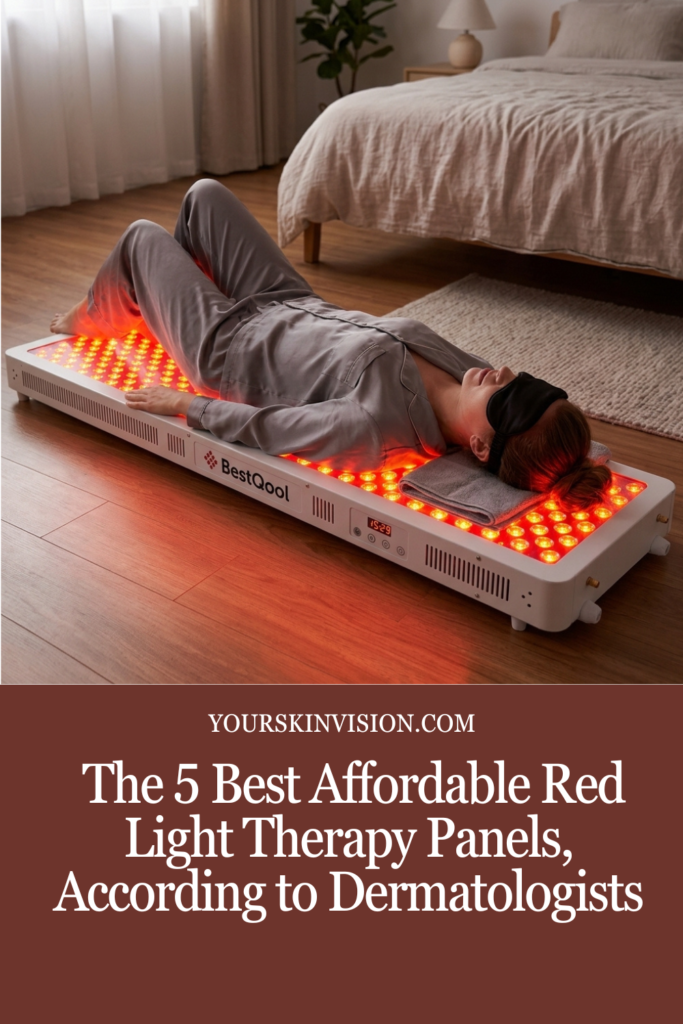
Table of Contents
What Makes a Red Light Therapy Panel Actually Work?
Not all red light panels are equal. The panel’s wavelength determines how deep the light travels into your skin, and that depth determines what it can actually do for you.
Red light in the 630nm to 660nm range works on the skin’s surface. It targets fine lines, uneven tone, and redness. Near-infrared light, usually between 810nm and 850nm, goes deeper. It reaches muscle tissue and joints, which is why athletes use it for recovery as much as skincare fans use it for their face.
Irradiance matters too. That’s the actual strength of the light hitting your skin, measured in milliwatts per square centimeter. A panel with weak irradiance forces you to sit closer or longer to get any benefit, which gets old fast. Look for panels that state their irradiance numbers instead of vague marketing language like “clinical grade.” If a listing won’t tell you the number, that’s usually a sign the number isn’t impressive.
What Do Dermatologists Say About Red Light Therapy?
Board-certified dermatologist Dr. Ava Shamban, based in Beverly Hills, explains the mechanism in a way that finally made it click for me. She explains that red light gets absorbed by light-sensitive compounds inside the mitochondria of skin cells, which pushes fibroblasts to produce more collagen. In plain terms: the light doesn’t just sit on top of your skin. It talks directly to the cells responsible for keeping your skin firm.
Dr. Corey L. Hartman, a board-certified dermatologist and founder of Skin Wellness Dermatology, recommends sticking to a red light wavelength between 630nm and 680nm for the best research-backed results. That’s a useful number to keep in your back pocket while you’re comparing panels, because plenty of cheap devices use wavelengths that don’t fall in that proven range at all.
Consistency matters more than intensity, according to Dr. Dendy Engelman, a board-certified dermatologist who treats red light therapy almost like flossing: unglamorous but non-negotiable if you want results. She recommends sitting about 12 inches away from the panel and warns against sitting too close, since that can lead to skin sensitivity.
She also notes that most panels work best when used three to five times a week, for up to 20 minutes per session. Skip a week here and there, and your results stall. Use it daily and overdo the distance, and your skin can get irritated instead of improved.
How Do You Pick an Affordable Panel Without Wasting Money?
Price and quality don’t move in a straight line with red light panels. Some $300 devices use weaker LEDs than a $90 panel from a smaller brand. Because of that, you need a short checklist before you buy.
First, check the wavelength. You want 630-660nm for skin, and ideally 810-850nm as well if you also care about muscle or joint relief. Second, check irradiance if it’s listed. Third, look at coverage area versus your actual needs. A tiny handheld wand won’t treat your whole face evenly, no matter how strong the marketing copy sounds. Finally, read the return policy. Skin response varies from person to person, and a solid return window protects you if a panel just doesn’t suit your skin.
With that framework in mind, here are the five affordable panels that come closest to hitting every mark, starting with the strongest overall pick.
What Are the Best Affordable Red Light Therapy Panels

1. Hooga PRO300 Red Light Therapy Device — Best Overall
The Hooga PRO300 earns the top spot because it doesn’t cut corners on wavelength or irradiance, and it still lands at a price most people can justify without much guilt. It runs on the dermatologist-approved 660nm and 850nm combination, so it treats surface skin concerns and deeper muscle soreness in the same session.
Buyers on Amazon consistently mention two things about this panel. The first is how sturdy it feels for something in this price range; several reviewers note that the stand holds steady instead of wobbling mid-session, which matters if you’re using it hands-free while working at a desk. The second common thread is skin texture.
Multiple longtime users report smoother, calmer-looking skin after several weeks of regular use, especially around areas prone to redness. A few reviewers mention pairing it with their nighttime skincare routine and noticing their moisturizer seems to absorb better afterward, which lines up with how red light is believed to support circulation.
The trade-off is size. It’s built for face and upper body, not full standing sessions, so if you want head-to-toe coverage, you’ll want a larger model.

2. Bestqool Red Light Therapy Panel — Best for Full-Body Coverage
If you want a panel tall enough to stand in front of, Bestqool is the one to grab. It’s built with 200 LED bulbs and three separate modes: red only, near-infrared only, and a combined setting that gives you both wavelengths at once. That flexibility is rare at this price point, and it means one panel can double as a skincare tool in the morning and a muscle recovery tool after a workout.
American buyers frequently bring up two specific points in their reviews. First, the height. At over 40 inches tall, it treats the torso and legs without you needing to awkwardly reposition it every few minutes, which several reviewers say was a dealbreaker with smaller panels they’d tried before.
Second, athletes and people managing chronic joint pain often mention using the near-infrared setting after physical therapy sessions or long runs, reporting that soreness eased faster than it did without the panel. One recurring theme is how quiet the cooling fan runs, which matters if you’re using it while watching TV or working nearby.
It’s heavier than smaller panels, so it’s better suited to a fixed spot in a bedroom or home gym rather than travel.

3. reVive Light Therapy dpl IIa Panel — Best Compact Pick
The reVive dpl IIa is the panel to pick if you want something clinical without the clinical price tag or the clinical bulk. It’s compact enough to fit in a drawer or a suitcase, but it still hits the research-backed wavelength range dermatologists recommend for skin health.
This is the panel Dr. Hartman’s wavelength guidance maps onto most cleanly among smaller devices, since it’s built specifically around anti-aging and skin tone concerns rather than trying to also double as a full muscle-recovery tool.
Reviewers on Amazon tend to focus on two things. Some mention how easy it is to travel with, using it in hotel rooms during business trips without losing their skincare routine. Others focus on fine lines around the eyes and mouth, describing subtle but noticeable smoothing after weeks of nightly use before bed.
A few reviewers who also own larger panels say they keep this one specifically for face treatments because the smaller size makes it easier to hold at a consistent distance, which ties back to Dr. Engelman’s advice about keeping distance steady for even results. The tighter treatment area means it takes longer to cover the neck and chest area in the same session.

4. Fxtiaa Multi-Color LED Panel — Best Budget Multi-Mode Option
The Fxtiaa panel stands out because it doesn’t limit you to just red and near-infrared. It also includes blue, green, yellow, cyan, purple, and white light settings, so one device covers acne concerns, redness, and hyperpigmentation, not just anti-aging. That range of colors typically shows up on panels twice this price, which is part of why it made this list.
Buyers commonly point out two advantages. First, people manage occasional breakouts alongside anti-aging concerns like having blue light on the same device instead of buying a separate acne-focused gadget. Reviewers describe switching between red light at night and blue light during flare-ups without needing two different tools cluttering the bathroom counter. Second, several reviewers mention using it beyond the face, targeting the neck, hands, and even sore shoulders, and note that the adjustable stand makes repositioning simple.
Because it spreads its LEDs across so many light colors, the red and near-infrared output per session runs slightly lower than a dedicated red-only panel like the Hooga. It’s a solid all-in-one option, but not the strongest choice if red light alone is your main priority.

5. Rhmip LED Red Light Therapy Device — Best Under $50
For anyone who wants to try red light therapy without committing much money, the Rhmip device is the easiest entry point. It’s small, straightforward, and priced low enough that trying it feels risk-free even if you’re not sure red light therapy will work for you personally.
Two patterns show up again and again in reviews. First-time users often mention being surprised by how noticeable the warmth and glow feel during a session, which builds confidence that the device is doing something real even before visible results appear. Longer-term users, meanwhile, describe modest but real improvements in skin tone evenness after a month or more of consistent use, usually paired with the honest admission that it’s not as powerful as pricier panels they’ve tried since.
This is not the device for anyone chasing dramatic anti-aging results or muscle recovery. Think of it as a low-stakes way to find out whether you like the ritual and the results enough to invest in something stronger later.
Which Panel Should You Buy?
If you only take one thing from this article, let it be this: match the panel to your actual goal instead of chasing whichever one has the flashiest Amazon listing. Want the most balanced, dermatologist-aligned option for both face and body?
Go with the Hooga PRO300. Need full-body coverage for workouts and recovery? Bestqool is built for that. Traveling often or focused purely on facial anti-aging? The reVive dpl IIa packs clinical wavelengths into a size that fits in a bag. Dealing with acne and aging at the same time? Fxtiaa’s multiple light colors solve two problems at once. And if you just want to test the waters before spending real money, the Rhmip gets you started for less than $50.
Red light therapy isn’t magic, and no panel will undo years of sun damage in a week. But used consistently, at the right distance, with the right wavelength, it’s one of the few at-home skincare tools that dermatologists themselves keep bringing up. Pick the one that fits your routine, stick with it for a few weeks, and give your skin the consistency it actually needs to show a difference.
